
Walk into any CrossFit gym, often called a “box,” and you’ll notice something striking: women dominate the room. Confidence fills the air.
What started as a niche training method has evolved into one of the most empowering and inclusive fitness movements in the world. This intensive functional fitness regime empowers women to boost their self-confidence through demanding workouts, while also defying conventional gender stereotypes and striving for athletic excellence.
For many, CrossFit is more than a workout. It’s a mindset shift. It’s a place where women push limits, find community, and redefine what strength looks like. But what exactly makes CrossFit so popular among women today?
Quick Highlights:
- Earlier industry data suggested women made up about 60% of CrossFit athletes globally between 2015-21, while more recent sources place female participation closer to 40% of the membership base.
- Women in CrossFit report 90%+ improvements in self-esteem and 80%+ improvements in daily energy.
- The CrossFit Games award equal prize money to male and female athletes, something most major sports still can’t say.
- According to a BoxMate study, 77% of the women surveyed felt that when training in their gym/box, they could be competitive with males without judgement.
- Women in CrossFit face lower reported injury incidence— 30% compared to 45% of men.
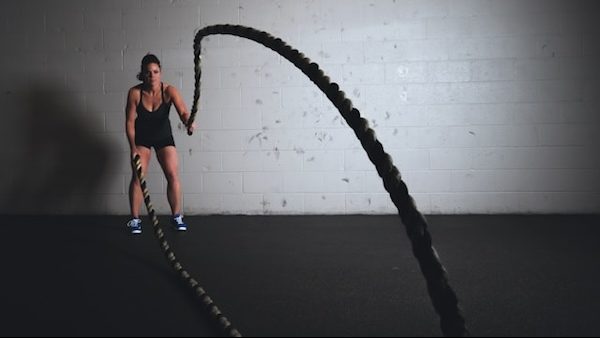
Strength as a Skill, Not a Stereotype
CrossFit provides women with a training environment focused on performance and measurable progress. Instead of focusing on appearances or the scale, women concentrate on what their bodies can actually accomplish.
Data shows that women in CrossFit are highly motivated by developing strength, rating this factor higher than tone, size, or muscle mass. This indicates a positive shift towards performance goals. One study found that 81% of participants reported significant increases in perceived strength after consistent CrossFit training.
Beyond physical strength, the psychological benefits remain a driving force. Women participating in CrossFit report more than a 90% improvement in self-esteem and an 80%+ increase in day-to-day energy. In a survey of over 500 women, 94% said CrossFit and lifting made them feel empowered, strong, and more confident in their bodies.
That shift is happening at the elite level too. Athelo’s own Dani Speegle, who famously dominated a 250-pound sandbag clean event in 2022, embodies a new era of strength-forward female athletes. She’s vocal about inspiring girls to push limits and chase big goals, proving just how powerful and resilient women’s bodies are.
Supportive Community and Scalable Longevity
CrossFit is built around community. Instead of the isolated feel many commercial gyms have, classes bring people together, encourage progress, and create accountability. This supportive environment, paired with a focus on personal improvement, keeps people engaged for the long term.
That support matters: 77% of surveyed women said they feel comfortable pushing themselves alongside men without judgment when training in their gym or box.
CrossFit’s community dynamic mirrors what we’ve seen across the broader women’s sports ecosystem. When women are given equal space, equal visibility, and equal investment, participation surges.
We see this through CrossFit’s continuous opportunities. Women can start young, compete in the CrossFit Open starting at age 14, and have the freedom to grow stronger and compete until they are in their 80s and beyond.
Equal Plates, Equal Opportunity
From its inception, CrossFit has offered equal prize money for male and female competitors. Similarly, the same number of women and men are invited to the CrossFit Games. There is no separate women’s league; there is just the CrossFit Games, where every women’s field is broadcast widely.
The 2021 NOBULL CrossFit Games demonstrated this parity. Champions Tia-Clair Toomey and Justin Medeiros both received checks worth $310,000. Toomey, arguably regarded as the face of modern CrossFit, shows how powerfully women shape the sport’s culture and global reach.
In addition, the women’s fields at the 2021 Games were broadcast to 99 million aggregate viewers across the CrossFit Games platforms, standing against the sobering statistic that women’s sports generally make up only 4% of total sports media coverage.
This level of visibility echoes broader trends in women’s sports, where full-stage presentation, not only tokenism, drives engagement.
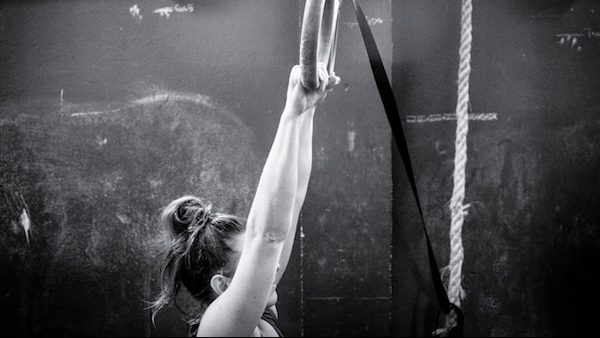
Inspiring Youth and Role Models
Visible, strong female athletes in CrossFit play a crucial role in inspiring the next generation.
Earlier industry reports estimated that women made up nearly 60% of CrossFit athletes globally between 2015 and 2021. More recent data places women closer to 40% of total membership, still a substantial portion of the community.
Athelo’s own athletes reflect the range of what is possible.
Amy Bream continues to lead the way for adaptive competitors. Kyra Milligan, a six-time CrossFit Games athlete who moved from Utah to Las Vegas to deepen her training, shows grit, community service, and elite performance. Emily Loogman Rethwill, mother, coach, and athlete, shows how strength and identity can evolve through every stage of life.
The Path Forward and Where We Fit
CrossFit’s rapid rise among women is no coincidence. It’s the product of a culture that prioritizes equity, visibility, and shared opportunity. When women are given the same platform as men, they are recognized not as exceptions, but as leaders shaping the sport.
At Athelo Group, we champion that same commitment. As CrossFit continues to set the bar for equity and empowerment, we work to ensure that momentum reaches beyond the gym. We partner with athletes and brands to elevate female strength in all its forms and expand competitive opportunities across the sports industry.