
What is free solo climbing?
This increasingly popular sport is a style of rock climbing in which the climber uses only their body strength and chalk to ascend. This is done all without the safety net of ropes, harnesses, or protective gear. Climbers instead rely entirely on their strength, mental focus, and technique.
The sport has recently gained worldwide attention and popularity. This is largely thanks to free soloist Alex Honnold. Climbers like Honnold highlight not only the extreme risks, but also the incredible skill that free solo climbing requires.
While it may appear to be a purely physical challenge, free solo climbing is actually a true battle between fear and fatigue. The mind and body push their limits in order to maintain control and keep themselves alive.
Quick Highlights
- Free solo climbing is considered the most dangerous form of climbing over bouldering, free climbing, and sport climbing, due to its high mortality risk.
- Climbers solo rocks and buildings nearing 3,000 feet without the safety net of padding or harnesses.
- ‘Skyscraper Live’, the Netflix documentary featuring Alex Honnold’s free solo of Taipei 101 has amassed over 6.2 million views.
- Only one person has successfully free soloed El Capitan, the premier big-wall rock climbing destination in Yosemite.
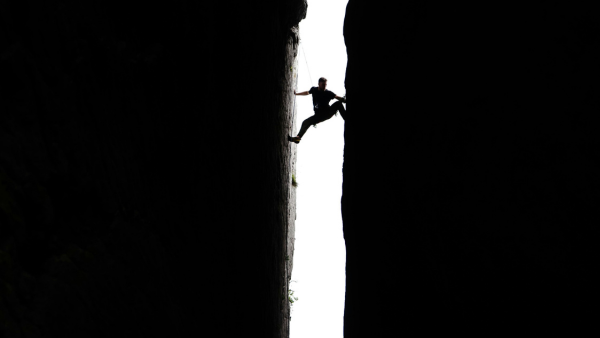
Free Solo Climbing v.s. Free Climbing
Many people often confuse free solo climbing with free climbing. While similar, the lack of ropes and other protective gear gives meaning to the word ‘solo’.
In traditional free climbing, climbers have the help of harnesses with ropes, as well as padding on the ground that saves them from a fall. Additionally, the harnesses can be used to manually ascend the climber if they find themselves stuck.
While ropes may not seem like a large difference, the consequence of a solo fall is almost always fatal. Climbers solo rocks and buildings nearing 3,000 feet, all without the safety net of padding or harnesses. Falling is not an option.
Taipei 101
Alex Honnold recently took on the famous skyscraper Taipei 101, which was the tallest building in the world from 2004-2010.
At 1,667 feet, this building towers over the city of Taiwan.
Honnold performed the feat of climbing it solo, with nothing but a bag of chalk and reliance on his training. His performance was documented by Netflix, creating a thrilling live drama leaving the viewers on the edge of their seats. The documentary has amassed over 6.2 million views.
Just 50 years ago, free solo climbing was even more unheard of than it is now.
95% of Americans believed that “mountain climbers” ascended difficult rock cruxes by throwing a grappling hook attached to a hemp rope 30 feet in the air, then scaling the rope hand-over-hand.
With the extreme sport gaining visibility on platforms like Netflix, people who have never climbed before could begin to engage in the risk without proper training or preparation.
The Mental Battle
If asked, many climbers would immediately reject the idea of a solo climb.
Fear is a survival instinct, and not something most people are able to overcome for a supposed quick thrill. Fear is something that free solo climbers must learn to control.
Half the battle of free solo climbing is separate from gym training. This includes mental visualization, meditation, memorizing routes, and rehearsing moves. They must be able to remain calm even in extreme situations of exposure, or when something doesn’t go to plan.
The psychological pressure faced is extreme. Even with moves calculated to the centimeter, rock breakage or weather could put the climber in fatal danger. The knowledge of this can lead to stiff or hesitant movements that increase the risk of failure. As long climbs progress, mental fatigue runs the risk of setting in.
Training and Physical Limits
The physical training that goes into a successful free solo climb is critical. To preserve energy, climbers train efficient body positions and holds to conserve their strength during long and tedious climbs.
Climbers often simulate ‘Cross-fit’ style circuits. They also participate in finger grip exercises, endurance, and push-pull drills to get as prepared as possible for the climb. Long hangboard sessions often simulate the deep fatigue that will plague climbers’ arms during a free solo. Deep physical fatigue can affect a climber’s grip strength, reaction time, and coordination.
In climbing, injury prevention and rest are vital. Climbers strengthen muscles, core, and shoulders to withstand the tenuous climbs. Proper rest and recovery allow muscles to rebuild and adapt to intense training sessions. Stretching and mobility work also help maintain flexibility and reduce fatigue.
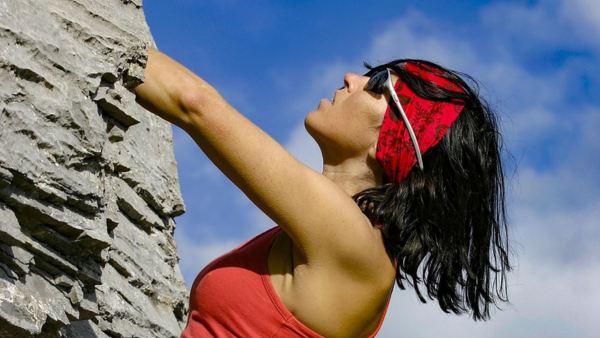
Gym Confidence to Outdoor Reality
Naturally, smaller indoor climbing gyms provide climbers with the safety and security to practice climbing in a controlled environment. They are able to attempt the lifts and grabs they will have to perform thousands of feet in the air from the safety of 15 feet.
The challenge of training in indoor facilities is that climbers can get too comfortable with movements and the ability to fall.
There is an immense mental battle for climbers to transfer to the real surfaces.
Where Control Replaces Fear
Free solo climbing remains one of the most extreme and dangerous sports in the world. Climbers must balance intense training, careful route planning, and the ability to remain calm in situations where a single mistake could be fatal.
While documentaries and media coverage have brought greater attention to the sport, they also highlight the reality that free solo climbing is far from a casual thrill. The sport is a discipline built on years of preparation and calculated risk.
Ultimately, free solo climbers push the boundaries of human capability. They show how far the mind and body can go when working together under the most extreme conditions.
FAQ:
- What is the tallest free solo climb in history? The tallest free solo climb was completed by Alex Honnold on January 25, 2026. Honnold ascended Taipei 101 in Taiwan, which stands at 1,667 feet. This climb took 91 minutes.
- Is free solo climbing legal everywhere? Yes. Free solo climbing is generally legal in outdoor climbing areas, however the regulations differ by location. Environmental, safety, or conservation concerns can place restrictions.
- How do free solo climbers memorize routes? Climbers have a wide variety of ways in which they attempt to memorize routes and simulate the climb before the real attempt. They climb the route many times using ropes and other protection, while building repetition. This creates the ability to practice sequences of moves in section breaks and memorize hands and footholds. Off the surface, they can mentally rehearse the climb.
- What are ethical concerns surrounding the promotion of free solo climbing? The promotion and filming of free solo climbs can encourage risky behavior. When hit shows or Youtube videos receive millions of views and the climbers large sums of money, beginners can be encouraged to attempt free solo climbing without the skill or training. This also puts pressure on even experienced climbers to attempt more dangerous feats.
- Is free solo climbing the same as ‘free climbing’? No. In free climbing, the ability to use ropes, harnesses, and padding is available to climbers. In free solo climbing, the ascent must be made with just your body and chalk.
- How do climbers deal with fear during a free solo climb? Experienced climbers have all formulated their own routine on how they handle fear before and during a climb, however it is inevitable. They often climb routes that they know well, and prepare extensively for routes they don’t. Most practice mental focus techniques off the surfaces daily, and know to avoid climbing if they feel uncertain or distracted.