
WrestleMania 41 was nothing short of historic. Held in Las Vegas, it proved itself as one of the most watched, talked-about, and profitable sporting spectacles of the year.
Beyond the ring, it marked the peak of WWE’s evolution, driven by smart business strategy, massive digital growth, and an entertainment model tailor-made for the social media era.
In the last five years, WWE has managed to build one of the most successful business models in all of sports entertainment.

From 19,000 Fans to Over 100 Million Eyes
WrestleMania was born in 1985 at Madison Square Garden. Back then, the main draw was Hulk Hogan and Mr. T, accompanied by celebrity appearances from Muhammad Ali and Cyndi Lauper.
Over 19,000 fans packed the arena with another million watching via closed-circuit TV– a bold experiment that would go on to be a pinnacle event for the WWE brand.
By WrestleMania III (1987), the live crowd had jumped to 93,173 at the Pontiac Silverdome, a record that held for decades.
WrestleMania 32 (2016) pushed that number to 101,763 at AT&T Stadium in Texas. The scale of the event kept rising, but it’s been the digital transformation over the last 3–5 years that has truly sent viewership into the stratosphere.
Recent WrestleMania Viewership Growth
- WrestleMania 36 (2020) debuted the two-night format.
- WrestleMania 38 (2022) brought that format to full stadium capacity, backed by strong attendance and growing digital engagement.
- WrestleMania 39 (2023) shattered records with:
- Over 500 million social media views.
- $21.6 million in gate revenue.
- 11 million hours of video consumed over the two days, a 42% increase over WrestleMania 38.
- WrestleMania 40 (2024) raised the bar again:
- 145,298 fans packed the stadium across two nights.
- 660+ million social media views, the most in WWE history.
- 67 million YouTube views in a single day, a channel record.
- Gate revenue surged 78% year-over-year, nearing $40 million.
- Total viewership jumped 41% compared to WrestleMania 39.
- The return of The Rock and the payoff to Cody Rhodes’ storyline drove immense engagement.
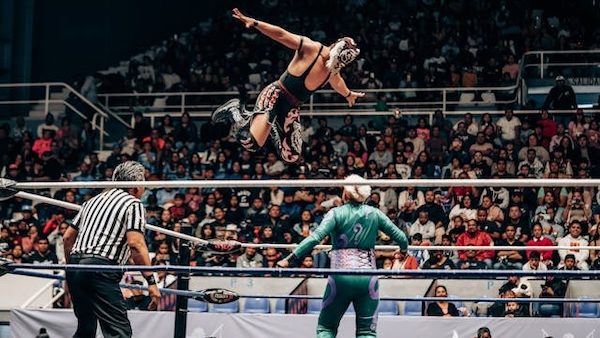
WrestleMania 41 Results
WWE reported a combined attendance of 124,693 across both nights at Allegiant Stadium—61,467 on Night 1 and 63,226 on Night 2—marking a sellout. While official streaming numbers are unconfirmed, the Netflix, Peacock, and YouTube broadcasts averaged 85,000 live viewers.
Jey Uso Wins World Heavyweight Championship
Jey Uso opened Night 1 by submitting Gunther to win his first world title, ending Gunther’s 259-day reign. The 2025 Royal Rumble winner used three top-rope splashes and a rear naked choke to seal the win.
Seth Rollins Takes Main Event of Night 1
In a Triple Threat match, Seth Rollins defeated Roman Reigns and CM Punk after Paul Heyman shockingly turned on both Reigns and Punk, handing Rollins a steel chair. This marks Rollins’ third WrestleMania main event win.
John Cena Secures Record 17th Title
On Night 2, John Cena beat Cody Rhodes to become a 17-time world champion, breaking Ric Flair’s record. Assisted by Travis Scott and underhanded tactics like a low blow and a title belt strike, Cena’s win was part of his 2025 retirement tour and likely his final WrestleMania match.
WWE’s Digital Strategy: YouTube and Beyond
At the heart of WWE’s explosive growth is its YouTube presence, where the company’s ability to package thrilling, highlight-driven moments perfectly suits the platform. As of 2025, WWE’s channel has:
- Over 108 million subscribers
- More than 93 billion lifetime views
- Ranked as the 11th most-subscribed YouTube channel in the world
WWE’s blend of scripted drama and athletic spectacle is engineered for digital consumption. The viral potential of finishers, crowd reactions, and dramatic storyline twists creates a loop of engagement across YouTube, TikTok, Instagram.
The Business Behind the Boom
WWE’s success isn’t just creative storytelling, it’s strategic outlining and planning. Since 2019, the company has more than doubled its EBITDA, going from $175 million to $415 million by 2023, ahead of the TKO merger with UFC.
This growth came despite cutting back on 75% of non-televised events, a bold decision under the leadership of Nick Khan, Ari Emanuel, and Mark Shapiro. Rather than exhausting talent with constant shows, WWE focused on fewer, bigger events that allowed for their crown jewel events like WrestleMania to flourish.
What Comes Next After WrestleMania 41?
With WrestleMania 41’s success, it’s clear WWE has found a model that works beyond wrestling. It has become a masterclass in brand building, digital growth, and live event strategy that any sports league would envy. As WWE continues to grow its global following, expand its streaming presence, and build stars who transcend the ring, WrestleMania will only get bigger.
The ability to capitalize on social media figures like IShowSpeed, Logan Paul, and Travis Scott also helps grow the sport and drive viewership to WWE’s polished highlights content on YouTube and other platforms. Travis Scott’s walkout during the peak of the Cena and Rhodes match shows WWE’s ongoing effort to bring in celebrities and connect with new audiences.
What started as a gamble in 1985 has become one of the most dominant entertainment franchises on the planet.