
The United States has hosted iconic sporting events before. But the 2026 FIFA World Cup may just become the largest sports entertainment moment the country has ever seen.
The era of evaluating major sports tournaments purely by tickets and linear TV ratings is officially over. Today’s entertainment landscape is driven by decentralized digital content, creator networks, and multi-industry lifestyle integration. Success is no longer measured by crowning a champion on the pitch. It is about orchestrating a complete cultural takeover that commands the global conversation.
This shifts the landscape into uncharted territory for brands, agencies, and creators alike, forcing a central question: Has the U.S. ever hosted a sporting event this globally influential, commercially valuable and culturally immersive at the same time?
The reality points to a definitive change in the status quo. The upcoming tournament transcends soccer, functioning instead as a massive anchor for the international entertainment economy.
Quick Highlights
- Original market models predicted an astounding $30 billion baseline injected across domestic economies, challenging traditional commercial frameworks.
- The expansive match calendar transforms standard advertising models, giving brands premium inventory that commands Super Bowl-equivalent ad value across dozens of distinct match windows over a single month.
- In an unprecedented entertainment play, the final match introduces a historic Super Bowl-inspired musical halftime show, complemented by city opening ceremonies featuring global icons.
- The core demographic driving soccer interest in the U.S. is heavily concentrated within Millennial and Gen Z buyers, presenting an audience primed for mobile streaming, influencer content and social commerce.
- Traditional static advertising has taken a backseat to highly integrated partnerships featuring elite athlete-creators, high-fashion houses and live digital activations.
- At an unparalleled scale, the tournament hosts a historic 48-team roster playing 104 matches mapped across major North American metropolitan hubs. Media metrics forecast a cumulative worldwide audience clipping past 5 billion viewers.
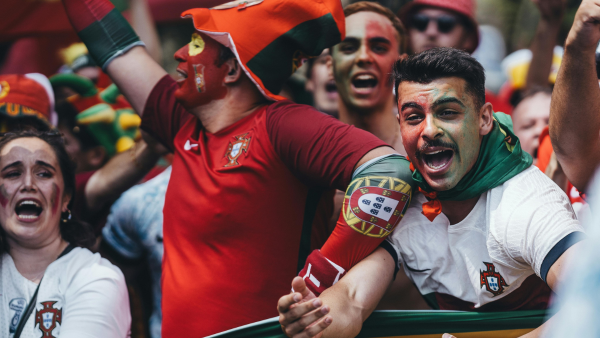
Bigger than a Game: Dismantling the Super Bowl Benchmark
To conceptualize the magnitude of what is unfolding, it is essential to measure it against the undisputed heavyweight of the American sports media landscape: the Super Bowl.
While the NFL’s showcase remains a massive cultural force domestically, its overall infrastructure operates on an entirely different axis compared to this multi-week festival.
The Super Bowl functions in a hyper-focused 24-hour media window, predominantly concentrated in U.S. markets. The World Cup emerges as a rolling, six-week international festival that transports multi-national viewer networks. The Super Bowl is centered around North American football culture, built as a premium television broadcast asset. The World Cup, however, serves as a fluid integration of global style, music, lifestyle and is distributed as a live, experiential urban takeover.
The baseline differentiator is clear: the World Cup isn’t just watched – it’s lived. A standard Super Bowl weekend dominates the public consciousness for a brief 48 hours. This tournament maintains that peak level of cultural engagement for well over a month. The sheer volume of matches completely reconfigures local commercial spaces, digital platforms, and hospitality sectors.
For the duration of the tournament, host cities morph into decentralized fan ecosystems. From packed, city-wide fan zones to multi-million dollar experiential brand pop-ups, the event operates as a continuous, self-sustaining economy.
If the Super Bowl represents a highly polished piece of legacy television, the World Cup is a dynamic, living marketplace.
The Olympics Comparison – One Unified Obsession
The other natural point of comparison is the Olympic Games. While the Olympics provide an incredible anthology of athletic disciplines, the structure naturally scatters the consumer’s attention span. On any given night, media consumers are fragmented across gymnastics, swimming, track or other niche events.
The World Cup removes that friction by generating one unified global obsession. It combines the scale of the Olympics with the emotional intensity of the Super Bowl.
The deep cultural ties tied to national soccer teams unlock an intense level of daily, recurring drama. The entire event thrives on historic, deeply rooted international rivalries that unfold over consecutive weeks. It feeds a non-stop loop of social media virality.
Because matches are strategically spaced across a broader calendar window, a singular, cohesive storyline captivates the global public. This gives brands an uninterrupted, highly concentrated audience that the fragmented nature of the Olympics simply cannot deliver.
Entertainment Is the Real Story
The convergence is precisely where lifestyle marketing and modern agency strategy uncover their greatest opportunities. In the current media landscape, elite sports cannot be separated from music, fashion and digital trends. Recognizing this shift, organizers have given the tournament a complete pop-culture evolution.
Breaking long-standing tradition, the final match is taking a page straight from the American entertainment playbook. They are hosting a massive halftime show co-headlined by Madonna, Shakira and BTS at New York New Jersey Stadium. Additionally, the opening ceremonies are built to function as full-scale music festivals spanning North America, featuring global chart-toppers like J Balvin, Katy Perry and LISA.
The lifestyle integration stretches far beyond stadium stages. The explosion of “blokecore” and vintage soccer aesthetics has pushed team jerseys off the training pitch and straight onto luxury runways. Streetwear brands and high-fashion houses are leveraging the match calendar as the premier seasonal retail collection window.
Major markets like Miami, Los Angeles and Atlanta are evolving past their roles as tournament hosts to become cultural laboratories. Brands and social platforms are installing creator-led content studios directly into urban cores to capture real-time, short-form storytelling.
Unleashing a Borderless Commercial Ecosystem
Historically, American sports entertainment required a choice:
- You could have the hyper-localized cultural immersion of a home-team playoff run.
- Or, you could have the broad, passive global reach of an Olympic broadcast.
The 2026 World Cup is the first event in history to fuse both into a single, borderless commercial ecosystem. It achieves the ultimate media trifecta.
The World Cup imports the entire world into the domestic infrastructure. For six weeks, major U.S. cities aren’t just broadcasting to the globe. They are being actively re-authored by international fan bases. This creates a multi-directional exchange of influence that no domestic league can replicate.
Legacy U.S. mega-events rely on a centralized financial model. The 2026 World Cup shifts the commercial playground entirely.
Because the 104-match format is decentralized across real-time digital streaming, localized creator hubs, and social commerce, it unlocks a multi-tiered marketplace. Brands aren’t just buying ad space. They are embedding themselves into a rolling, data-driven digital economy.
While past events have treated entertainment as a peripheral add-on, like a concert outside a stadium, the World Cup creates an environment where sports and lifestyle are natively indistinguishable. We are seeing cross-industry collisions where fashion houses design the match-day subculture, musicians drive the digital pre-game narratives, and internet subcultures dictate real-time fan engagement.
The U.S. has simply never hosted a sports property capable of moving the economics and cultural needles on so many fronts simultaneously. The 2026 World Cup fundamentally redefines how human capital, corporate dollars and digital media converge on a global scale.
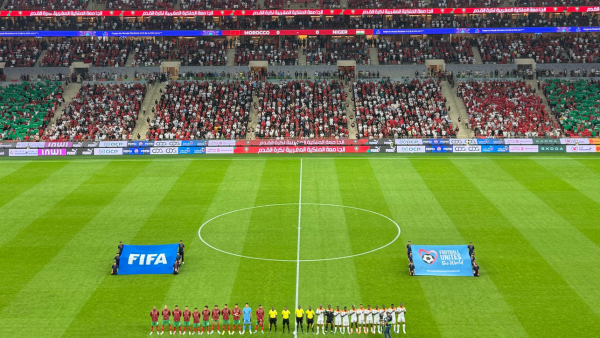
The Tournament Paradox: Where Expectations Meet Reality
While the cultural impact of the tournament remains undeniable, an interesting counter-narrative is emerging from the hospitality and local business sectors.
Has the corporate windfall of the World Cup been massively oversold?
Just weeks before kickoff, data from American Hotel & Lodging Association (AHLA) revealed a staggering reality check. 80% of surveyed hoteliers reported that World Cup room bookings are tracking significantly below initial forecasts.
In major tier-1 markets like Los Angeles, San Francisco and Dallas, hotel executives are openly calling early numbers a bust. Occupancy in some regions ARE actually tracking below a typical non-sporting summer.
Early optimism was heavily inflated because FIFA overcommitted and locked down massive blocks of local hotel inventory. Months before the games, FIFA quietly executed material room block releases. Some markets saw up to 70-95% of their contracted inventory suddenly vanish back onto the open market.
Geopolitical tensions, steep ticket prices, and unexpected bottlenecks in the U.S. travel visa vetting process have severely throttled the wave of high-spending international tourists that host cities prepared for. Instead, the audience is pacing to be overwhelmingly domestic.
Traditional summer tourists, terrified of hyper-inflated room rates and severe city congestion, are actively avoiding host markets. Modern soccer fans aren’t staying for weeks. Tracking data shows the average attendee books brief, one-to-two night stays centered strictly around match day.
The traditional “build a stadium and they will buy hotel rooms” playbook is broken. The value of the 2026 World Cup isn’t a traditional brick-and-mortar tourism boom; it is entirely digital, experiential and cultural.
The New Map of Influence
We are witnessing a structural evolution in how global entertainment is produced and consumed.
The 2026 World Cup has officially broken the mold. They are proving that sports can no longer exist in a silo separate from music, fashion and digital creator networks.
By transforming a sports tournament into an immersive, multi-city entertainment ecosystem, this event has set a new benchmark for global brand building. The finish line for the brands and creators participating this summer isn’t about surviving a high-profile weekend; it’s about cementing a permanent footprint in global pop culture.
The map of entertainment influence is being redrawn in real-time, and culture is the driving force.
FAQ:
- Has the U.S. ever hosted an event of this scale before? While the U.S. hosted the 1994 World Cup and multiple Olympic Games, the 2026 tournament is fundamentally different. With an expanded 48-team format, a 104-match schedule, and an entertainment infrastructure deeply integrated with streaming and social media platforms, the scale of global culture and digital immersion is entirely unprecedented.
- How does the World Cup benefit lifestyle brands not traditionally connected with soccer? Because soccer culture has deeply penetrated luxury fashion, streetwear and music, the World Cup serves as a massive lifestyle platform. Brands are utilizing high-profile clothing drops, localized creator studios and major concert events to tap into a highly engaged, global audience that views the tournament as a broader cultural festival.
- If hotel bookings are lagging, does that mean the event is failing commercially? Not necessarily. It indicates a massive shift in consumer behavior. The commercial success of the 2026 games is shifting away from traditional lodging and toward short-term rentals (which are up over 50% in markets like Houston) and digital/experiential brand activations. The economic energy is moving to the creator economy rather than traditional hospitality infrastructure.
- Why is the 2026 final incorporating a Super Bowl-style halftime show? FIFA is explicitly embracing an entertainment-driven model to maximize global pop-culture reach. By featuring icons like Madonna, Shakira and BTS, organizers are intentionally blurring the lines between elite sports and global entertainment spectacles to capture non-traditional sports viewers.