
The modern sports industry prides itself on measuring performance. We celebrate speed, power, endurance, recovery metrics, and data-driven evaluations. Media ecosystems revolve around statistics and athletic output, yet some of the world’s most physically demanding performers remain outside the cultural definition of “athlete.”
Dance, ballet and cheer exist at a strange intersection. They require elite levels of strength, flexibility, precision and endurance. However, they are still routinely categorized as entertainment rather than sport.
Cheerleading’s governing bodies have earned Olympic recognition, and competitive formats like STUNT are now advancing to NCAA championship status. Yet culturally, the stereotype remains: performance athletes and artists are seen as athletes secondarily.
This disconnect reveals a larger blind spot in sports culture. Athleticism is defined not by physiological output, but by visibility, broadcast value, and legacy structures.
As sports continue evolving toward hybrid forms of competition, the question becomes harder to ignore: If we judged athleticism purely by physical demand, would these performers still be considered “outside” of sport, or have we simply been measuring the wrong things?
Quick Highlights
- Research shows that professional ballet dancers can reach VO2 levels similar to endurance-based athletes during performance.
- Injury patterns in dancers mirror high-performance sports, with professional and pre-professional dancers experiencing overuse injuries at rates similar to gymnastics and running.
- Competitive dance already functions as a judged sport, using scoring systems based on execution, difficulty, artistry and synchronization, much like gymnastics and figure skating.
- Professional athletes regularly incorporate ballet and dance training to improve balance, strength, and injury prevention.
- Visibility, media rights and sponsorship, not physiology, often determine what qualifies as “sport,” leaving performance-based disciplines under-recognized despite comparable physical demands.

The Physiology of Performance
At a physiological level, the distinction between “athlete” and “performer” becomes increasingly difficult to defend. Ballet dancers, competitive dancers and cheer athletes routinely train with workloads that mirror elite sport environments. This includes strength development, cardiovascular endurance, mobility and repeated high-impact movement.
Research examining professional dancers shows that performance and rehearsal demand significant aerobic output. Cardiovascular demands can approach those seen in endurance-based training contexts. While dance is often framed as artistic expression, the physical reality includes sustained exertion and precise recovery between explosive sequences.
The biomechanical demands are equally substantial. Dancers require exceptional strength-to-weight ratios to execute lifts and controlled landings while maintaining technical precision and form. Many movements combine extreme flexibility with stability and force absorption.
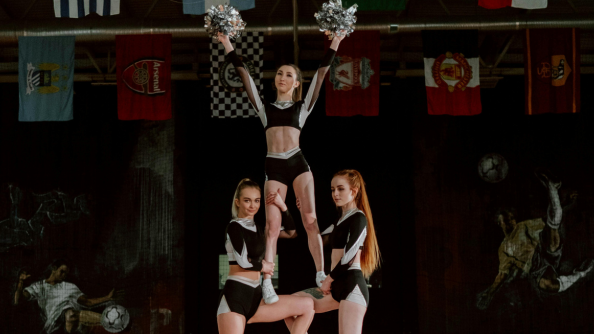
Cheerleading presents a similarly measurable athletic profile. Tumbling passes, aerial stunts and synchronized routines demand coordination, balance, and power output comparable to gymnastics-based disciplines.
If performance disciplines were evaluated purely through biomechanics, training load, and injury risk, their place within the broader athletic landscape would be far less disputed. The body does not distinguish between a leap executed for artistry and one performed for points.
The Role of Competition
One of the most common arguments used to separate dance and other “performance” sports from traditional sports is that they are “art, not competition.” The implication is that artistry somehow disqualifies physical performance from athletic legitimacy. Yet across many sports, the line between art and sport has never been as clear as this argument suggests.
Competitive dance already functions within structured judging systems. Athletes are scored on technique, execution, synchronization and performance quality, criteria that closely resembles scoring frameworks used in established judged sports. Competitive circuits continue to grow internationally. They bring standardized rules and ranking systems that mirror the competitive structures found throughout athletics.
Olympic figure skating offers a clear example of sport and artistry coexisting. The International Skating Union’s judging system formally combines technical elements with program components such as composition, presentation and artistry. Performance quality is not separate from sport. It’s embedded within how athletes are evaluated.
Gymnastics operates similarly. Olympic scoring explicitly includes artistic components alongside execution and difficulty. This shows that aesthetic expression and measurable athletic performance have long coexisted at the highest levels of sport.
Cheerleading has followed a comparable evolution. Once widely viewed only as sideline entertainment, modern cheer now features structured competitions and world-level championships governed by standardized rules and judging criteria. Events such as the ICU World Cheerleading Championships bring national teams together under international sport governance. This reinforces cheer’s role as a global competitive discipline.
The existence of these systems raises an important question: if artistry and competition can coexist in figure skating and gymnastics, both as fully recognized sports, why are other performance-based disciplines still viewed differently? The distinction appears less rooted in competitive structure and more heavily influenced by historical perception, media exposure and tradition.
Media & Market Influence
Recognition in modern sports culture rarely develops from physical demand alone. Visibility, shaped largely by media and market forces, plays a central role in determining which activities receive legitimacy.
Television and streaming contracts have become some of the strongest indicators of cultural status within sport. Media rights generate revenue and define which competitions audiences see regularly, which athletes become household names, and which leagues attract long-term investment. As media exposure grows, sports move from niche participation to mainstream relevance.
Sponsorship tends to follow that visibility. Brands invest where audiences gather, meaning broadcast exposure often drives commercial partnerships more than the inherent difficulty or athleticism of a discipline. This dynamic can create a feedback loop. Greater visibility attracts more sponsors, which in turn fuels growth and broader recognition.
Institutional legitimacy frequently follows investment. Governing bodies, collegiate programs and professional leagues expand where sustained revenue and audience demand exist. Recognition is less about whether a discipline requires elite skill, and more about whether it can demonstrate commercial visibility within the modern sports ecosystem.
The result is a sports landscape shaped as much by economics as by athletic performance. Activities that are easy to package for television and sponsorship often gain legitimacy faster than disciplines with comparable physical demands but less established media infrastructure. The sports industry rewards what it can monetize, and visibility can matter as much as physiology in defining what the public recognizes as sport.
The Opportunities Ahead
As the definition of athleticism continues to evolve, the gap between performance-based discipline and traditional sports presents a clear opportunity both culturally and commercially. Dance, ballet and cheer already demonstrate comparable training demands and competitive structures. The next step may depend on how the industry chooses to invest in and market these athletes.
One emerging area is name, image and likeness (NIL) monetization. The rapid expansion of NIL in collegiate athletics has created new pathways for athletes to build personal brands outside traditional sponsorship models. As dance and performance programs grow at the collegiate level, dancers may increasingly tap into that same creator-driven economy.
For brands, this creates potential for expansion into underdeveloped performance-based markets. Audiences are increasingly engaged with hybrid forms of sport and entertainment across digital platforms. This allows for disciplines that combine artistry with elite physical skill to present new storytelling opportunities and sponsorship categories beyond traditional team sports.
Expanding the Definition of Elite
Athleticism is continuously evolving. As sport continues to blend entertainment, performance and competition, the traditional boundaries that once separated athletes from performers are becoming difficult to justify.
One of the clearest signals of this shift is the emergence of the newly founded Pro Cheer League (PCL), which represents a significant step toward the professionalization of cheer as a standalone athletic discipline. As leagues like the PCL gain visibility, they help challenge outdated definitions of elite sport.
The future of sports culture may not depend on choosing between art and competition, but on recognizing that the two have long coexisted. As media, institutions and brands continue to reshape the landscape, the next generation of athletes may be defined less by the label attached to their discipline and more by the measurable performance they bring to it.
The next era of sport should acknowledge what the body has always known. Ballerinas, dancers and competitive cheerleaders are not redefining athleticism because they have embodied it all along.