
For a sport that’s only 60 years old, pickleball has earned a reputation as the fastest-growing sport in America.
Once a niche backyard pastime, pickleball is now almost impossible to ignore. The appeal stems from its convenience and low-commitment nature. The sport itself is low-maintenance and low-stakes, and asks little of you. No expensive gear, no steep learning curve, no major time commitment.
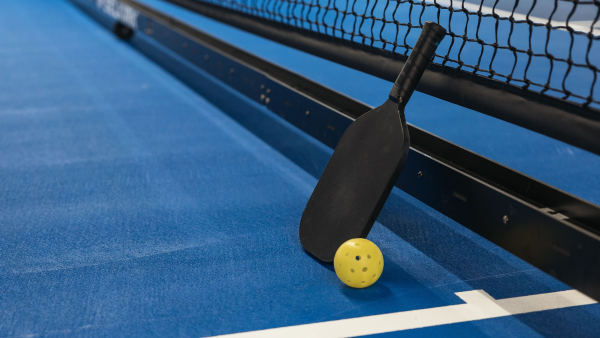
Just a paddle, a ball, and a court.
That accessibility, sense of community, and inexpensive equipment attract those who want to get their body moving without committing to a full-time hobby that will drain the bank.
Here’s a closer look at where the game came from, why it’s exploded in popularity, and what’s driving so many adults to fall in love with it.
Quick Highlights
- In 2024, it was reported that the 2020 COVID-19 pandemic spiked a 21% growth in participation due to an influx in sports and fitness-related activities.
- Approximately $152.8 million has been invested in building and upgrading pickleball facilities across the country.
- The average age of a recurrent pickleball player is about 35 years old.
- According to the Sports & Fitness Industry Association (SFIA), pickleball engagement grew 223.5% over three years, affirming the game’s rapid growth.
History of Pickleball
Due to the spike in popularity, the common misconception is that the game was created within the past few decades. The concept of pickleball began in the summer of 1965 on Bainbridge Island, Washington.
In an effort to occupy their children on a rainy day, vacation home neighbors Joel Pritchard and Bill Bell began improvising on the badminton court. With wooden paddles and a wiffle ball in hand, concepts of a game came into fruition.
Eventually the adults favored the game considerably more than the children.
The pickleball rules upheld today were crafted through trial and error. The 7-foot non-volley zone known as the “kitchen” prevented players from spiking at the net. The height of the net at the sidelines is measured to be 36 inches tall because it is set to the height of Joel Pritchard’s waist.
Barney McCallum, their neighbor, began playing with Pritchard and Bell. It was McCallum who created the paddle design. He used ping-pong paddles as inspiration. Elongating the handle, strengthening the density, and squaring the shape.
The three men worked together to redefine the scoring and penalties to shape the classic pickleball game played today.
How Pickleball Gained Traction
McCallum, Pritchard, and Bell spread the game of pickleball. Through word of mouth, the game to began to gain notoriety. Rapidly, makeshift courts were being used and mimicked on residences.
Joel Pritchard was establishing himself as a politician at the time. He would familiarize the guests of his political gatherings with the game.
Meanwhile, the National Observer published the first ever article about pickleball. McCallum began to mass-produce equipment, leading to the commercialization of the game.
Recent Rise in Popularity
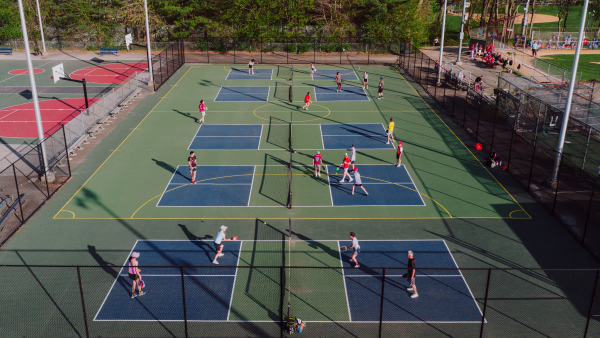
The COVID-19 pandemic facilitated the influx of players and facilities. Although pickleball was invented in 1965, its popularity has risen from niche to mainstream throughout the past decade.
According to the Sports & Fitness Industry Association (SFIA) Topline Participation Report, pickleball engagement grew 223.5% over three years. In 2024, it was reported that the 2020 COVID-19 pandemic spiked a 21% growth in participation due to an influx in sports and fitness-related activities.
Restrictions on indoor gatherings provided limited options for those who enjoy physical activity and social interactions. Many sought an answer that would allow them to engage with others while staying active.
Since pickleball’s versatility allows the game to be played either indoors or outdoors, it was seen as a feasible option.
Attributes to Adults
The average age of a recurrent pickleball player is about 35 years old.
Compared to children, adults are less likely to attempt to try new sports due to cost and skill deficits. Recreational sports are seen as a high-maintenance activity that requires attentive skill.
Unlike other sports, pickleball requires little equipment or knowledge of the game’s technique to play; paddles and the ball are a necessity, the rules can be digested within a match. Those who aren’t familiar with other sports often get discouraged, assuming that ignorance means that learning to partake in a recreational activity is futile. Players don’t need years of experience or impeccable athletic knowledge to engage.
Accessibility is a big attribute of the game. It’s a low-impact sport due to the compressed court size, causing less stress on the joints. Since the game utilizes an underhand serve, it is less likely to cause injuries due to the low movement and motion that typically is inflicted from sports with a wider range of motion. There are also different versions of the game that are considered accessibility-friendly, such as wheelchair pickleball.
The game is social, which gives players a feeling of community. Due to the short match times (15 to 25 minutes per game), there is leeway for chatting to fill the space in between games.
Pickleball’s Push Toward Professionalism
Professional pickleball entities have also developed since the sport has gone mainstream.
The PPA (Professional Pickleball Association) Tour was founded in 2019 and hosted it’s first professional and amateur tournament in February 2020. The tournament is held year-round across the United States. Players compete in men’s singles, women’s singles, men’s doubles, women’s doubles, and mixed doubles divisions.
The International Tournament Series was introduced in 2025, broadening tournaments worldwide.
Major League Pickleball (MLP), the PPA Tour’s sister company, focuses on team-based competition. Both are owned by the United Pickleball Association (UPA), which created the UPA-A in 2024 to oversee rules, equipment testing, and growth.
The tournaments are offered for all ages and skill levels, which remains faithful to the general appeal of pickleball: inclusivity and accessibility.
New Pickleball Courts Nationwide
Due to the rise in popularity, thousands of pickleball courts are beginning to pop up nationwide.
Approximately $152.8 million has been invested in building and upgrading pickleball facilities across the country. This includes existing facilities.
Even though it is considered a trend in the sports world, businesses don’t expect attendance to decline anytime soon.
Whether it’s the competition, the camaraderie, or simply the chance to stay active, pickleball has proven it’s far more than a passing trend. It’s a game more adults are eager to pick up, one match at a time.
FAQ:
- How did pickleball get its name? This is widely disputed; it’s either from the rowing term pickle boats, which is the boat to finish last, or it’s names after the Pritchard family dog, Pickles.
- Is pickleball only for adults? No– the sport gained popularity due to its inclusivity and accessibility for all ages.
- Do I need experience to start playing? Rules and regulations coincide with pickleball. However, the learning curve is slight.
- How is pickleball different from tennis? Pickleball combines badminton, ping pong, and tennis. Compared to tennis, pickleball has a smaller playing area and a slower-moving ball.
Athelo Group Pickleball Classic
Grab a paddle and join us for a day of friendly competition for a great cause! Whether you’ve been playing for years or never picked up a paddle, all skill levels are welcome. This event is about community as much as it is about competition.
Join us on October 23rd, 2026 at The Sports Haus in Norwalk, CT, and come play for a purpose. Every dollar raised goes directly to Stamford Health’s Bennett Cancer Centers, supporting patient care, research and financial assistance programs for those who need it most.
It’s more than just a game, it’s a chance to make a difference.