
For the past 30 years, the United States Women’s National Soccer Team (USWNT) has been the dominating force not only in women’s international soccer, but female sports across the globe.
More recently, the USWNT has faced a decline in both on-field dominance and audience engagement. This signals a shift in its once unwavering supremacy.
This is not simply due to declining interest. It’s the result of a perfect storm of reduced competitive dominance, fragmented media consumption and a shift in global women’s soccer that has redistributed attention away from a once singular powerhouse.
The USWNT now finds themselves in a crossroad of regrowth and rebuilding, attempting to maintain their culture and competitive nature.
Quick Highlights
- The USWNT have won 4 World Cup titles and 7 Olympic medals, 5 of which being gold.
- The USNWT had never finished worse than 3rd place until 2023, when they exited in the Round of 16, their earliest ever finish.
- After years of lawsuits, in 2022 the USWMNT had a historic $24 million dollar settlement.
- Globally, soccer already dominates: about 3.5 billion people watch the sport, making it the most viewed sport in the world.
Past Dominance
Coach Anson Dorrance was brought to the USWNT in 1986. He was able to transform the team into a powerhouse that led them to be one of the most iconic teams of 1999. When the 1999 World Cup was to be hosted on United States soil, the team made it their mission to win and increase viewership and awareness of the team.
The 1999 World Cup exploded, selling out stadiums like the Rose Bowl, which was previously unheard of for a women’s event. This was due to the combination of unrelenting dominating wins and major stardom from players like Mia Hamm and Michelle Akers. The team was able to leverage their talent and secured major brand deals with household names like Nike and Jordan.
Not only did the U.S. Women win the 1999 World Cup in a dramatized penalty shootout with China, they went viral for the way Brandi Chastain ripped her jersey off and fell to her knees on the field.
A Dynasty Takes Hold
After the 1999 World Cup, the success and relevance of the USWNT skyrocketed.
Since their founding in 1985, they have won 4 World Cup titles (and placed in multiple others), and 7 Olympic medals, 5 of which being gold. The media attraction and performance success of the team in the early 2000s stayed strong, then proceeded to exceed expectations from 2010-2019.
The team won back to back World Cups and an Olympic gold in that time, solidifying themselves as a top competitor. The energy surrounding the team during and following their 2015 and 2019 World Cup wins was worldwide.
The team consisted of long standing household names like Megan Rapinoe, Abby Wambach, and Alex Morgan. These players appeared in large-scale international ad campaigns and dominated stat sheets on the field.
The team was not only the biggest talk in women’s international soccer, but women’s sports in general. Their influence and dominance was also heightened due to the lessened success of the United States Men’s National Team.

Change in “Invinceability” Factor
During 2020 and the start of the worldwide COVID-19 pandemic, the USWNT faced obvious changes. The 2020 Olympics getting pushed back to 2021 was the first time doubts circled about the team.
Following an extremely early tournament elimination, a majority of the world speculated on if the team was on a decline. A team that had once been so dominant being knocked out so early, even during a rebuilding phase, unsettled fans.
Following their tough break in 2021, many of the team’s prominent stars announced retirement, leaving long-term fans wondering where the team was going from there. The team came back and won the 2024 Olympics, however they lost many games and players along the way.
Rise of Global Competition
Not long ago, teams like Spain and Portugal weren’t seen as consistent contenders on the international stage.
Now, they’re legitimate contenders. Spain’s 2023 World Cup win was a signal that the gap had officially closed. The rest of the world had not just caught up to the USWNT, they reshaped the competitive landscape entirely.
This shift didn’t happen overnight. It was the result of years of increased investment in women’s soccer across Europe and South America. Clubs began funding youth development programs, and national teams started to prioritize long-term growth rather than short-term participation.
The result is a deeper, more competitive global field. Countries that once lacked experience are now producing technically sharp, tactically disciplined players who can compete at the highest level. International games and tournaments feel less predictable, more competitive and ultimately more compelling.
For the USWNT, this means the old formula no longer works. Dominance is no longer assumed. It has to be earned.
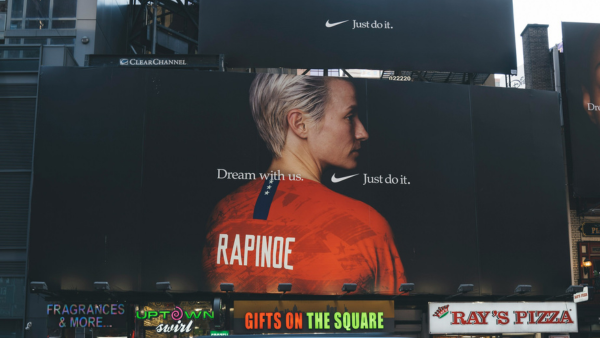
Media and Viewership Habits
Media habits have drastically changed since the peak years of USWNT dominance, which has shifted how the fans are able to consume them.
In the late 1990s and early 2000s, major events like the 1999 FIFA Women’s World Cup were broadcast on widely accessible television networks. This allowed millions of viewers to tune in collectively. It also created shared cultural moments that amplified the team’s visibility and made players widely recognizable.
Today, sports viewership is far more fragmented. Games are often split across multiple streaming platforms, cable networks and subscription services, making it harder for casual fans to consistently follow the team. As a result, even when the USWNT performs well, their games may not reach the same unified, massive audiences that once fueled their widespread popularity.
At the same time, the rise of social media platforms like Instagram, TikTok, and X has also changed how fans interact with athletes and teams. While these platforms give players more control over their personal brands and allow for direct fan engagement, they also shift attention away from full games to short highlights. This creates a space where fans feel as though they do not have to pay for a subscription and tune into the full match live.
Political and Social Controversies
As stated, The USWNT has consistently outperformed the men’s national team (USMNT). Even given this strong outperformance, they were continuously paid a considerable amount less than the men. Their fight for equal pay was a longstanding battle that influenced many other female athletes and teams.
The USMNT was awarded 3x more than the women for an early exit in the 2014 World Cup, compared to the women’s 2015 World Cup victory. After years of lawsuits, the women had a historic $24 million settlement in 2022. It guaranteed equal pay moving forward for men’s and women’s soccer.
While this was a positive and historic moment, some sports fans and people across the world did not see it that way. The women had a more guaranteed salary whereas the men had a play for pay structure, which led to extensive backlash following this trial.

Dominance to Transition: The Evolving Legacy
The story of the USWNT is no longer just one of dominance, but of evolution in a rapidly changing global and cultural landscape.
While their recent results and shifting audience engagement may suggest a decline, the reality is far more complex. Increased global competition, changing media consumption habits and ongoing social conversations have reshaped the environment in which the team operates.
As the USWNT enters this period of rebuilding and adaptation, the team’s success will be measured not only by wins. It will be measured by their ability to grow, connect with new audiences and redefine what sustained excellence looks like in a more competitive and modern era.
FAQ:
- Is the USWNT actually declining or is the rest of the world just catching up? More accurately, the game is catching up. Funding is improving in countries that once could never compete with the United States. Visibility due to the USWNT’s successes has led others to see the possibility.
- What made the 1999 Women’s World Cup such a turning point? The 1999 World Cup brought unprecedented attention to women’s soccer in the U.S., with sold out stadiums and iconic moments that helped launch the USWNT into mainstream popularity.
- How has social media changed the way fans ingest the game? Platforms like TikTok and Instagram allow fans to engage through highlights and player content instead of watching full matches, which can reduce traditional viewership.
- How long was the fight for equal pay? While the ideology circled for much longer, the lawsuits lasted around 6 years, with the most visible pushback coming in 2016.
- What does the USWNT’s future look like? The team is in a rebuilding phase with younger talent. The team is restrengthening with the likes of Mallory Swanson and Sophia Smith returning from maternity leave, and Trinity Rodman from injury. While dominance may look different moving forward, they remain one of the strongest and most influential teams in the world.