The process of becoming a NASCAR driver is a long and tedious road. Driving at top speeds of 200 mph is not something that the average person can imagine doing, but for some it is their entire life and not just the actual driving part of it.
NASCAR and global professional motorsports as a whole is a sport that continues to evolve at a rapid rate and continues to gain interest from several different stakeholders. As fascinating as the cars, on-track battles, and business side of this world can be, something almost every Driver is asked when meeting fans or strangers is “how did you get into this?”
Similar to other sports, most NASCAR drivers begin driving as children. They get exposed to the sport in their early life, racing go-karts. Eventually, they work their way up to cars as they get older and more comfortable with the vehicles. The cars get faster and more powerful as they get older in age and improve in skill. The ultimate goal of progression is to be racing under the big lights in front of thousands on the NASCAR stage. Through countless hours of training, driving and practice, only the best of the best will have what it takes to make it to the NASCAR stage.
There are four major national racing series which include the NASCAR Cup Series, NASCAR Xfinity Series, NASCAR Camping World Truck Series, and ARCA Menards Series. Once they get recognition from high-level drivers, racing teams or companies that want to sponsor them, they can go to racing school and get a license. This is where the process towards professional NASCAR driving gets very competitive.
The responsibility of growth both on the track but the business side weighs very heavily on the Driver which is different from many other sports. Few have the luxury of letting their talent lead them to the pearly gates of victory lane and top tier team benefits. The business side of motorsports is an ever evolving space that is far from crystal clear.
The interesting thing about obtaining a NASCAR racing license is that, according to many NASCAR drivers, there isn’t a definitive way to get into the NASCAR scene as a driver. While many follow the same route, NASCAR is not set up like many other sports. There is no path to NASCAR through college athletics so it is very important to make connections in the sport.
The most straightforward path to becoming a NASCAR driver is gaining racing experience as young as possible and winning important races to gain notice and create a buzz within the community. While getting a license is a must, many paths can be followed.
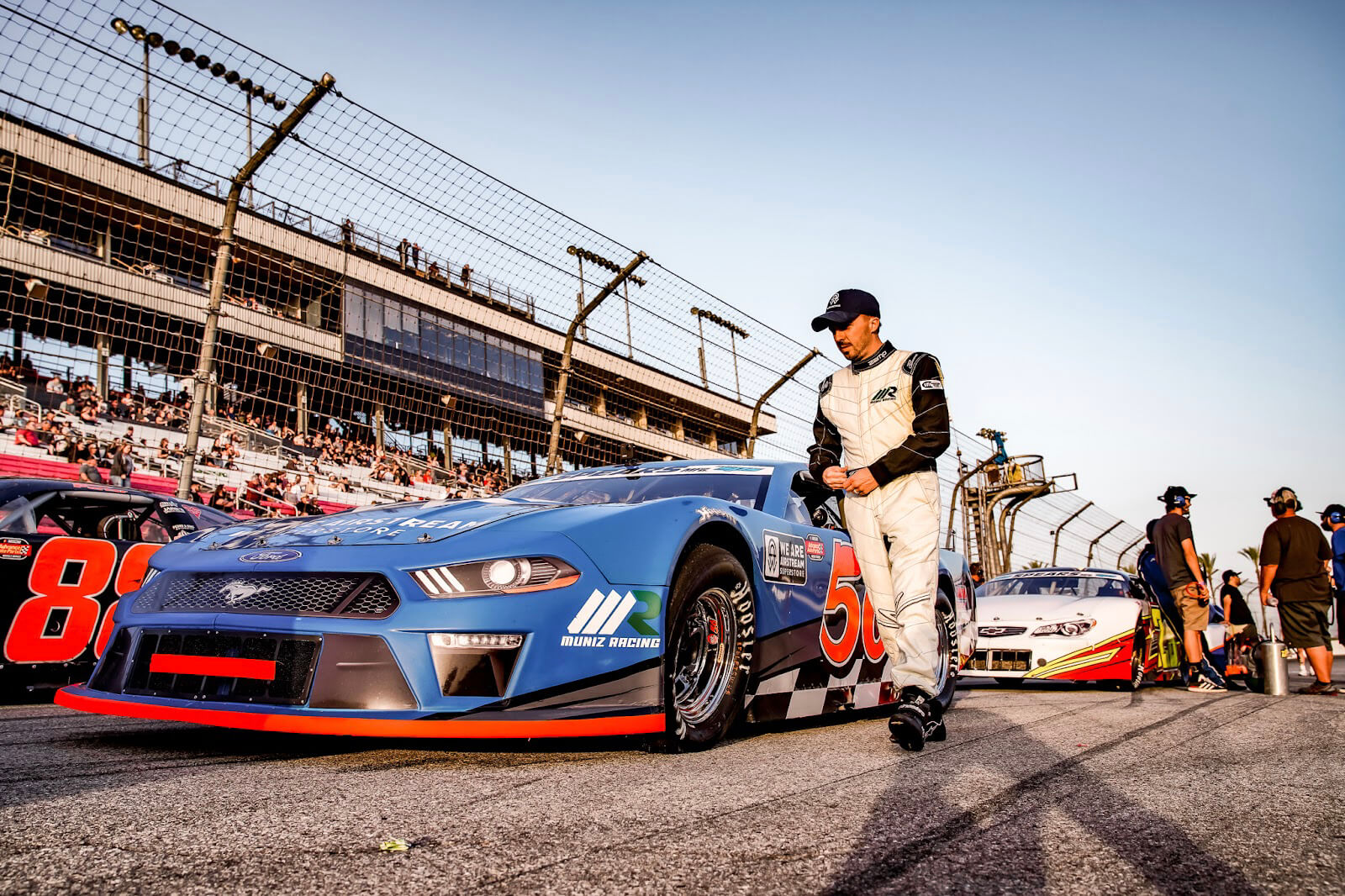
There are outliers in the pack like Frankie Muniz that have taken a different route in the pursuit of becoming a NASCAR driver. He was mostly known for his acting endeavors throughout the early 2000’s. Frankie Muniz has also quietly had a progressive career in racing that has stemmed from his passion for sports cars and motorsports racing. In late 2021, Muniz began putting the plans in place to go racing full time as a professional motorsports driver with his primary goal being full time NASCAR racing in 2023. Muniz is licensed to race in the ARCA Menards Series and will make an announcement about his racing plans for the 2023 season soon.
Although there is not one straight path to becoming a NASCAR driver, it is possible for anyone with the drive and ambition to pursue a career in racing. NASCAR driving requires a lot of skill and it takes a certain mindset to achieve such high levels of driving. One thing is clear in every driver’s mind, their ultimate goal is to be racing in NASCAR Cup series going for gold.
Over the past couple of weeks, people had the opportunity to watch motorsports races such as F1 Series in Monaco, the Indianapolis 500, and NASCAR’s Sonoma 350. Watching drivers like Conor Daly, who led the most laps in the Indy500, and Corey LaJoie, who was in the top 5 with 25 laps remaining at the Sonoma 350, had me thinking about the strategy that comes into every race.
Why Strategy Is Winning in Motorsport from the Start Line
For most other team sports, the strategy comes before the game based on the opposing team’s players as well as a couple of adjustments throughout the game. However, there is a lot of strategy and in-race adjustments that go into the success of a NASCAR race. Tire pressure, pole position, mileage of the track, gas mileage, and in-season position are some factors that impact weekly strategy. Also, NASCAR strategy is important because the season is short and the position after every race can determine the success and value of a team and impact the different partners that a team can bring in. This blog post will talk all about strategies in motorsports specifically looking at different factors, types, and the impact a strategy can have on a driver’s season.
Tire Pressure, Fuel Loads & Real-Time Adjustments
Two important factors in strategy that are mentioned throughout racing broadcasts are tire pressure and the amount of fuel remaining. These two factors will determine when a driver should pit so that way they can swap in new tires and increase the amount of fuel. Motorsports tires are not like your typical car tires, they are actually called “slicks.” They are called this because “they are smooth and are a softer” (HowStuffWorks) than regular tires. The high speeds and miles are driven which causes these tires to wear out, and when these tires wear out, they cause the car to lose grip which becomes unsafe for the driver. So, these drivers need to pit every so often so that way they do not lose grip on their car. When a team decides to replace their tires, they typically replace either two of the tires or all four tires at once. “Replacing two tires typically takes 6.5–8 seconds while replacing all 4 tires takes roughly 14 seconds.” (Rookie Road) The advantage of only changing two tires is to spend less time on the racetrack while also regaining some of the grip, but this means that the driver would have to come back in to get the other two tires changed out. The advantage to changing all 4 tires is that you regain all possible grip on the car while also being able to spend more time out on the track, but this means you are spending more time in the pit where you could get lapped by other cars. If a car is towards the top of the pack, they may want to only replace two tires at a time so that way they can keep up with the rest of the leaders, while a car in the back may want to change all 4 so that way, they can make up ground by being able to stay out on the track longer.
The amount of fuel remaining is also a determining factor in strategy. This means that a driver must take into account how long each lap is and how fast they would like to go per lap. For example, the Indy500 is a 2.5 miles track where each driver must complete 200 laps (so 500 miles in total). At this past 500, the average speed was 190 mph, so each driver drove between 27–40 laps before needing to enter pit road. The average time it takes to fill the car halfway full of gas is roughly 7 seconds while it takes 14 seconds to fill the car all the way up with gas. A driver could decide to push his fuel closer to the 40-lap mark so that way other drivers pit and they can take a lead, but this means that they will have to pit eventually and move behind everyone else. This would be an advantageous move earlier on in the race when the driver knows that there will be more pit stops. Another strategy, similar to what “Ed Carpenter did in this year’s Indy 500” (NBC Sports), is pit before everyone else. If you are positioned in the middle of the pack, you can pit before everyone else which means you will have more fuel and move to the back of the pack, but everyone will eventually need to pit which will put you into the front of the race. This strategy can be beneficial towards the end of a race if the drive is confident that he can conserve enough fuel to get him to the finish. Strategies change based on other factors such as cautions and how other drivers are competing.
Pole Position, Pit Stops & Partnerships: The Bigger Picture
Another factor in determining a strategy for a race is based on the drivers qualifying pole position. Pole position is where each driver will start when the green flag is dropped for a race. A driver in Pole position 1 will have a different strategy than a driver who has pole position 25; however, the knowledge of where the driver will be starting can allow the team to plan their race and how they want to execute it. For example, a driver at the start of the pack can determine that they want to set the pace for the race by starting out fast or slow. A driver that is typically in the back of the pack can try and use the “caution strategy.” “This is when a driver, in position 15–30, takes his last pit before everyone else.” (Malzahn Strategic) They hope that the caution flag comes out after they pit so that way a lot of other driver’s pit, and they can move to the front of the pack without having to pass other cars. This then gives that driver a chance to win with only a few laps remaining. This strategy has worked from time to time, but I personally do not find it to be the most effective strategy because you are hoping that someone else in front of your screws up, and that might not always happen.
What Motorsports Strategy Teaches Brands & Sponsors
As you can see, a driver and his or her team need to think about a lot of different factors when determining a strategy for race day, and honestly most of these strategies change frequently while the race is going on. However, there is more than just winning that comes from having a productive strategy. Having a good strategy can also impact partnerships and the future of a driver. For example, if a driver uses the “caution strategy” and finishes towards the bottom of every race but happens to finish 5th in one race different brands are going to notice that this strategy is not effective and may decide not to partner or sponsor this driver. While another driver might determine that they cannot win every race, so they decide to position themselves within the top 15–20 instead of swinging for the fences. This shows different brands that they have found an effective strategy of placing high in races and are looking to improve every week. This makes the brand more inclined to partner with them. Also, if a driver can not find a good strategy, then their race team is more likely to release them as a driver the following year. Winning is important in motorsports, but I would argue that making money in partnerships is equally as important.
Join us in making a difference. Tell us a bit about yourself and we’ll be in touch with sponsorship details.
By submitting this form, you agree to be contacted by the Athelo Group team regarding sponsorship opportunities.
We use cookies to ensure that we give you the best experience on our website. If you continue to use this site we will assume that you are happy with it.