NASCAR Legal Showdown: What’s at Stake

In October 2024, NASCAR teams 23XI Racing and Front Row Motorsports filed a lawsuit challenging NASCAR’s new charter system, claiming that NASCAR and Chairman Jim France have violated U.S. antitrust laws.

With so much uncertainty around the charter agreement, the outcome could reshape NASCAR’s business model and competitive landscape. The lawsuit is still ongoing, making this a case fans will want to watch closely.

Quick Highlights:

  • There are 36 charters in the NASCAR Cup Series, and each one guarantees a team entry into every points race.
  • Charters are valuable business assets currently worth an estimated $20 to $25 million, with some selling for over $40 million.
  • Under the charter agreement, teams receive about 39% of broadcast revenue, while NASCAR keeps 51% and tracks receive 10%.
  • Teams receive a relatively small share of broadcast income, so they rely on sponsorships for 60% to 80% of their yearly revenue.
  • NASCAR’s Year-End Point Fund, which awards money based on the final standings, is expected to grow from $33.7 million in 2025 to over $40 million by 2031.
  • A U.S. District Judge recently stated that NASCAR effectively holds a 100% market share in premier stock-car racing, which has become a key point in the antitrust dispute.
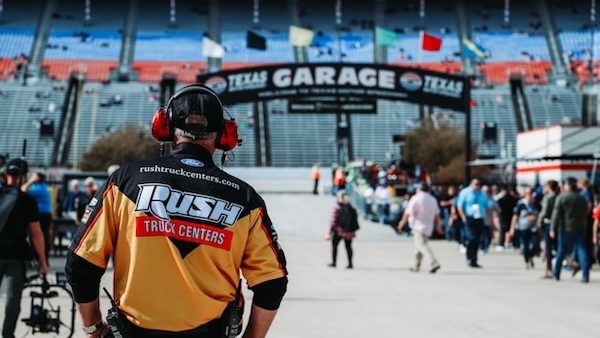
nascar pit crew member

What Led to this Dispute?

NASCAR introduced the charter system in 2016, giving 36 teams guaranteed entry into races and a share of revenue. The value of a team is now heavily tied to its charter, which helped stabilize the sport financially.

A new multiyear charter agreement was proposed for the 2025 season, and many teams declined to sign on. They argued the terms would reduce their independence and create anticompetitive conditions. 

In October 2024, 23XI Racing and Front Row Motorsports filed an antitrust lawsuit against NASCAR and Chairman Jim France. With charters now selling for over $40 million, teams say NASCAR holds too much power.

Progress Since the Initial Filing

Almost immediately after the filing, the case drew national attention. The involvement of Michael Jordan as a co-owner of 23XI Racing brought even more focus to a lawsuit that challenges how NASCAR governs its teams.

In the months that followed, the case moved quickly through the courts. The teams secured an early win when a federal judge granted a temporary injunction allowing them to compete as chartered teams for the 2025 season while the lawsuit continued.

NASCAR later appealed the ruling. As a result, the teams had to race as ā€œopenā€ teams, which meant they no longer had guaranteed race entry or payouts under the charter system.

The litigation has since continued through discovery, summary-judgment motions, and settlement discussions. As of October 2025, both sides are still negotiating. Unless an agreement is reached, the trial is set to begin on December 1.
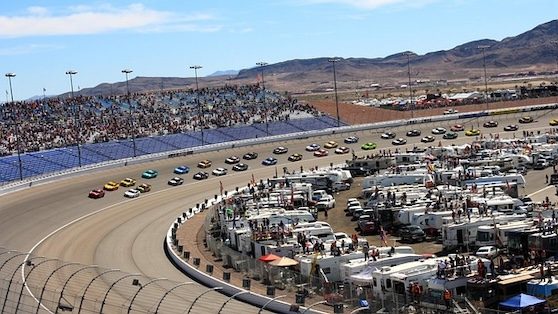
nascar race track

23XI Racing and Front Row Motorsports’ Perspective

23XI Racing and Front Row Motorsports argue that the new charter agreement included release clauses and other provisions that forced teams to accept terms under threat of losing their guaranteed racing status.

The teams argue that NASCAR’s dominance in the stock car racing market allows it to exclude or severely disadvantage teams that push back. According to the lawsuit, these terms harm competition, reduce team revenue opportunities, and impact the marketplace for charters and team ownership. 

Their main goal in court is to obtain relief and possibly rewrite the terms in the charter that they see as unenforceable. They also intend to limit NASCAR’s future use of such clauses. 

NASCAR and CEO Jim France’s Argument

NASCAR argues that, as the governing body of a national racing series, it has the right to set rules and contract terms that ensure the sport operates smoothly. This includes protecting its commercial relationships with tracks, broadcasters, and sponsors.

They argue that standard contract features like releases, exclusivity, and noncompete-type provisions are lawful and necessary to run a coherent national series.

Jim France and NASCAR emphasize how its charter rules, track exclusivity, and performance standards are essential to maintain broadcasting deals and other necessities in operating a racing series. 

From NASCAR’s perspective, allowing teams to pick apart the agreement would create instability across the entire Cup Series.
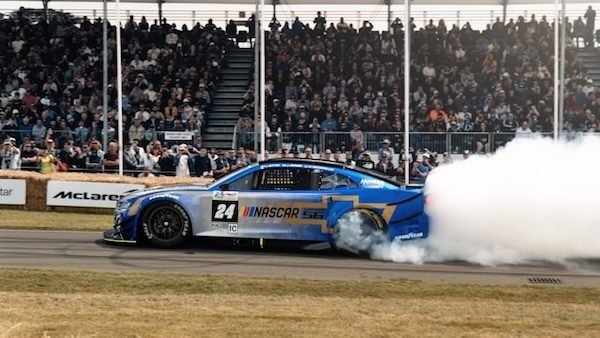
car in nascar race

What if 23XI and Front Row Win?

If 23XI and Front Row win, the most direct outcome would be changes to NASCAR’s charter agreement. The court could force NASCAR to renegotiate charter terms with teams, reducing NASCAR’s control over charter pricing and creating a more open market.

Beyond the charter rewrite, the teams are also seeking broader changes to how NASCAR operates. Their goals include requiring NASCAR to divest from the racetracks it owns and allowing more stock-car racing events at Cup Series venues.

A ruling in the teams’ favor would reshape NASCAR and set a precedent for other sports leagues. Fans could see more transparency and stronger protections for team ownership in the future.

What if NASCAR Wins?

If NASCAR wins, it will maintain a firm grip over charter terms, transfers, and performance rules. That result would bring stability to the Cup Series and keep TV partners and sponsors confident in the system.

A victory for NASCAR could also push charter values even higher, since guaranteed entry would remain tightly controlled and demand for the 36 charters would stay strong.

This result would reinforce NASCAR’s authority over the sport and limit future antitrust challenges. It would signal that leagues can continue to set restrictive terms without risking legal consequences.

No matter which side prevails, this case will play a major role in how professional racing is governed and will define how much or how little power teams have in shaping the future of the sport.

NASCAR is Reducing their Carbon Footprint

When thinking of NASCAR, the brain doesn’t immediately associate it with environmental efforts or being a sport that focuses on sustainability; it may seem like it is amassing quite a carbon footprint. 

Why NASCAR’s Carbon Footprint Matters

A single race car takes between 65 and 75 gallons of gas for a Saturday race; multiply that number by 40 and you have about 2,600 to 3,000 gallons of gas used in one day’s race. In a single day and on one track, NASCAR vehicles have the potential to release 120,000 pounds of carbon dioxide. Though these numbers may seem alarming, NASCAR takes the steps necessary to become a more sustainable sport and leave less of a carbon footprint one race at a time with NASCAR Green.

NASCAR Green: Racing Toward a Sustainable Future

NASCAR Green is an industry effort and initiative that is working to minimize NASCAR’s environmental impact while bringing value and inspiration to the motorsports industry, its partners, employees, and fans. NASCAR had always wanted to influence, educate and inspire our fans on fuel efficiency, reforestation, sustainability, etc., and with that, the beginning of this journey involved with is automotive fluid recycling which safely recycles and transports oils, is in every NASCAR garage as well as many team shops

This initiative takes place at NASCAR events throughout the racing season. It incorporates racing on a blended biofuel called Sunoco Green E15 that assists with in-venue recycling efforts, food diversion, solar-powered tracks, and lighting fixtures.

One early initiative involved promoting the use of high-MPG vehicles, for which they partnered with the Environmental Protection Agency and in 2009, a NASCAR team called Hall of Fame Racing purchased carbon credits to offset half of its emissions per race, practice session, and even travel.

In another NASCAR division, one driver even purchased and tended to an acre of rainforest to offset their carbon emissions.

NASCAR Carbon Footprint

Sustainability in Action Across NASCAR Tracks

In addition, NASCAR efforts made through the ā€˜NASCAR Tree Planting Program’ have resulted in more than 500,000 trees being planted across the country, specifically in areas affected by climate-related natural disasters.

Sustainability in NASCAR is more than what is being put into the vehicles and how it affects the environment, but also how to give back to help and improve the environment and its well-being. Many NASCAR tracks and teams are also implementing renewable energies as well as more energy-efficient options in their day-to-day operations. Things like aluminum, plastic, and cardboard recycling have now become an operational function for many NASCAR venues and a normal part of their business operations.

Similarly, initiatives like this are taking place at venues all over the country, Daytona International Speedway, for example, has created the Daytona Rising project and partnered with Florida Power and Light Company to create the FPL Solar Pavilion and Solar Canopy to provide shade for fans along with the FPL Solar Park. Collectively, all three consist of over 7,000 solar panels that generate zero-emissions energy.

The Broader Impact on Motorsport’s Green Revolution

So why is this important? These days, environmental awareness is at an all-time high, and looking for ways to become more sustainable and environmentally safe is a top goal for many companies, organizations, and industries all across the globe and NASCAR is no exception. It may be easy for NASCAR fans to feel uneasy about supporting a sport that may seem like it is impacting the environment negatively, but that is simply not the case anymore.

While it is true NASCAR cars burn more fuel than their street-legal cars and vehicles, some of what they burn is ethanol. Fuel that includes ethanol, like NASCAR’s E15, is cleaner than the type of fuel some road vehicles burn derived from plants and it is a renewable resource. And to make things environmentally friendlier, NASCAR cars convert heat into power better than many road cars.

Though these initiatives are new and NASCAR wasn’t always considered environmentally safe, they are turning things around. And while most of NASCAR’s fuel blend remains gasoline, adding 15 percent ethanol to the mix allows for far cleaner fuel than you might find at your local gas station.Ā 

Not only do the initiatives taken by the NASCAR industry implement big changes within, but other industries, for example, Indy Car is implementing a new initiative within their day-to-day racing with eco-friendly tires announced earlier this year. All tires delivered are relayed by electric vehicles and all electricity consumed at the speedway is purchased through 100% renewable energy credits.

We are seeing sustainable and environmental efforts across various aspects of motorsport that will only continue to grow. These initiatives are only about a decade old and the direction of sustainability in NASCAR and all motorsports for that matter will only continue to grow from here.

Sources:

  1. https://green.nascar.com/nascar-green-an-industry-effort/
  2. https://green.nascar.com/news-media/look-tires-fuel-used-nascar-weekend/
  3. https://flowracers.com/blog/is-nascar-bad-for-environment/
  4. https://www.greenbiz.com/article/meet-driving-force-behind-nascar-green-catherine-kummer
  5. https://motorsports.nbcsports.com/2022/04/22/indycar-firestone-green-tire-rubber-indianapolis-motor-speedway-shell-electric-earth-day/

How to Become a NASCAR Driver

The process of becoming a NASCAR driver is a long and tedious road. Driving at top speeds of 200 mph is not something that the average person can imagine doing, but for some it is their entire life and not just the actual driving part of it.

NASCAR and global professional motorsports as a whole is a sport that continues to evolve at a rapid rate and continues to gain interest from several different stakeholders. As fascinating as the cars, on-track battles, and business side of this world can be, something almost every Driver is asked when meeting fans or strangers is ā€œhow did you get into this?ā€

Similar to other sports, most NASCAR drivers begin driving as children. They get exposed to the sport in their early life, racing go-karts. Eventually, they work their way up to cars as they get older and more comfortable with the vehicles. The cars get faster and more powerful as they get older in age and improve in skill. The ultimate goal of progression is to be racing under the big lights in front of thousands on the NASCAR stage. Through countless hours of training, driving and practice, only the best of the best will have what it takes to make it to the NASCAR stage.

There are four major national racing series which include the NASCAR Cup Series, NASCAR Xfinity Series, NASCAR Camping World Truck Series, and ARCA Menards Series. Once they get recognition from high-level drivers, racing teams or companies that want to sponsor them, they can go to racing school and get a license. This is where the process towards professional NASCAR driving gets very competitive. 

The responsibility of growth both on the track but the business side weighs very heavily on the Driver which is different from many other sports. Few have the luxury of letting their talent lead them to the pearly gates of victory lane and top tier team benefits. The business side of motorsports is an ever evolving space that is far from crystal clear.

The interesting thing about obtaining a NASCAR racing license is that, according to many NASCAR drivers, there isn’t a definitive way to get into the NASCAR scene as a driver. While many follow the same route, NASCAR is not set up like many other sports. There is no path to NASCAR through college athletics so it is very important to make connections in the sport.

The most straightforward path to becoming a NASCAR driver is gaining racing experience as young as possible and winning important races to gain notice and create a buzz within the community. While getting a license is a must, many paths can be followed.

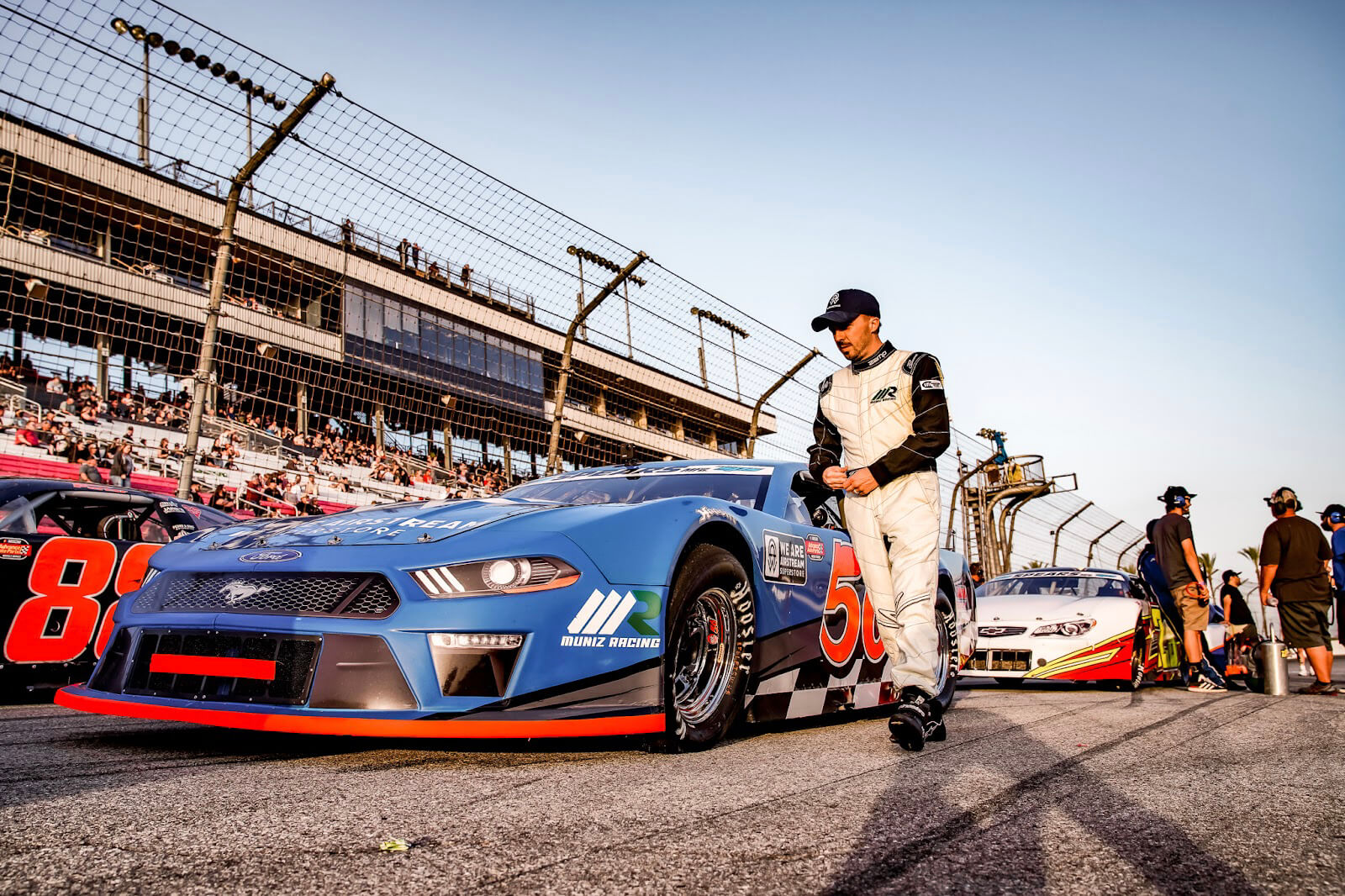
There are outliers in the pack like Frankie Muniz that have taken a different route in the pursuit of becoming a NASCAR driver. He was mostly known for his acting endeavors throughout the early 2000’s. Frankie Muniz has also quietly had a progressive career in racing that has stemmed from his passion for sports cars and motorsports racing. In late 2021, Muniz began putting the plans in place to go racing full time as a professional motorsports driver with his primary goal being full time NASCAR racing in 2023.  Muniz is licensed to race in the ARCA Menards Series and will make an announcement about his racing plans for the 2023 season soon.

Although there is not one straight path to becoming a NASCAR driver, it is possible for anyone with the drive and ambition to pursue a career in racing. NASCAR driving requires a lot of skill and it takes a certain mindset to achieve such high levels of driving. One thing is clear in every driver’s mind, their ultimate goal is to be racing in NASCAR Cup series going for gold.

Sources:

  1. https://www.jacksonville.com/story/sports/motorsports/2012/02/16/pit-road-money-pit-costs-field-nascar-team-are-staggering/15875590007/
  2. https://www.nascar.com/long-form/frankie-in-the-fastlane/
  3. https://www.softschools.com/facts/us_history/nascar_facts/3163/

Become a Sponsor.

Join us in making a difference. Tell us a bit about yourself and we’ll be in touch with sponsorship details.

By submitting this form, you agree to be contacted by the Athelo Group team regarding sponsorship opportunities.