The business of baseball has seen immense success in the 2020s, coming off one of the most thrilling World Series in recent years, consistent attendance growth, and a booming sponsorship market.
All of this success may come crashing down over the next several months.
The future of Major League Baseball hangs in the balance as its collective bargaining agreement is set to expire this December. The threat of a lockout indefinitely suspending the 2027 MLB season has shifted from possible to highly likely.
Consequences of a lockout affect far more than the players. No season means the league takes a monumental hit to tangible factors. This includes ticket and broadcast revenue, franchise valuation, and both current and prospective partnerships. Intangible costs like shifting fan sentiment and strained player-franchise relationships threaten the health of the league for years to follow.
But a lockout doesn’t mean baseball will disappear.
Minor League Baseball is poised for massive growth in the uncertainty of a 2027 MLB season, a unique opportunity for cities and brands to seize the moment.
Quick Highlights
- The average payroll of an MLB team in 2024 was $169,733,434, a 26.2% increase from 2022.
- The last MLB lockout took place in the 2021-2022 offseason and lasted 99 days, resulting in Opening Day getting delayed one week.
- The average MLB player salary is $5.34 million and has risen about 5.6% annually since 2022.
- 28 of 30 MLB teams have deals for jersey patch sponsorships, averaging $17 million annually.
- Minor League Baseball attendance totaled 30,360,682 in 2025, down 2.9% from the previous year.
Why a Lockout Could Happen
The main issue of the upcoming negotiations is the potential implementation of a hard salary cap. This would be the first of its kind in MLB history.
The league currently operates under a luxury tax threshold, which serves to discourage teams from spending over the limit by issuing harsh penalties. Several franchises in big cities like New York, Los Angeles, and Chicago frequently boast a payroll above the tax threshold as they can more easily absorb the penalties. Small market teams cannot consistently afford to do so.
This calls into question the current competitive balance of the league. Franchise owners argue in favor of a hard cap to bring a more even spread to roster construction, as large market teams will not be able to consistently outbid small market teams for free agents. They also call for changes such as a more centralized revenue sharing system.
The MLB Players Association fiercely opposes the implementation of a hard salary cap on the grounds that it limits players’ total earnings potential and the average value of an MLB contract. Instead, they believe a salary floor should be introduced to create a baseline spending threshold and raise the average contract value. Other amendments such as revisions to arbitration and earlier free agency have grown popular among players.
At its core, neither party is willing to budge. Owners are searching for cost certainty and more protected franchise valuation. Players argue that the real issue is owners who elect to field an uncompetitive team, instead pocketing a larger portion of the shared revenue.
The Key Driver in Los Angeles
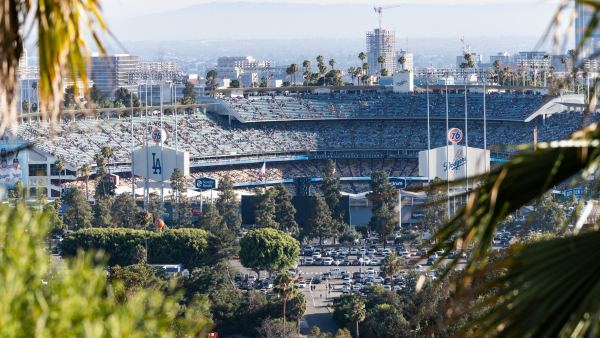
Those hoping for stricter payroll rules often point to the Los Angeles Dodgers as the primary culprit.
The Dodgers are back-to-back World Series champions and heavy favorites to win a third straight championship in 2026. In the past few years, they have garnered a reputation for boasting an annual payroll far above the competitive balance tax threshold and frequently inking the league’s top free agents to long-term, high-value contracts. Notable signings include Mookie Betts, Freddie Freeman, Yoshinobu Yamamoto, and the recently acquired Kyle Tucker.
The Dodgers, with a valuation of approximately $8 billion, hold the second highest payroll in the league behind the New York Mets. They have not dipped below the tax threshold since 2020.
The biggest point of contention is the Dodgers’ recent pattern of deferrals in their contracts. Such deferrals allow teams to push a percentage of the contract’s value into the future, lowering the present-day amount affecting payroll and the tax threshold. The most notable example is Shohei Ohtani’s 10-year, $700 million contract signed in December 2023, with an unprecedented $680 million deferred until 2034.
Contract deferrals are within the current rules and are rumored to have originated in the 1950s with Ted Williams. And of course, Bobby Bonilla Day serves as a humorous reminder every July 1.
A Matter of Scale
The key here isn’t the deferrals themselves. It’s the scale at which the Dodgers are operating.
The Dodgers currently have over $1 billion in deferrals to be paid out over the next two decades. This is nearly equivalent to the league’s ten lowest total payrolls combined. They owe this money to nine players on the roster, whereas many teams have at most a single deferral on their payroll.
Major League Baseball went without a repeat champion for 25 years before the Dodgers’ recent success. Fans are worried that this shift in contract structure may soon cause large market teams to dominate the league and price small market teams out of being competitive.
Many executives believe changes like a hard salary cap and bans or limits on deferrals will create a structure where every team is in play for key free agents and can compete for championships.
A Season at Stake: Who Pays the Price?
A partial or even full suspension of the 2027 MLB season threatens major ramifications for all parties involved.
First, the franchises. Valuations will plummet fast. Without a product, key components such as ticket sales, concessions, and in-stadium sponsorships provide no value.
Current and potential sponsors are now forced to reevaluate risk. One might look at MLB’s record $2.05 billion in sponsorship revenue in 2025 and see that the game is as lucrative as ever.
Brands sign these deals expecting certainty: each team hosts 81 games per season and is on TV almost half a year. Some companies pay specifically to have their jersey patch visible all game.
But a sudden threat of uncertainty means companies are forced to take a step back. They may grow wary of the league or even search for more secure opportunities elsewhere. Of course, the players can’t work if there are no games to be played. But they also miss out on massive marketing opportunities from both the league and their respective teams (endorsements, bobblehead nights, in-stadium jersey sales, etc.).
Fan unrest will continue to grow as a lockout marches on, giving baseball the threat of losing a portion of its fanbase entirely. This could make a major dent in all aspects of a team’s valuation.
Once baseball eventually comes back, attendance and sales may decline significantly.
Minor League Growth Potential
In the event of a lockout, Minor League Baseball will be largely unaffected since it operates under its own governance structure.
Unlike 2020 where the sport was entirely shut down due to the pandemic, a lockout poses no threat to their season. This presents a rare opportunity for franchises and brands to capitalize on the Minor Leagues being vaulted to the forefront of the sport.
Minor League teams cannot depend on television broadcast deals as a steady source of revenue. National TV ratings remain low as many people do not choose to tune into lower-level professional games, and often these teams do not generate enough revenue to justify the cost of featuring a professional-grade broadcast. Instead, they must leverage local corporate partnerships and stadium signage, a key portion of their overall income behind ticket sales.
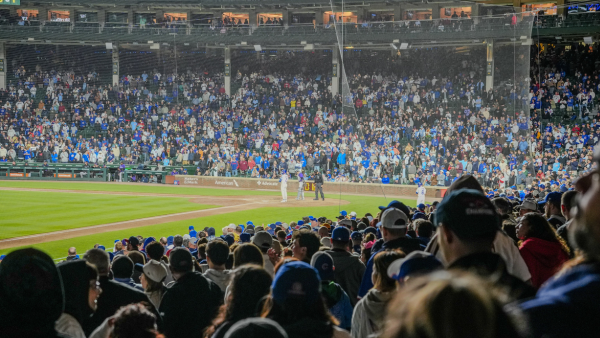
With no MLB games, it may prompt the masses to tune into the Minor Leagues more closely. The Minor Leagues are already doing well on the attendance front, averaging over 30 million fans in recent seasons. Most teams have a steady, albeit modest fanbase on a local level.
This opportunity is unprecedented because MLB’s demand funnels to the Minor Leagues by default. Fans in search of baseball will flock to their local ballparks to catch a game. Regional news outlets can lean harder into Minor League coverage and help teams reach new fans and solidify a larger fanbase.
The potential for revenue generation is also massive. Large attendance spikes mean major gains in merchandise, concessions, and parking sales. This creates a perfect opportunity for regional and mid-market brands.
With an extensive lockout looking highly likely, the opportunity for a partnership could prove rewarding for both sides.
The Bottom Line
Baseball is approaching a climax, and without swift and proper action, all of its recent successes may soon vanish.
Even a temporary pause to the season has potential to set the league back many years.
Minor League baseball has an opportunity unlike one we’ve seen before: to become the face of baseball. The quickest to recognize this and adapt can build strong, long-lasting relationships within their community, and baseball can continue to grow in a new light.
However long this labor war lasts, it’s clear that the landscape of baseball will look a lot different in the seasons to come.
FAQ:
- What is a lockout? A lockout is a work stoppage that occurs when the league’s Collective Bargaining Agreement expires. Team owners initiate a lockout and freeze league operations until a new deal is agreed upon.
- How does Minor League Baseball operate? Minor League teams are affiliates of their MLB franchise and consist of players under contract of that franchise. There are four levels of Minor League Baseball, with Triple-A (AAA) being the highest level. The MLB team controls player assignments while each individual Minor League team controls its business operations and fan experiences.
- Have lockouts ever resulted in cancelled games? No previous lockout has resulted in the cancellation of games. The most recent lockout in the 2021-22 offseason caused a delay to the start of the season, but a full 162-game season was played. A player strike in 1994 cancelled the remainder of the season, including that year’s World Series.