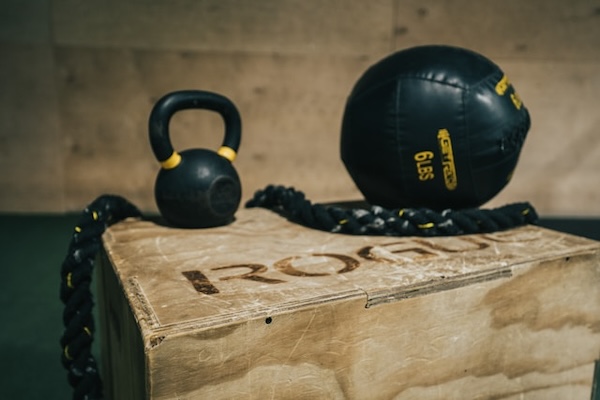
Why is CrossFit So Popular Among Women?

Walk into any CrossFit gym, often called a “box,” and you’ll notice something striking: women dominate the room. Confidence fills the air.

What started as a niche training method has evolved into one of the most empowering and inclusive fitness movements in the world. This intensive functional fitness regime empowers women to boost their self-confidence through demanding workouts, while also defying conventional gender stereotypes and striving for athletic excellence.

For many, CrossFit is more than a workout. It’s a mindset shift. It’s a place where women push limits, find community, and redefine what strength looks like. But what exactly makes CrossFit so popular among women today?

Quick Highlights:

  • Earlier industry data suggested women made up about 60% of CrossFit athletes globally between 2015-21, while more recent sources place female participation closer to 40% of the membership base.
  • Women in CrossFit report 90%+ improvements in self-esteem and 80%+ improvements in daily energy.
  • The CrossFit Games award equal prize money to male and female athletes, something most major sports still can’t say.
  • According to a BoxMate study, 77% of the women surveyed felt that when training in their gym/box, they could be competitive with males without judgement.
  • Women in CrossFit face lower reported injury incidence— 30% compared to 45% of men.
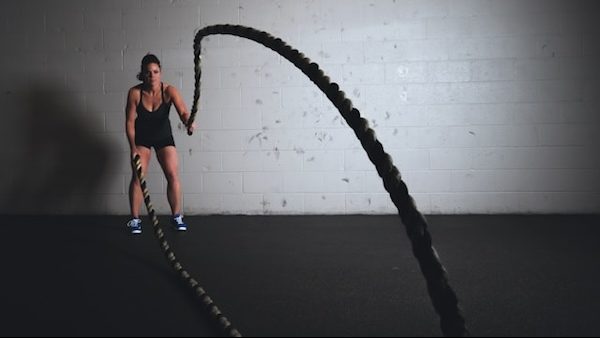
female crossfit athlete

Strength as a Skill, Not a Stereotype

CrossFit provides women with a training environment focused on performance and measurable progress. Instead of focusing on appearances or the scale, women concentrate on what their bodies can actually accomplish.

Data shows that women in CrossFit are highly motivated by developing strength, rating this factor higher than tone, size, or muscle mass. This indicates a positive shift towards performance goals. One study found that 81% of participants reported significant increases in perceived strength after consistent CrossFit training.

Beyond physical strength, the psychological benefits remain a driving force. Women participating in CrossFit report more than a 90% improvement in self-esteem and an 80%+ increase in day-to-day energy. In a survey of over 500 women, 94% said CrossFit and lifting made them feel empowered, strong, and more confident in their bodies.

That shift is happening at the elite level too. Athelo’s own Dani Speegle, who famously dominated a 250-pound sandbag clean event in 2022, embodies a new era of strength-forward female athletes. She’s vocal about inspiring girls to push limits and chase big goals, proving just how powerful and resilient women’s bodies are.

Supportive Community and Scalable Longevity

CrossFit is built around community. Instead of the isolated feel many commercial gyms have, classes bring people together, encourage progress, and create accountability. This supportive environment, paired with a focus on personal improvement, keeps people engaged for the long term.

That support matters: 77% of surveyed women said they feel comfortable pushing themselves alongside men without judgment when training in their gym or box.

CrossFit’s community dynamic mirrors what we’ve seen across the broader women’s sports ecosystem. When women are given equal space, equal visibility, and equal investment, participation surges.

We see this through CrossFit’s continuous opportunities. Women can start young, compete in the CrossFit Open starting at age 14, and have the freedom to grow stronger and compete until they are in their 80s and beyond.

Equal Plates, Equal Opportunity

From its inception, CrossFit has offered equal prize money for male and female competitors. Similarly, the same number of women and men are invited to the CrossFit Games. There is no separate women’s league; there is just the CrossFit Games, where every women’s field is broadcast widely.

The 2021 NOBULL CrossFit Games demonstrated this parity. Champions Tia-Clair Toomey and Justin Medeiros both received checks worth $310,000. Toomey, arguably regarded as the face of modern CrossFit, shows how powerfully women shape the sport’s culture and global reach.

In addition, the women’s fields at the 2021 Games were broadcast to 99 million aggregate viewers across the CrossFit Games platforms, standing against the sobering statistic that women’s sports generally make up only 4% of total sports media coverage.

This level of visibility echoes broader trends in women’s sports, where full-stage presentation, not only tokenism, drives engagement. 
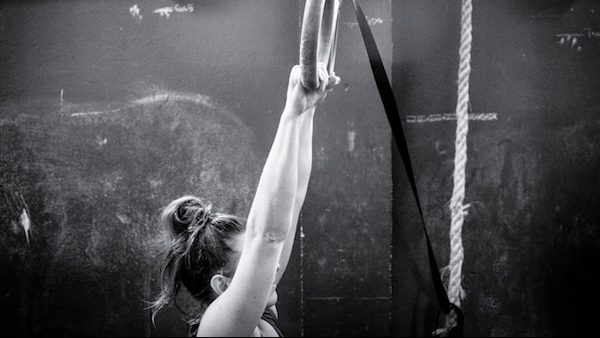
female crossfit athlete

Inspiring Youth and Role Models

Visible, strong female athletes in CrossFit play a crucial role in inspiring the next generation.

Earlier industry reports estimated that women made up nearly 60% of CrossFit athletes globally between 2015 and 2021. More recent data places women closer to 40% of total membership, still a substantial portion of the community.

Athelo’s own athletes reflect the range of what is possible. 

Amy Bream continues to lead the way for adaptive competitors. Kyra Milligan, a six-time CrossFit Games athlete who moved from Utah to Las Vegas to deepen her training, shows grit, community service, and elite performance. Emily Loogman Rethwill, mother, coach, and athlete, shows how strength and identity can evolve through every stage of life.

The Path Forward and Where We Fit

CrossFit’s rapid rise among women is no coincidence. It’s the product of a culture that prioritizes equity, visibility, and shared opportunity. When women are given the same platform as men, they are recognized not as exceptions, but as leaders shaping the sport.

At Athelo Group, we champion that same commitment. As CrossFit continues to set the bar for equity and empowerment, we work to ensure that momentum reaches beyond the gym. We partner with athletes and brands to elevate female strength in all its forms and expand competitive opportunities across the sports industry.
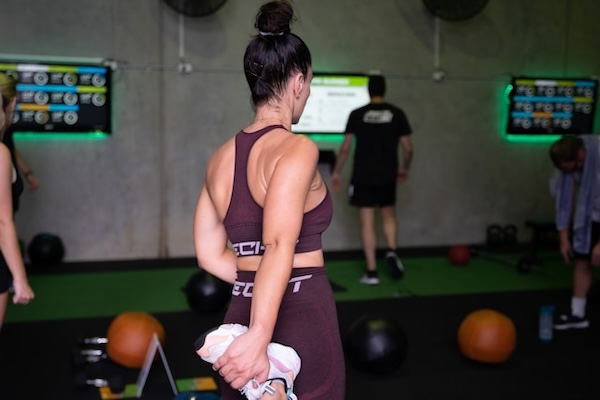
The Truth About the Gender Pay Gap in Sports

Women’s sports are surging. Fans tune in at record levels, brands finally pay attention, and storytellers in women’s athletics shape culture beyond competition. From sold-out stadiums to major sponsorships, demand keeps rising.

Still, the opportunity and gender pay gap between men and women in sports remains huge. The conversation now goes beyond salaries. It’s about equity, visibility, and respect.

For many female athletes, it’s not just about money but about how their talent and impact are valued.

Quick Highlights:

  • Between 2022 and 2024, women’s sports in the U.S. grew 4.5× faster than men’s sports.
  • Women’s football is projected to be among the top 5 global sports by 2030, with an audience of over 800M fans worldwide.
  • The WNBA landed an 11-year broadcast deal starting in 2026, with prime coverage on USA Network and streaming platforms—one of the largest media rights deals in women’s sports history.
  • Fans of women’s sports are 2.8× more likely to purchase products endorsed by female athletes compared to men’s sports fans, driving sponsor ROI beyond exposure.
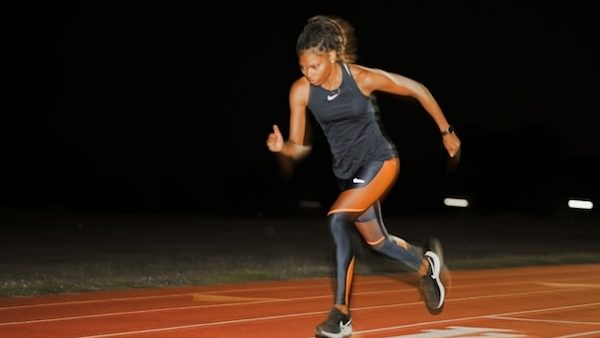
woman running on track

When Growth Isn’t Enough 

Women’s sports are booming: stadiums are full, TV ratings are soaring, and sponsorships are rising. Total U.S. women’s sports revenues surpassed $1 billion for the first time in 2024 and are projected to hit $2.35 billion globally in 2025—a 25% jump in just one year.

The surge in visibility has been undeniable. What many now call “The Caitlin Clark Effect” shows how one athlete’s rise can elevate an entire league. Major moments like these prove the audience and excitement are there.

Yet that success hasn’t translated into equal pay. Despite all the progress, many professional female athletes still earn only a fraction of what men in the same sports take home. The question now is whether this momentum can finally lead to fair compensation.

What’s Really Behind the Pay Gap

The imbalance often comes down to exposure. For decades, women’s sports were under-marketed and under-televised, which limited their ability to build audiences and attract sponsorship dollars. That cycle of less visibility leading to less revenue has been one of the hardest to break.

But when women’s sports get the spotlight, the results are undeniable.

The 2023 Women’s World Cup shattered attendance and broadcast records, drawing over 2 billion viewers worldwide. The NCAA women’s basketball championship between LSU and Iowa became the most-watched college basketball game, men’s or women’s, in ESPN history.

The success proves something female athletes have known for years: when you give them equal opportunity, they deliver equal excitement.

female soccer player kicking ball

The Real Barrier: Investment, Not Interest

Equal investment in marketing and sponsorship consistently drives engagement and profit, showing the gap is about opportunity, not audience. In fact, 86% of brands say their women’s sports sponsorships have met or exceeded ROI expectations, proving that when companies invest, the returns follow. 

Still, the system hasn’t caught up. Sponsorship dollars, prize money, and media contracts remain uneven.

As The Bounce points out, the gender pay gap persists not because of talent or demand but because of institutional inertia. Women’s leagues are still building the infrastructure men’s sports have had for decades—investment, storytelling, and consistent exposure.

Voices That Have Changed the Game

Venus and Serena Williams have been two of the most powerful forces in the fight for equality in sports. In one meeting about pay, Venus asked everyone to close their eyes and imagine their daughter, sister, or wife being paid less simply for being a woman. Then she left the room, letting the truth hang there.

As she later said, “A lot of people think that was impactful. It was just the truth. When you stand up for what’s right, that’s what my mom taught me.”

Serena carried that conviction far beyond the court. Through Serena Ventures, she’s invested in more than 60 companies—most led by women and people of color—and joined the ownership group of Toronto’s new WNBA franchise, using her success to build opportunity from the top down. 

Venus has done the same through her wellness brand Happy Viking and a growing portfolio of angel investments, proving advocacy can also mean ownership.

Together, the Williams sisters turned their influence into infrastructure, shifting the conversation from demanding equality to creating it.

Progress and Pressure

Women’s sports are entering what many call their “golden era,” but the pressure to sustain it is real. Fans are showing up, investors are paying attention, and female athletes continue to shoulder the dual role of performers and advocates.

The gender pay gap revolution in U.S. soccer set a major precedent when the women’s national team won its lawsuit for back pay and secured a collective bargaining agreement guaranteeing equal match compensation with the men’s team.

But progress isn’t linear. For every major win, disparities persist in leagues like the WNBA, where many players still head overseas in the off-season to supplement their income. The fight extends beyond closing the pay gap and to creating sustainable systems so female athletes can earn a livable wage.

The Future of Fair Play

Women’s sports are breaking barriers in real time, rewriting what’s possible and redefining what’s profitable. The pay gap remains a frustrating reminder of how far there is to go, but it also fuels the determination that defines so many female athletes. 

The next challenge lies with the systems that still lag behind: media deals that undervalue women’s leagues, brands that treat inclusion as a campaign instead of a commitment, and governing bodies slow to modernize their models.

The momentum is already there. What will define this era isn’t how hard women fight to be seen, but how quickly the institutions around them learn to catch up.

Fertility Care in Women’s Sports: How Athletes Balance Family

Women’s sports are entering a pivotal phase, one where athletes are no longer expected to sacrifice personal milestones, like starting a family, to maintain competitive status. Fertility care and motherhood, once largely invisible in the world of elite competition, are now being recognized and supported by some of the world’s most prominent leagues and clubs.

From tennis to soccer, organizations are taking bold steps to support female athletes holistically by offering fertility protection, parental leave, and medical benefits. This shift is not just reshaping sports culture but creating a meaningful opportunity for brands to connect authentically with fans.

Quick Highlights

  • In 2025, the WTA introduced a groundbreaking policy allowing players to retain ranking protection during fertility-related absences, an expansion of its previous maternity rule.
  • Multiple NWSL players have received fertility treatment support, including hormone therapy coverage and time off for egg retrieval.
  • Racing Louisville FC partnered with Kindbody in 2021 to offer fertility preservation services to all players, believed to be a first-of-its-kind deal in pro sports.
  • Veteran WNBA players are eligible for a $60,000 reimbursement for adoption, fertility treatments, and surrogacy costs.
  • The LGPA has removed the 10-game limitation for golfers on maternity leave to enhance player autonomy.
  • FIFA mandates 14 weeks of paid maternity leave for all female footballers under its governance as well as 8 weeks paid leave for those who adopt a child under the age of 2.
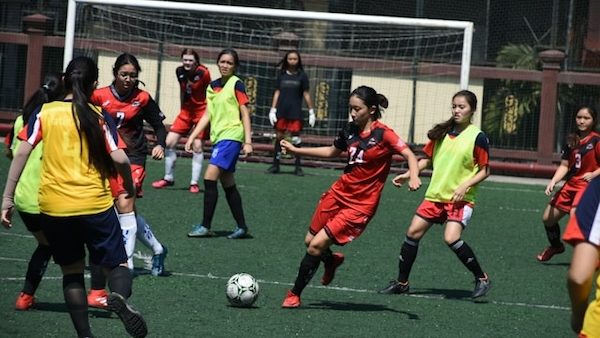
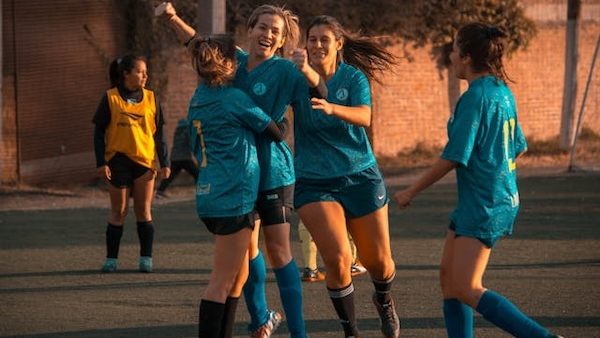
female athletes cheering on soccer field

The Overdue Recognition of Fertility Care in Sports

Fertility care has long been overlooked in elite athletics, despite its critical role in female health.

Treatments like egg freezing and in vitro fertilization (IVF) are physically demanding and time-sensitive, often clashing with an athlete’s competition schedule. Olympic bobsledder Kaillie Humphries opened up about her struggle to balance the IVF process while still maintaining her training regimen. Humphries navigated the hardships of ovary stimulation, egg retrieval, and more while actively gearing up for the Olympics. 

Until recently, female athletes risked losing their rankings, contracts, or roster spots simply for prioritizing reproductive health. In a recent study by Cofertility spanning hundreds of female athletes, 70% of participants revealed they have postponed having children due to their careers. An even greater percentage expressed concerns that having children could negatively impact their earning potential and long-term career opportunities. 

New policies from organizations like the WTA and NWSL are finally acknowledging that reproductive health is essential in empowering female athletes and advancing the game.

Redefining Athlete Support: The WTA’s Historic Maternity Initiative

In a groundbreaking move, the Women’s Tennis Association (WTA) and Saudi Arabia’s Public Investment Fund (PIF) have introduced the PIF WTA Maternity Fund Program, marking the first time in women’s sports history that comprehensive maternity benefits are available to independent, self-employed athletes.

This pioneering initiative provides eligible WTA players with up to 12 months of paid maternity leave, grants for fertility treatments, including egg and embryo freezing and IVF, and two months of paid parental leave for those becoming parents through adoption, surrogacy, or partner pregnancy.

To build on this support, the WTA followed up these provisions with a new policy to protect player rankings while they are away for fertility reasons. 

The program is a significant step forward in supporting female athletes, offering financial stability and flexibility to balance professional careers with family life. It empowers players to make personal decisions without the fear of jeopardizing their careers, setting a new standard for athlete support in women’s sports. 

These initiatives also highlight the importance of partnerships in driving positive change.

While the collaboration with PIF has faced scrutiny due to concerns over Saudi Arabia’s human rights record, both the WTA and PIF emphasize the transformative potential of the program in creating a more inclusive environment where athletes can thrive both professionally and personally.

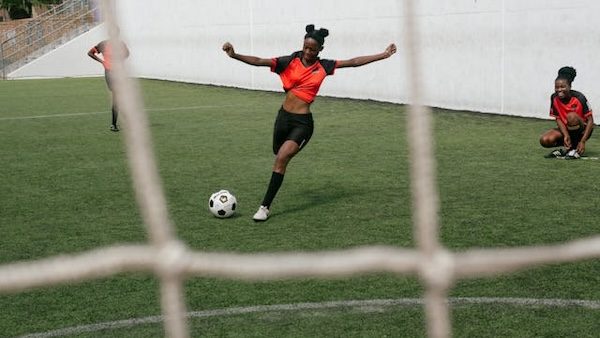
female athlete kicking soccer ball

Changing the Game: Fertility and Family Support in Women’s Soccer

In recent years, the NWSL has emerged as a leader in redefining what athlete wellness looks like through fertility, pregnancy, and motherhood support.

In 2021, the NWSL Players Association ratified its first collective bargaining agreement (CBA), which included comprehensive paid parental leave, adoption support, and guaranteed housing for players with children.

A new CBA executed last year expands on those rights. It states that if a player’s contract expires during her pregnancy, her team must invite her back to give her a chance to earn her spot again. 

Since then, several clubs have gone even further. Racing Louisville FC, for instance, became the first team in professional sports to partner with a fertility care provider, offering players access to egg freezing and fertility preservation through Kindbody, a groundbreaking move that acknowledged the very real-time pressure female athletes face when it comes to reproductive choices.

But the NWSL has not yet standardized fertility support. In some cases, NWSL reimburses players for hormone therapies or provides time off for egg retrievals, however access varies depending on club policies and individual insurance plans. This uneven landscape highlights both the progress made and the work still ahead.

For Brands, Purpose Drives Connection

Consumers today, especially Gen Z and millennial women, expect brands to stand for something. Companies that back fertility access, parental support, and gender equity in sports are setting the tone for modern advocacy.

Take WHOOP, for example. The wearable tech brand invested in extensive research to launch its Menstrual Cycle Coaching feature, helping female users better understand their physiology. It’s a move that signals real investment in women’s health, not just performance.

This kind of purpose-driven work also delivers returns. A recent study found that fans of women’s sports are 2.8 times more likely to buy products endorsed by female athletes. These endorsements land with more impact because women athletes are seen as 7 points more trustworthy than their male counterparts, largely due to their authenticity.

That authenticity deepens when brands support athletes holistically, honoring the entirety of their lives, including family planning.

The most successful brand campaigns in women’s sports have tapped into that message. Nike’s revision of its maternity policy following public criticism from Allyson Felix not only repaired its reputation, it deepened its connection with women worldwide. Likewise, brands that support fertility care in leagues like the NWSL or WTA have the opportunity to lead with empathy and true action.

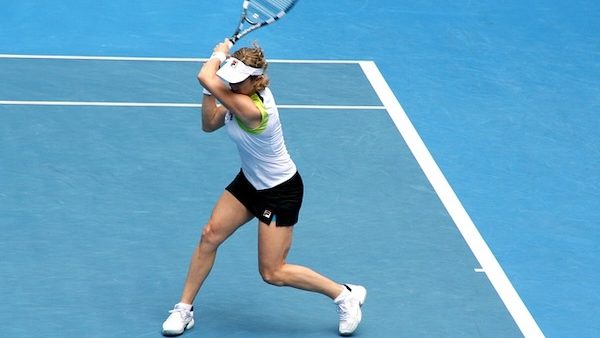
female tennis player swinging racket

A Smarter Model for Athlete Development

Maternity leave and fertility care aren’t “extras,” they’re essentials.

For too long, elite sports treated these aspects of health and life as optional or even burdensome. But as more female athletes speak openly about fertility struggles, pregnancy, and parenting, it’s becoming clear: these experiences are not interruptions to a career, they’re part of it.

By embedding fertility and parental support into athlete wellness strategies, leagues are safeguarding careers from being cut short by life events that disproportionately impact women. This matters especially in sports where peak performance years often overlap with the limited window for starting a family.

Athletes who feel supported holistically—physically, emotionally, and financially—are more likely to stay in the game longer, transition into coaching or leadership roles, and give back to the ecosystem that empowered them. This creates a virtuous cycle of mentorship, visibility, and institutional knowledge that elevates the entire sport.

Investing in the Whole Athlete

Athelo Group is helping drive that shift by empowering its female athletes with the resources and brand alignment needed to allow them to navigate their personal lives without compromising their professional goals. 

Investing in athletes as whole people extends beyond sport. It sends a cultural message that women in any high-performance field shouldn’t have to compartmentalize or delay motherhood in order to be taken seriously. Leagues that prioritize fertility care are modeling what inclusive, future-ready leadership actually looks like.

Should Transgender Athletes Compete in Women’s Sports?

The 1977 US Open was held at the West Side Tennis Club in Queens, New York, and ran from August 29 to September 11. Among the lineup of female athletes competing in the two-week tournament was 43-year-old RenĂ©e Richards, the first professional athlete to identify as transgender. Two years prior, Richards, who grew up as “Richard Raskind,” underwent gender affirmation surgery after decades of struggling with self-identity. In 1976, she applied to play in the women’s division of the US Open. When the United States Tennis Association did not allow her to, she sued them for violating the New York Human Rights Law. The court case ruled in Richards’ favor, and she was granted the right to compete in the Open in 1977. Although she did not win a singles or doubles title in the tournament, her presence alone had a substantial impact and opened many doors for transgender female athletes. Forty years later, the public is still divided on whether this has been an asset or a detriment to the world of women’s sports

The WSL: Bethany Hamilton

On February 3, 2023, the World Surf League adopted the International Surfing Association’s Transgender Policy, which allows transgender surfers to compete in either the men’s or women’s events, so long as they meet certain eligibility requirements. While the news elicited mixed reactions from fans and surfers across the globe, one particular response garnered the most attention. Just a day after the announcement, 15-year WSL veteran Bethany Hamilton posted a two-part video on her Instagram page, sharing her thoughts on the matter: “I think many of the girls currently on tour are not in support with this new rule and they fear being ostracized if they speak up.” Hamilton then posed questions she felt were not taken into consideration when the rule was passed: “Have any of the current surfers in the World Surf League been asked what their thoughts and opinions are? Is this better for the women in surfing? If so, how? How did whoever decided these hormone rules come to the conclusion that 12 months of testing testosterone makes it a fair and legal switch?” 

Hamilton also informed viewers that she will be pulling out of the league unless the law is retracted. Her combined videos received over 235,000 likes and more than 38,000 comments, many of which came from fans and professional surfers voicing their support. Other commenters found her claims to be ‘hateful,’ ‘transphobic,’ and ‘disappointing.’ 

Once her posts made headlines as big as CNN, Fox News and NBC, she published an additional statement aimed at her critics: “I really don’t think at this point there is a solution that will please everyone. There are different world views and that is part of life. I may not have the perfect answer. But I do feel the way I do and will continue to stand firm in what I shared here.” As a number of other big-name surfers continue to reshare her videos in agreement, WSL fans and athletes are left wondering what this means for the future of professional surfing. 

Should Transgender Athletes Compete in Women's Sports

USA Soccer: Alex Morgan

Such rules and regulations are not only impacting the pros. The same week Hamilton’s Instagram reels went viral, Alex Morgan, starting forward for the U.S. Women’s Soccer Team, relayed her thoughts on the topic of youth transgender athletes. During a press conference leading up to the SheBelieves Cup, Morgan expressed that “the inclusion of trans kids in sports is the inclusion of kids in sports.” She encouraged inclusivity, emphasizing how politics should have no place in sports and that the debate endangers trans kids’ lives. 

Policies against transgender athletes have the potential to uphold female and racial stereotypes. Assuming that individuals who are assigned male at birth will inevitably dominate when competing against individuals assigned female at birth enforces the idea that women are less athletic than men. Such conventional images often exclude black women and girls, who are frequently typecast as stronger and more masculine. These concepts are also echoed in the fact that there is significantly less dialogue surrounding trans men in sports, since it is a common supposition that they will be less likely to keep up with cis men, much less pose a threat to their teammates’ or competitors’ standings.

Morgan also continues to advocate that the National Team should discuss playing more games in Florida and Texas, two states that have legislation restricting transgender girls from playing with biological girls. “We’re not ones to shy away from hard conversation or taking a stand for what’s right,” she says. The National Women’s Soccer League’s current transgender policies state that trans women are allowed to compete for them, so long as the individual has identified themselves as female and does not change their declaration for a minimum of four years. This decision was made in the spring of 2021. Similar to the World Surf League’s more recent announcement, it too has received a mix of support and backlash.

Should Transgender Athletes Compete in Women's Sports

NCAA Swimming: Riley Gaines and Lia Thomas

The public debate about transgender women in sports extends beyond just tennis, surfing, and soccer. Lia Thomas graduated from the University of Pennsylvania last May, and during her four years at Penn, she competed on both the men’s and women’s swim teams, becoming the first transgender athlete to win an NCAA Division I national championship in 2022. Thomas won first place at nationals for the 500-yard freestyle event. She also competed in the 200-yard freestyle, tying for fifth place with University of Kentucky’s Riley Gaines. 

A 12-time NCAA All-American, Gaines was also in her senior season when she swam against Thomas, hoping to podium her final year as a Wildcat. She claims that when she and Thomas tied down the hundredth of a second, the NCAA official told her the trophy would be given to Thomas for “photo purposes.” Many have criticized this statement, arguing that it would not have made a difference: in accordance with NCAA rules in the case of a tie, the trophy is given to whichever athlete is older. Thomas was born in 1999, and Gaines was born in 2000. 

Nearly a year after both women graduated from their respective universities, Gaines has continued to speak out against transgender women in sports, pushing for a rewrite of Title IX. “I realized it’s my duty as a female athlete who experienced this injustice to really use my voice and my platform to advocate for those female athletes who are emotionally blackmailed and gaslit into silence,” she told the Washington Examiner in February. 

Gaines’ and Thomas’ interviews have sustained a decades-long debate, and have brought a massive amount of attention to the question: should transgender female athletes be allowed to compete in women’s sports? While there is no way to please everyone, keeping informed, being respectful, and staying open-minded are essential when making decisions or speaking about a topic that impacts human rights.

Sources:

  1. https://www.instagram.com/bethanyhamilton/
  2. https://www.them.us/story/sasha-jane-lowerson-surfer-trans-interview
  3. https://www.worldsurfleague.com/posts/511243/wsl
  4. https://www.foxnews.com/sports/us-soccer-great-alex-morgan-supports-inclusion-trans-kids-sports
  5. https://www.theguardian.com/football/2023/feb/08/alex-morgan-saudi-sponsorship-transgender-rights
  6. https://www.foxnews.com/media/lia-thomas-exposed-male-genitalia-womens-locker-room-after-meet-riley-gaines-dropped-pants
  7. https://www.nbcnews.com/nbc-out/out-politics-and-policy/west-virginia-transgender-sports-ban-halted-appeal-rcna71950
  8. https://www.youtube.com/watch?v=f_TjTVA1W3c
  9. https://www.washingtonblade.com/2022/06/02/we-need-a-conversation-about-transmen-in-sports/

Become a Sponsor.

Join us in making a difference. Tell us a bit about yourself and we’ll be in touch with sponsorship details.

By submitting this form, you agree to be contacted by the Athelo Group team regarding sponsorship opportunities.