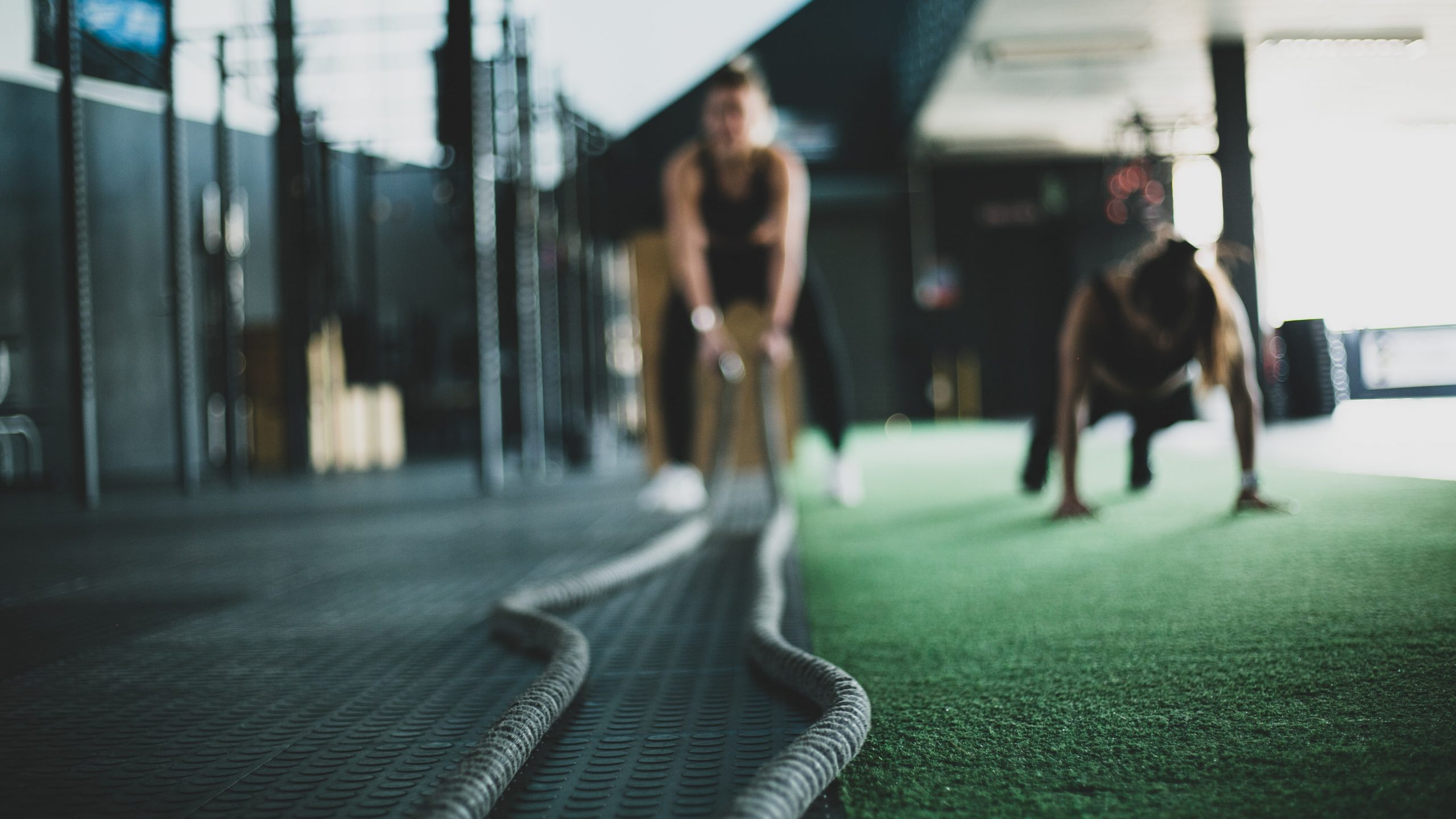
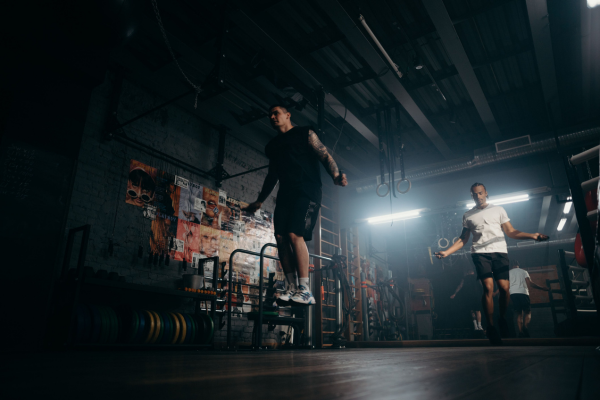
From CrossFit to HYROX: Why Everyone Suddenly Wants to Compete

Going to the gym used to be simple. Now, people pay to push sleds across convention-center floors, throw medicine balls at walls and run kilometers in between, all while thousands of people watch.

Welcome to competitive fitness, the era where the gym isn’t just a place you go anymore.

It’s something you train for.

What was once a solo workout has become a measurable test of speed, strength, and endurance. Competitive fitness gives athletes clear benchmarks to chase while creating an environment built around shared competition. That combination has helped turn traditional training into something people can prepare for, participate in, and compare on a global scale. 

CrossFit opened that door, proving that everyday gym-goers could train and compete like athletes. Now HYROX has walked through it, taking that same idea and turning it into a global phenomenon with millions of participants and no signs of slowing down.

So, is HYROX just the latest fitness trend? Or is it something more permanent, a real shift in how people want to work out?

Quick Highlights

  • HYROX attracts athletes from multiple fitness backgrounds. A 2025 study of HYROX athletes found that 40.3% came from CrossFit or powerlifting backgrounds, 26.6% from endurance sports, and 16.9% from team sports, showing how the format is pulling competitors from across the fitness landscape. 
  • What began with just 650 HYROX competitors in 2017 has developed into a worldwide fitness competition targeting over 2 million athletes of all skill levels. 
  • HYROX reports that more than 99% of its athletes complete their race, with no qualification requirement or finishing-time restriction for standard participation.
  • An analysis of 34 cities that hosted HYROX events in consecutive seasons found that participation increased 118% overall, with 22 of those 34 cities experiencing growth of at least 100%. Washington, D.C. and Stockholm each saw participation jump by more than 330%.
  • Fitness concepts like New Jersey-born Alpha Fit Club are embracing the same combination of strength, cardio, community, and competition. 
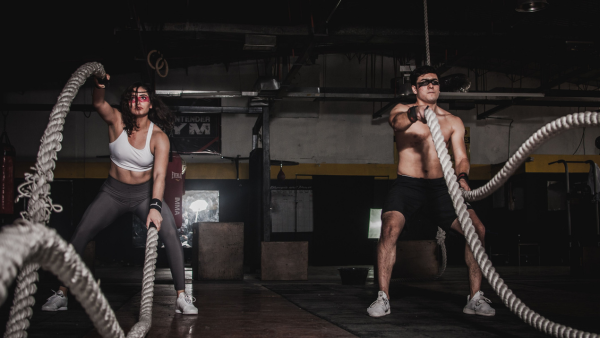
rise of HYROX

The CrossFit Blueprint

Prior to the HYROX movement, CrossFit helped change the culture surrounding fitness. Instead of walking into a traditional gym and figuring out your workout yourself, CrossFit handed people structure: programmed workouts, coaches, leaderboards, and most notably, a community. 

Suddenly, a workout could be a sport.

CrossFit popularized functional movements and high-intensity interval training while creating an environment where people could measure their performance against themselves and everyone around them. That competitive element became a major part of its appeal. 

But the functional fitness category is continuing to evolve. A new generation of hybrid fitness concepts is growing around the combination of strength, endurance, competition, and community. 

No brand has capitalized on that shift quite like HYROX.

Enter HYROX

If CrossFit helped turn the gym into a sport, HYROX figured out how to turn that sport into something closer to a marathon. It was through trailblazers like Hunter McIntrye, one of the first HYROX world champions (he won three years in a row), to really turn the page and begin turning this event into what it is today. 

The HYROX format is simple. Competitors complete eight one-kilometer runs, with each run followed by a functional workout station. Think SkiErg, sled pushes, sled pulls, rowing, farmer’s carries, lunges, and the infamous wall balls waiting at the finish line.

What matters most is that the format never changes. A HYROX in New York is functionally the same competition as a HYROX in London, Sydney, or Hong Kong. Athletes can compare times across cities, chase personal records, and know exactly what they’re training for no matter where they race. Think of it as a 10K with a lot more working out, and apparently, that’s exactly what people are craving.

Why is HYROX Growing so Fast?

One of HYROX’s smartest moves might also be its simplest: You don’t have to be an elite athlete to feel like one. Running a marathon can be intimidating. Competing in the CrossFit Games can be unrealistic. HYROX sits somewhere in the middle. 

The workout is difficult, but also understandable. You can train specifically for it, compete individually or with a partner, and enter different divisions based on your ability. The standardized format also makes progress easy to measure from race to race. Athletes can track their times, identify weaknesses, and set specific goals for their next competition. That built-in sense of progression gives training a clear purpose beyond simply getting fitter. 

Most importantly, there’s a finish line. That is something traditional fitness often lacks. “Get in shape” is vague. “Beat my HYROX time from last year” is not. The race gives people a reason to train, and training gives them a reason to keep showing up. 

Then there’s the social layer. Race photos, training partners, gym leaderboards, TikTok videos, Instagram posts, matching team outfits. 

The experience extends far beyond race day, becoming part of how athletes present their fitness journeys online. Competitors share months of training, race prep, and results with their communities, creating a steady stream of content around HYROX. Each post helps expand the event’s reach while strengthening the sense of community surrounding it. 

HYROX has fused fitness with the same social identity that fuels marathon culture. Finishing one doesn’t just give you a workout. It gives you something to post about. That makes social media especially valuable because every training video, race photo or finish-line post extends HYROX’s reach beyond the people who actually attend the event.

Competitors introduce the sport to their own audiences, helping HYROX build awareness and potentially turn viewers into future participants. Sponsors benefit from the same reach. When athletes post their training and race-day experiences, the shoes, apparel, fuel, and recovery products they use become part of the content, giving brands authentic exposure rather than a traditional advertisement.

The Gym is Becoming the Locker Room

HYROX’s growth isn’t just happening on race weekends. The company has created an environment of gyms and fitness studios where athletes can prepare for races throughout the year. 

This creates a powerful cycle: Someone sees a HYROX video, talks a friend into signing up, starts training, competes, posts about it, and three more friends decide they want in too. It’s the same community wheel that turned CrossFit into a culture force, except HYROX has attached it to a standardized global event. 

Major brands have also taken notice. Puma, for example, has extended its partnership with HYROX through 2030. Amazfit is the official timing tracker of the whole event, and Centr supplies HYROX with all their equipment.

These examples are a strong signal that sports industry giants are starting to treat HYROX competitors as athletes, not just gym-goers. That brand investment is critical to HYROX’s long-term growth, giving the sport greater visibility and credibility while introducing it to audiences beyond the existing fitness community.

At the same time, partnerships with competitors turn athletes into ambassadors who can bring sponsors directly into their training, race-day and recovery content, showing why effective athlete marketing can help emerging sports build awareness and develop long lasting communities.
rise of HYROX

Same Playbook, Different Brand: Alpha Fit Club

You don’t have to look across the world, or even outside the Northeast, to see the same shift happening. Alpha Fit Club, founded in Westfield, New Jersey in 2019, has built its entire experience around the same pillars fueling hybrid fitness: strength, conditioning, coaching, and community.

Alpha’s 60-minute classes move members through six stations combining total-body strength training with conditioning. The other half of the equation is belonging. 

Alpha calls its community “The Pack,” and that community-driven model has helped the company expand beyond its New Jersey roots. With 20 studios already open in New Jersey, Alpha plans to more than double that footprint up and down the East Coast by the end of 2026. Alpha is even leaning further into competition through the Alpha Games, where members can put their training to the test in a competitive fitness environment. 

Sound familiar? Workout. Community. Competition. Event. Repeat.

Alpha isn’t HYROX, and it isn’t CrossFit. However, its growth reflects the same broader movement reshaping fitness. People increasingly want their workouts to feel like they’re training for something. 

Fitness is Becoming a Sport Again

The biggest takeaway from the rise of CrossFit, HYROX, and brands like Alpha Fit Club is that people don’t just want exercise. They want goals, teammates, competition. They want something circled on the calendar that makes the 6 a.m. workout feel like it has a purpose.

HYROX has tapped into that desire better than almost anyone. The line separating “workout” from “training” is getting blurred every year. There’s a big difference between telling someone they should go to the gym, and giving them a reason they actually want to go.

CrossFit helped prove fitness could become a community. HYROX is proving that community can be a global sport. And if the current growth is any indication, there are going to be a whole lot more sleds getting pushed in the years ahead.

FAQ:

  1. What is HYROX? HYROX is a global fitness competition that combines running with functional strength exercises. Competitors complete eight one-kilometer runs, with each followed by a workout station such as sled pushes, rowing, farmer’s carriers, lunges, or wall balls. The same format is used at HYROX events around the world.
  2. Why has HYROX become so popular? HYROX hits a sweet spot between competition and accessibility. You don’t have to be a professional athlete to enter, but you still get the experience of training for and competing in a real sporting event. Add doubles and relay divisions, gym communities, social media, and the ability to chase personal records, and HYROX gives everyday athletes something bigger to train for.
  3. Is HYROX Replacing CrossFit? Not exactly. It’s better to think of HYROX as another evolution of the competitive fitness movement CrossFit helped popularize. CrossFit showed that strength and conditioning could become a competitive sport surrounded by a passionate community. HYROX takes some of those same ideas and packages them into a standardized race format that can appeal to runners, lifters, and everyday gym goers. 
Why is CrossFit So Popular Among Women?

Walk into any CrossFit gym, often called a “box,” and you’ll notice something striking: women dominate the room. Confidence fills the air.

What started as a niche training method has evolved into one of the most empowering and inclusive fitness movements in the world. This intensive functional fitness regime empowers women to boost their self-confidence through demanding workouts, while also defying conventional gender stereotypes and striving for athletic excellence.

For many, CrossFit is more than a workout. It’s a mindset shift. It’s a place where women push limits, find community, and redefine what strength looks like. But what exactly makes CrossFit so popular among women today?

Quick Highlights:

  • Earlier industry data suggested women made up about 60% of CrossFit athletes globally between 2015-21, while more recent sources place female participation closer to 40% of the membership base.
  • Women in CrossFit report 90%+ improvements in self-esteem and 80%+ improvements in daily energy.
  • The CrossFit Games award equal prize money to male and female athletes, something most major sports still can’t say.
  • According to a BoxMate study, 77% of the women surveyed felt that when training in their gym/box, they could be competitive with males without judgement.
  • Women in CrossFit face lower reported injury incidence— 30% compared to 45% of men.
female crossfit athlete

Strength as a Skill, Not a Stereotype

CrossFit provides women with a training environment focused on performance and measurable progress. Instead of focusing on appearances or the scale, women concentrate on what their bodies can actually accomplish.

Data shows that women in CrossFit are highly motivated by developing strength, rating this factor higher than tone, size, or muscle mass. This indicates a positive shift towards performance goals. One study found that 81% of participants reported significant increases in perceived strength after consistent CrossFit training.

Beyond physical strength, the psychological benefits remain a driving force. Women participating in CrossFit report more than a 90% improvement in self-esteem and an 80%+ increase in day-to-day energy. In a survey of over 500 women, 94% said CrossFit and lifting made them feel empowered, strong, and more confident in their bodies.

That shift is happening at the elite level too. Athelo’s own Dani Speegle, who famously dominated a 250-pound sandbag clean event in 2022, embodies a new era of strength-forward female athletes. She’s vocal about inspiring girls to push limits and chase big goals, proving just how powerful and resilient women’s bodies are.

Supportive Community and Scalable Longevity

CrossFit is built around community. Instead of the isolated feel many commercial gyms have, classes bring people together, encourage progress, and create accountability. This supportive environment, paired with a focus on personal improvement, keeps people engaged for the long term.

That support matters: 77% of surveyed women said they feel comfortable pushing themselves alongside men without judgment when training in their gym or box.

CrossFit’s community dynamic mirrors what we’ve seen across the broader women’s sports ecosystem. When women are given equal space, equal visibility, and equal investment, participation surges.

We see this through CrossFit’s continuous opportunities. Women can start young, compete in the CrossFit Open starting at age 14, and have the freedom to grow stronger and compete until they are in their 80s and beyond.

Equal Plates, Equal Opportunity

From its inception, CrossFit has offered equal prize money for male and female competitors. Similarly, the same number of women and men are invited to the CrossFit Games. There is no separate women’s league; there is just the CrossFit Games, where every women’s field is broadcast widely.

The 2021 NOBULL CrossFit Games demonstrated this parity. Champions Tia-Clair Toomey and Justin Medeiros both received checks worth $310,000. Toomey, arguably regarded as the face of modern CrossFit, shows how powerfully women shape the sport’s culture and global reach.

In addition, the women’s fields at the 2021 Games were broadcast to 99 million aggregate viewers across the CrossFit Games platforms, standing against the sobering statistic that women’s sports generally make up only 4% of total sports media coverage.

This level of visibility echoes broader trends in women’s sports, where full-stage presentation, not only tokenism, drives engagement. 

female crossfit athlete

Inspiring Youth and Role Models

Visible, strong female athletes in CrossFit play a crucial role in inspiring the next generation.

Earlier industry reports estimated that women made up nearly 60% of CrossFit athletes globally between 2015 and 2021. More recent data places women closer to 40% of total membership, still a substantial portion of the community.

Athelo’s own athletes reflect the range of what is possible. 

Amy Bream continues to lead the way for adaptive competitors. Kyra Milligan, a six-time CrossFit Games athlete who moved from Utah to Las Vegas to deepen her training, shows grit, community service, and elite performance. Emily Loogman Rethwill, mother, coach, and athlete, shows how strength and identity can evolve through every stage of life.

The Path Forward and Where We Fit

CrossFit’s rapid rise among women is no coincidence. It’s the product of a culture that prioritizes equity, visibility, and shared opportunity. When women are given the same platform as men, they are recognized not as exceptions, but as leaders shaping the sport.

At Athelo Group, we champion that same commitment. As CrossFit continues to set the bar for equity and empowerment, we work to ensure that momentum reaches beyond the gym. We partner with athletes and brands to elevate female strength in all its forms and expand competitive opportunities across the sports industry.

How AI in Sports Revolutionizes the Fan Experience 

The fan experience is all about how people interact with their favorite team, athlete, or brand. It’s more than just “watching the game.” It’s about building a lasting emotional connection.

Wimbledon shows how this is evolving. Their “Match Chat” feature lets fans ask an AI assistant questions during matches, while “Likelihood to Win” delivers real-time win percentages. Both are powered by IBM’s language model and stem from a 35-year partnership between IBM and Wimbledon. Together, they highlight how technology is reshaping what it means to be a fan.

At Athelo Group, we’ve seen AI in sports extend well beyond major tournaments. Athletes are using similar tools to connect more authentically with their communities. From frictionless stadium energy to instant highlight reels and smarter data, the fan experience is becoming more personal and interactive than ever.

Quick Highlights

  • The Cleveland Cavaliers saw an 83% jump in app downloads after rolling out AI-personalized highlights with WSC Sports.
  • WSC Sports’ editing tools generated over 16,000 highlight clips in a single Cavs season.
  • 46% of Gen Z fans watch live games because of the athletes they follow, not team loyalty, making AI-driven personalization crucial.
  • MLB’s Go-Ahead Entry program using facial recognition delivers ticket scans 2.5 times faster than traditional gates.
  • AI targeting has cut media waste by 40% while boosting conversion rates for sports brands.
  • The market for AI in sports is projected to reach $4.6 billion by 2032, up from $2.2 billion in 2022.
mlb stadium using ai to enhance fan experience

Personalized Highlights: Any Play, Any Player 

The Cleveland Cavaliers were the first NBA team to test a new wave of AI-driven content through their partnership with WSC Sports, an AI-powered sports content firm. They became the guinea pigs for personalized highlights.

WSC’s platform recognizes that no two Cavs fans are alike. Using AI, the app lets users create custom reels around their favorite players and moments.

Want every Donovan Mitchell dunk or every Jarrett Allen block? The system automatically compiles it. The results speak for themselves: 83% more app downloads and over 16,000 clips generated in a single season.

This type of technology won’t stay limited to basketball. Athelo Group sees applications across all sports—from MLB to surfing. Imagine surfers like Zoe Benedetto releasing custom highlight edits to showcase her moves and connect with fans on a deeper level. The sky’s the limit.

The Data-Driven Superfan 

AI personalization has redefined how fans engage, but the biggest shift is the rise of real-time data. It’s no longer just about watching the game—it’s about understanding it on a deeper level.

During the NBA Playoffs, Sportradar processed hundreds of thousands of data points live to calculate win probabilities and generate game forecasts.

These insights gave gamblers and fans alike access to information that once sat behind closed doors with coaches and analysts. Suddenly, the fan experience isn’t just emotional, it’s analytical, with numbers shaping the way people consume every possession.

The same model applies to athletes themselves. Just as fans track player performance on the court, training data can reveal an athlete’s strengths, weaknesses, and progress over time. 

Take CrossFit athletes like Laura Sanchez, for example. The strength metrics collected during her workouts can be quantified to measure efficiency, recovery, and long-term growth. The line between fan engagement and athlete development is blurring, all powered by data.

crossfit athlete using ai in sports to measure military press performance

Biometrics: A New Normal for Game Day

​​Biometrics are reshaping the in-stadium experience in MLB through programs like “Go-Ahead Entry,” which uses facial recognition at ballparks such as Oracle Park and Nationals Park. Fans upload a photo into the MLB Ballpark app, link their ticket, and access the stadium through special gates—cutting ticket scan times by 250%.

Several NFL teams are now adopting similar systems, including the Tennessee Titans at Nissan Stadium. Their Express Entry program, powered by Wicket and Verizon, allows fans who upload a selfie in advance to use facial recognition for faster gate access. Shorter lines and added security make the case clear for teams and venues.

At the same time, concerns about data privacy are growing. Orrick, Harrington & Sutcliffe note that “state regulators are increasingly concerned about biometric data privacy, and state laws that grant private rights of action present significant risk for this type of sensitive information.”

Stadiums will need to weigh transparency and clear disclosure against the push for convenience. For fans who value privacy, the question isn’t just whether this technology works, it’s whether they can trust it.

biometric fingerprint showcasing ai in sports

Information Overload 

New technology and AI in sports have given fans and leagues access to a depth of information never seen before. A recent Snowflake / Sports Innovation Lab collaboration found that AI-driven targeting reduced media waste by 40% and boosted fan conversion rates across multiple brands. Personalized highlights, biometric systems, and predictive analytics are only the start.

At Athelo Group, we see this moment as both an opportunity and a challenge. Technology is reshaping how fans connect, but athletes and brands need the right strategy to cut through the noise. Authenticity remains the key to lasting engagement.

Our work helps athletes harness these tools in ways that strengthen relationships and expand fan communities. From smarter content delivery to data-driven engagement, we focus on innovation without losing sight of trust.

Learn more about our projects and partnerships here.

Incoming Social Media Trend: The Hybrid Athlete

The hybrid athlete weaves strength and endurance into a training style that’s gaining traction on Instagram and TikTok. Once separated into distinct worlds like bodybuilding, CrossFit, and running, these disciplines are now merging into a performance-driven lifestyle that offers strong potential for brand placement.

This shift reflects a generational change in how fitness is approached online. Gen Z’s focus on balance and overall wellness, accelerated by the Covid-19 pandemic, has pushed the industry toward a more holistic approach to training.

Quick Highlights 

  • The #hybridathlete tag has surpassed 280K posts and 85M TikTok views, with creators like Alex Kukla, Nick Bare, and Ashley Horner driving daily content.
  • Hybrid fitness events like HYROX are seeing over 600,000 competitors in the 2024/25 season, up from just 650 at launch.
  • HYROX reached 1 million tickets sold in May 2025, signaling explosive growth.
  • CrossFit Open 2025 saw a 32% decline in registrants while HYROX’s greater accessibility drove a surge in participation. 
  • Brands like PUMA, Red Bull, and Amazfit are sponsoring hybrid fitness events. Peloton also joined HYROX last week with a new collaboration.
hybrid athlete running in desert

A New Breed of Athlete

Gone are the days of the one-dimensional fitness influencer. This new wave of hybrid creators might deadlift 400 pounds for sets, then knock out a 6-mile ruck right after.

Luke Hopkins stands out on social media for showcasing the hybrid lifestyle. His day in the life video garnered 1M+ views on YouTube, which included:

  • 6:00 AM – 29.14 mile stationary bike averaging 188 watts
  • 8:15 AM – 8 mile run averaging 8:17 pace
  • 12:15 PM – Deadlift for sets up to 405lbs, then back workout
  • 4:20 PM – Form work in the pool 

Viewers gravitate to this content because of the sheer volume of work and the discipline it takes to maintain. The “day in the life” format gives an inside look at the hybrid athlete’s mindset and training load.

Hybrid Events: The Newest Branding Arena

As hybrid athletes gain momentum, hybrid events are exploding in popularity. Competitions like HYROX, DEKA, and GoRuck test both strength and endurance through timed circuits of sprints, sled pushes, and lifts, creating plenty of Instagram-worthy moments. 

Brands like Puma, Concept 2, and MyProtein have already jumped on HYROX sponsorships.

Unlike the CrossFit Games, which require years of technical training and multiple qualifiers, hybrid events are open to all fitness levels with simple, time-based rankings. That accessibility makes them appealing to athletes and a prime opportunity for brand activations.

With the sport still growing, it’s a key moment for brands to establish a foothold, much like Rogue and Reebok did early in the CrossFit era.

resistance bike for hybrid athlete

The Gold Rush for Hybrid Athletes 

Brands have a short window to get in early as hybrid athelete-influencers continue their rise. 

Hybrid athletes are highly marketable because of the breadth of products they touch—pre-workout and hydration supplements, heart rate monitors, smartwatches, and athleisure. Their daily training routines create natural opportunities for product integration.

Nick Bare shows the engagement opportunity for this space: his 1.4M+ YouTube and Instagram followers have helped turn Bare Performance Nutrition into a multimillion-dollar brand, powered by his hybrid training content.

With participation in hybrid events climbing each season, these athletes are positioned to become key faces for sponsorships in the next five years, similar to how Athelo Group positioned Liquid IV early in the functional hydration market.

Fresh Faces in Fitness

Gen Z grew up watching Chris Bumstead and Ronnie Coleman dominate YouTube with iconic bodybuilding content, shaping early online fitness culture around muscle and aesthetics.

As that audience matures, so does their definition of health. They’re shifting from pure aesthetics to optimization and performance, wanting athletes who can blend strength, endurance, and longevity.

Will Tennyson is a standout example of this evolution. Known for his mix of hybrid training and highly shareable content, he’s built a 4M+ subscriber YouTube channel and a fast-growing supplement line by leaning into the lifestyle side of fitness. 

His ability to entertain while showcasing training variety has made him one of the most marketable creators in the space.

With hybrid events making this style of training accessible to a broader audience, the opportunity for brands is clear: align with athletes redefining what modern performance looks like.

Breaking Tradition

As social media continues to reward grit and authenticity, expect influencers to keep blurring the line between sports and lifestyle. While traditional fitness partnerships will always hold weight, the future is in creators who combine athleticism with relatable, day-to-day content.

Athelo Group specializes in building strategic partnerships with rising athlete creators, including hybrid athletes. Explore our work to see how athlete influencers are changing the game for brands.

Personal Branding Examples: How Niche Athletes Leverage Storytelling

Brisa Hennessy, a world-class surfer and environmental advocate, grew up on a remote Costa Rican island where she formed a strong bond with the ocean. Her journey, fueled by a love for surfing and a mission to protect marine life, has captivated fans who admire her athleticism and dedication to the planet. Today, athletes aren’t defined only by their on-field performance. Niche athletes, particularly those in sports that don’t receive mainstream media attention, are becoming the ultimate personal branding examples. By sharing authentic stories of resilience, challenges, and personal ties to their sport, they’re forging connections with audiences that go beyond their athletic abilities. Platforms like Instagram, TikTok, and YouTube give these athletes the power to shape their own stories, connect with fans, and attract brands eager to share in their unique journeys.

personal branding examples

The Power of Storytelling in Personal Branding

In an era where audiences value authenticity, niche athletes are tapping into storytelling to communicate their personal values, experiences, and passion for their sport. Unlike athletes in more mainstream sports who might rely on large media outlets to tell their stories, niche athletes have taken matters into their own hands. They are using their platforms to humanize their journey, offering fans an inside look at their day-to-day lives, training regimens, and the obstacles they face in life. 

Take CrossFit and Olympic weightlifting athlete Kyra Milligan, for example. Kyra’s story isn’t just about lifting heavy weights—it’s about balancing her rigorous training schedule with her pursuit of a degree in dental hygiene. By sharing her journey, Kyra connects with followers who value hard work, discipline, and balancing multiple passions. This authenticity makes her more than just an athlete; she writes in her Instagram bio, “DO IT ALL WITH A SMILE,” which helps position her as a relatable and inspiring figure, capable of attracting both fans and brands that align with her values.

personal branding examples

Aligning Personal Narratives with Brand Partnerships

Brands are increasingly recognizing the value of unique stories, allowing niche athletes to secure partnerships that align with their personal journeys. In a crowded marketplace, brands are looking for more than just high-profile athletes—they want ambassadors whose stories and values reflect their brand ethos. Authenticity is crucial, and niche athletes provide it in abundance through their storytelling.

Pro surfer Zoe Benedetto, for example, has teamed up with sustainable fashion brands like Pura Vida, reflecting her commitment to protecting the environment. Through her campaigns with Pura Vida, she shares her passion for ocean conservation, connecting with fans who care about cleaner beaches and eco-friendly practices. These partnerships boost Zoe’s brand and create powerful campaigns for sponsors, showing how authenticity and storytelling can drive impactful collaborations.

personal branding examples

Building Emotional Connections Through Authenticity

One of the most significant advantages of storytelling for niche athletes is its ability to build deep emotional connections with their audience. By showcasing their struggles, triumphs, and personal values, these athletes invite followers into their world in a way that feels intimate and genuine. This emotional connection fosters loyalty among fans, who often feel invested in the athlete’s journey and success.

Consider Chris Ruden—by sharing his journey from being labeled “broken” because of his disability to becoming a record-holding powerlifter and motivational speaker, Chris has inspired a community that values his resilience and authenticity. His story of turning obstacles into opportunities and his message of “creating your world without limits” form a strong emotional bond with supporters who see their own challenges and victories in his. This genuine connection not only grows Chris’s loyal fanbase but also makes him an ideal partner for brands looking for meaningful, authentic engagement.

personal branding examples

Becoming Thought Leaders and Ambassadors

Through storytelling, niche athletes can position themselves as thought leaders and ambassadors within their communities. By sharing their expertise, insights, and experiences, these athletes often become key voices in their sport’s culture. Their connection to their sport and their audience allows them to represent both their personal brand and the broader community they belong to.

For instance, DJ Diveny, a professional freestyle soccer athlete, uses his platform to share his journey from a recreational player to a professional. His story, filled with passion and determination, resonates with aspiring athletes. By positioning himself as a thought leader in freestyle soccer, DJ is able to secure partnerships with BodyArmor, Frito Lay, and DirectTV. His storytelling has enabled him to build credibility and become an ambassador for the sport, allowing him to influence his fans and the broader soccer community.

personal branding examples

Now more than ever, niche athletes are harnessing the power of storytelling to build personal brands that are both authentic and compelling. By sharing their journeys and values, these athletes are creating deep emotional connections with their audience, positioning themselves as thought leaders within their sports and securing meaningful partnerships with brands. As storytelling continues to be a powerful tool for building authentic relationships, niche athletes have an incredible opportunity to carve out unique spaces for themselves on the field and online.

Sources:

  1. https://www.jamprime.com/guides/using-storytelling-as-a-personal-branding-strategy/ 
  2. https://www.brandedagency.com/blog/personal-branding-for-athletes 
  3. https://www.sportshack.io/the-power-of-storytelling-in-sports-marketing/ 
  4. https://sparkplug.app/blog/strategies-for-activating-athletes-and-ambassadors-as-brand-storytellers 
  5. https://www.getstoryteller.com/blog/the-rise-of-storytelling-in-sports 
  6. https://www.yellowbrick.co/blog/sports/boost-your-athlete-branding-proven-strategies-to-dominate-the-game 

The Unifying Power of Sports: From Lionel Messi to CrossFit

In a world frequently divided by political, cultural, and geographical differences, sports stand out as a symbol of unity and camaraderie. Cheering fans, action-packed moments of competition, and the shared celebration of human achievement overcome barriers and foster connection. From the Olympic stage to a CrossFit gym, sports have the universal power to promote understanding and solidarity on a global scale.

Sports possess the unique ability to transcend language barriers and communicate shared emotions and values. When international athletes compete on the same stage, they are united by a common goal: to excel and showcase the pinnacle of human capability. Even in soccer’s English Premier League, where 63% of the athletes hail from foreign countries, athletic competition is their universal language. No matter where they are from, what language they speak, or what their values are, all countries are united on the field with the common goal of competition. Regardless of nationality, the pursuit of victory and the thrill of the game resonates worldwide.

As athletes and sports enthusiasts converge from various corners of the globe, they engage in a dynamic cultural exchange that enriches perspectives and broadens horizons. Sharing traditions, customs, and stories provides a platform for mutual respect and understanding among teams and fans. Sports can be used to promote cultural understanding because, despite differences, there is mutual respect and compassion for the dedication it takes to compete at the highest level. This was displayed recently among U.S. fans celebrating Lionel Messi’s transfer to Inter Miami. Americans took to the streets, waving Argentinian flags to welcome the player to the States. In a country where football is king, Inter-Miami saw their ticket sales surge 1700%. The Argentinian national’s move continues to bring greater cultural exchange to the United States as new American fans grow to appreciate soccer and the different cultures that comprise its rich history.

Power of Sports

Athletes competing on the world stage often share a similar exchange. Last week, American sprinter Sha’Carri Richardson came from behind to clinch the world championship 100-meter title. Soon after her finish, she was greeted by two Jamaican opponents, Sherika Jackson and Shelly-Ann Frasier-Price. The two embraced Richardson and joked about their rivalry. Despite their different home countries, all three women bonded over the love and commitment they share for their sport. Through this mutual respect and understanding, athletes and countries foster relationships that bypass geographic and cultural barriers. 

Sports have also long been recognized as a potent tool for diplomacy. High-profile international sporting events, such as the Olympics and the FIFA World Cup, often serve as a forum for nations to unite. These gatherings allow leaders to put aside political differences and focus on the spirit of friendly competition. Sports have even played a crucial role in mending relations and promoting peace between nations. During international conflict, sporting events often serve as symbolic gestures of goodwill and reconciliation. The “Ping-Pong Diplomacy” between the United States and China in the 1970s is a prime example of how sports can pave the way for diplomatic breakthroughs. Until the U.S. table tennis team traveled to China for the historic 1971 World Table Tennis Tournament, the U.S. had completely severed its relationship with the country. The successful trip ushered in a new era of domestic relations, improving diplomacy, goodwill, and understanding between the two countries for years to come.

Power of Sports

Additionally, sports unite and amplify the voices of underrepresented and marginalized communities. Athletes from disadvantaged backgrounds often rise to prominence through sheer determination and talent, breaking down barriers and inspiring others. CrossFit athlete Dani Speegle exemplifies sports’ ability to uplift these marginalized groups. Just this year, Speegle embarked on a groundbreaking journey to Saudi Arabia, a country not commonly associated with women in sports. Speegle’s visit not only marked a significant step forward for gender inclusivity in Saudi Arabia but also symbolized the power of an individual to impact international perceptions. Saudi Arabia has been actively working to promote sports and physical activity, particularly among women, as part of its Vision 2030 initiative. However, cultural norms and stereotypes have posed challenges to these efforts. Dani Speegle’s visit to Saudi Arabia defied these stereotypes, offering a refreshing perspective on women’s athleticism and empowerment. As Speegle engaged in CrossFit demonstrations and training sessions with local women, she showcased her physical strength and shared her dedication, discipline, and determination. Her presence challenged preconceived notions and highlighted the potential of women in sports, inspiring a new generation of athletes in the process.

The impact of sports in bridging gaps between countries extends far beyond the present moment. The triumphs and struggles of athletes serve as inspirational narratives for future generations, motivating them to strive for excellence, embrace diversity, and work toward a more unified and understanding world. As young athletes look up to international sports icons such as Lionel Messi or Dani Speegle, they internalize the values of respect, perseverance, and cooperation that sports embody. In a world often marked by division and discord, there is comfort in knowing future generations will continue to have the power of sports to unite them.

Sources:

  1. https://www.uese.org/how-sports-can-bridge-cultures/
  2. https://www.minnpost.com/community-voices/2012/08/diplomacy-through-sport-effective-way-bridge-cultures/
  3. https://www.robbinsfloor.com/bridging-cultures-through-sports/
  4. https://diplomacy.state.gov/ping-pong-diplomacy-historic-1971-u-s-table-tennis-trip-to-china/
  5. https://www.nytimes.com/2023/08/21/sports/shacarri-richardson-world-championships.html
  6. https://www.cnbc.com/2023/08/20/lionel-messi-joins-the-mls-single-game-ticket-prices-surge.html
  7. https://www.vision2030.gov.sa/
  8. https://theathletic.com/3679444/2022/10/12/darwin-nunez-translation-troubles-new-language/
  9. https://theathletic.com/4689114/2023/07/14/lionel-messi-shohei-ohtani-language/

New Year Fitness Goals: How to Start & Stick to Your Workout Plan

Many people make New Year’s Resolutions for self-improvement. But whether it’s eating cleaner, joining a gym, or increasing productivity, their efforts tend to diminish as the year unfolds. Like so many others around the world, my New Year’s resolution in 2023 is to work out more. I plan to take a big leap into a whole new experience: CrossFit.

Why Your New Year Fitness Goals Need a Game Plan

Recently I decided that I wanted to try out something new. I hadn’t worked out in a long time and I had very little self-motivation to take myself to the gym and work out on my own. After witnessing Athelo Group athletes, Dani Speegle and Brittany Weiss, compete in CrossFit competitions and following them through their journeys I thought ‘this might be impossible, but I’ll give this CrossFit thing a try,’ and so I signed up for a free week at the gym right around the corner from me. When I say I was scared, I was scared! I didn’t know the first thing about CrossFit; not the names of workouts, not how to properly lift weight, and don’t get me started on what a WOD was. It was terrifying walking into this place, but every single person was a beginner at some point in their journey. 

The first workout was hard – one of the hardest workouts I have ever done, but I felt fantastic… after it was over. So I went again, and again. I only went two days a week to get comfortable with the movements and to go easy on my body, but that was enough for me to feel so much better about my body and what it is capable of doing, not to mention how my mood was different every time I came home from a workout. I could tell I felt better. I was more proactive with at-home tasks, I just wanted to keep moving! Now imagine if I went more than twice a week.

New Year's Resolutions

Working out in the new year doesn’t have to be something that won’t last. Come 2023, I am attending CrossFit 4-5 days a week. Not only do I want to keep going for physical and mental improvement, but the people. Being surrounded by 20 people who are all lifting big weights while you are still just lifting the bar can seem extremely intimidating, but it’s not. Every single person in that gym is there for themselves, to better themselves, just like you are. The CrossFit gym is a place where people want you to succeed and will never ask you to do anything you aren’t comfortable with. I was lifting the bar the first 4 classes I took, and only when I was comfortable with adding weight did I put some on. CrossFit is a community filled with amazing, strong, hard-working people; like most gyms. My first day the workout was so hard I never wanted to go back while I was doing it, but everyone was proud of each other for finishing strong, it wasn’t a competition; just a group of people having fun and lifting weights. 

What I Hope to Gain This Year

I expect that in the new year, CrossFit will better me both physically and mentally. By doing just a little bit to start, I have been more confident in myself and I have a stronger body-image. A lot of people, particularly females, have difficulties with their appearances; being told we need to look a certain way to maintain an “ideal”  feminine body-image, but not one single person at the gym cares about how you look, they are just happy you made it and proud of you for showing up. 

For me, it is the community that keeps bringing me back, no judgment, no hate, just CrossFit. Working out in the new year may seem difficult, but in the right place with the right people, it can change your life. What New Year’s resolutions are you considering putting into practice in 2023?

Brittany Weiss: The CrossFit Star’s Rise to the Top

Making a name for herself in the CrossFit industry and competing at her best level yet, Brittany Weiss is someone to keep your eye on.

Brittany Weiss CrossFit
@furyphotography

Born in North Carolina, Brittany Weiss spent much of her young life as a gymnast. Weiss fell in love with the sport at a young age and enjoyed 16 years of competitive gymnastics, but after high school, she knew that it wasn’t something she truly wanted to continue. Brittany did know that she wanted to keep that competitive spirit and love for fitness going. Fast forward 10 years later, she is now a 2x CrossFit Games athlete and trains full time chasing her dreams in San Diego, California. In this interview with Brittany Weiss, we will take a deeper dive into the mindset and workout regimen that has fueled so much of her success as a female athlete in the CrossFit industry.

Can you share with us an interesting story from the beginning of your career? Can you tell us what lessons or ‘takeaways’ you learned from it?

As I was first starting CrossFit, it really took me some time to understand that being strong is beautiful. I always loved the thought of having muscles and being defined, but coming from a sport where everyone wanted to be as skinny as possible, it was definitely difficult for me to be able to push all I’ve ever known off to the side. I now look at being strong as such a powerful beauty; it recognizes courage, strength, diligence, and grit. I want girls to know and encourage others that strong is the new beautiful.

Now let’s shift to the main focus of our interview about the workout routines of professional athletes. Can you share with our readers a few of the workout routines that you use to help you perform at peak levels? Can you help articulate what each of those workouts achieves?

My workout routine stays relatively the same on a day to day basis. The training day consists of two sessions: Morning and Afternoon.

  • Morning Session: Machine work (running, rowing, assault bike, etc), followed by an accessory piece that’s normally a specific focus. This off season for me has been all about getting stronger so most of my accessory has been focused on lower body; posterior chain and legs.
  • Afternoon Session: Lifting (snatch, clean, squats, upper body pressing etc. This changes everyday), followed by a CrossFit style workout (more skill workout) and more accessory.

My training is pretty straight forward and there really isn’t a certain workout I do everyday which is why I love what I do. It’s constantly varied and there’s always something new to do. 

What do you do to prevent injuries during your workouts or during your competitions?

Warm-ups and cool downs are so important. I try to pay attention to every detail on how I’m feeling inside and out to make sure I’m doing all the things to keep my body feeling good.

My warm-up normally starts with an easy 10 minute bike to get some blood flow going. I then start firing the muscles that are being used in the session at that time so I can make sure they are awake and ready to get to work.

My cool down normally starts with an easy 10 minute bike to destress the body from all the intensity. I follow it with lots of stretching. My stretching sessions have a different focus depending on what I did each day. 

What type of workout regime has helped you to rehabilitate from injury?

Thankfully I haven’t had many injuries in my life but I do try to destress my body through sauna and ice. I’m a firm believer of hot/cold therapy and it always leaves me feeling refreshed mentally and physically. As professional athletes, our bodies go through so much and what you put into it is what you get out of it. Giving your body love is important and this is what I do to help mine perform at its best. 

What exercises do you do to strengthen your core?

Fun fact: Your core is what provides your body with the most strength. A strong core enhances balance and stability. I add a core piece into my training everyday. An example of a circuit I would do:

3 Sets

  • 30 Russian Twists (each side)
  • 30 Alternating Leg V-Ups
  • 30 Flutter Kicks (each leg)
  • Rest 30 seconds

As a successful athlete, which three character traits do you think were most instrumental to your success? Can you please share a story or example for each?

  • Hard Working: Work hard and you can achieve anything. Nothing beats one’s work ethic. I have never been a naturally gifted athlete. I have had to work really hard to get to where I am today. Sometimes it’s very difficult to see things come so easy to other athletes, especially if it took me years to accomplish. But the more I sit back and think, everyone’s path to success will be different and unique, and at the end of the day we can only pave the path of our story and it shouldn’t be through comparing ourselves to others.
  • Confidence: One of my favorite quotes; “It all begins and ends in your mind. What you give power to has power over you, if you allow it.” Your mind is such a powerful tool and your belief in your ability is so important. I lacked this for so long and it’s been hard to wrap my finger around why until I started spending my nights journaling and digging deeper and picking myself apart as an athlete. The belief is what I was missing and once I turned that around, I truly felt like my athletic performance took off. Every time I step out on the competition floor I remind myself that I don’t HAVE to do this but I GET to do this.
  • Trust in the process: I feel as an athlete, I am always wanting to do more and be more. I constantly feel like I’m not doing enough to get to where I want to be. It feels like the journey to the top is so far away. There are times I take 3 steps forward and then life throws me a curve and I take 5 steps backwards. It’s hard to understand in the moment, but everything happens for a reason. With every set back comes a learning opportunity. To learn is to grow, and growing is the point of life. There is beauty in the journey and no one becomes the best by taking the shortcuts.

It has been said that our mistakes can be our greatest teachers. Can you share a story about the funniest or most interesting mistake that occurred to you in the course of your sports career? What lesson or takeaway did you learn from that?

Sports are competitive. When you are out there grinding and working hard every single day, I can promise you that other people are out there doing the same exact thing. One of the hardest things that has happened to me throughout my career was not getting picked for the Games Team. I always felt like I was the hardest worker in the room that just never got picked. I used this as fuel going into every season after that. I put my head down, stopped looking for validation from my coaches, and just worked. Each day I continued to remind myself that my time was coming, I just wasn’t there… YET. But I would be for every other season after that.

Can you please share ‘5 Things You Need To Create A Successful Career As A Professional Athlete?

  • Write down your goals and never lose sight of them
  • Hard Work and Consistency
  • Confidence and Self Belief
  • Lean on your support system
  • Get enough sleep

As a person of influence in your community, if you could start a movement that would bring the most amount of good to the most amount of people, what would that be?

If I could start a movement that would bring the most amount of good to the most amount of people it would be to help educate and inspire women to appreciate their bodies and to understand what it is truly capable of. I feel so many women struggle with body image and keep so much inside. So being able to have a platform and create a safe space for people to share their stories and support one another through their struggles would be amazing.

What is the best way for our readers to continue to follow your work online?

Instagram: @Brittany_Weiss

If you are eager to see what secret projects Brittany is working on now, keep an eye out for her new YouTube content. On this platform Brittany plans to give viewers more insight on what her day-to-day looks like with training, food, life, and everything in between. Weiss is excited to start sharing her story and life in different ways, on top of finding more ways to help and guide others.

Women in CrossFit Are Breaking Down Body Image Stereotypes

By Clair Baker

Photo Credit: Trevor Knoll

When you think about CrossFit, what comes first to mind? Heavy weights? Box jumps? Men with large muscles? What if I told you that women are taking over the CrossFit industry like never before…not only in the gym, but in the media, too. Thanks to these strong, powerful, and capable women, the world is redefining what it means to look like a woman.

Women Are Leading the CrossFit Revolution

With the rise of CrossFit came a new era of fitness culture – drawing the attention of many females – athletes and non-athletes alike. This ultimately led to an increase in popularity and support for women’s athleticism. This, however, wasn’t without its faults. Even with Title IX opening the door for women in so many different sports, women still face criticism in sports across the board, especially those that require a very muscular physique. Nevertheless, the changes in women’s workout culture began to catalyze a change in women’s body image standards and expectations.

Strength Redefined: How Female CrossFit Athletes Are Rewriting the Narrative

The commonly accepted and celebrated woman’s body type has been, and still tends to be slim, toned, and youthful. A study done in 2019 asked women to reflect on their body image before and after their CrossFit journey. Before, the ideas they had for their bodies were much like many other girls: “skinny” and “fit”. But after their participation, it shifted into descriptors like “strong” and “powerful”. We are beginning to see more of these kinds of characterizations through women in CrossFit, the media, athletic apparel companies, and our very own athletes. With the increase of women in CrossFit came a decrease of the idea that there is an “ideal body type”. The push to not conform to these standards is being championed by the women who have already broken them. It isn’t a matter of how women look, but what they are capable of and moving beyond what is known as “socially acceptable”. 

Social media has played a major role in breaking the mold and veering away from firming and toning to power and strength. Female athletes have used social platforms to tell their stories by educating women of the true meaning of being comfortable in your own skin and how they have accomplished it through CrossFit. Fitting into a mold is a thing of the past, but it is not only social media that plays a role in breaking down barriers for women. 

Athelo group athletes, Dani Speegle and Michelle Basnett, have first-hand experiences of how CrossFit has broken their own idea of what a woman’s body should look like and how their confidence has grown as a result. Speegle has spoken about the changes she sees in herself, especially when it comes to body image. She said, “​​It’s amazing how much clarity and growth you can accomplish when you’re not worried about how your clothes are fitting or how your legs are jiggling or how other people are looking at you.” Basnett has also spoken out by saying “I choose to have muscle because I like it, it gives me confidence and I enjoy learning what my body’s capable of… do what makes YOU feel good because at the end of the day that’s what matters.” By being a positive advocate for women in sports and to encourage women’s health, it breaks down stereotypes of what a woman’s body should look like.

Other women in the industry have spoken out publicly about stereotypes in the CrossFit industry. CrossFit athlete Amanda Barnhart is an advocate for health and body positivity. She said, “Life’s way too short to be constantly chasing ‘the perfect body’. And I encourage you all to remember to love yourself despite your insecurities and to please give yourself a little forgiveness when you aren’t perfect because trust me NO ONE is.” Women in the industry have created a safe environment for anyone struggling with their body image and CrossFit has become their way of sharing their own stories of striking down body image stereotypes.

The Future of Fitness & Female Empowerment

As women in CrossFit break down body stereotypes in the media, there is also a push for athletic apparel to keep up. Typical athletic apparel in the past has been made to fit a women’s body based on past ideas of what it should look like, but with the growing popularity of CrossFit and more muscular female bodies, this apparel just doesn’t cut it. Brands like Reebok are looking to evolve their collections. By conducting 3D body scans across 300 different CrossFit body types, Reebok can determine how to create functional apparel for these powerful women. As more companies enhance technology and their knowledge of CrossFit, and all women in sports, it will boost their brand image. Stepping into the future of women greatly enhances their step forward in the world of sport and seeing it through a new lens. 

CrossFit continues to grow and attract women every day. Strength, power, and body empowerment in women is on the rise. As the media and apparel companies continue to support this, the ultimate hope and goal is that there will be no singularly accepted female body type. Women in CrossFit are making a move, breaking down barriers, and telling their stories. Following their lead will take us into the future of supporting all women’s body types, not just one size fits all. 

Sources:

  1. www.crossfitinvictus.com/blog/women-body-image-and-the-media-a-new-emphasis/
  2. https://www.boxrox.com/female-body-image/
  3. www.stylist.co.uk/fitness-health/wellbeing/women-crossfit-boxes-body-image-confidence/588758
  4. fashionandtextiles.springeropen.com/articles/10.1186/s40691-017-0116-y
  5. www.wellandgood.com/prime-day-best-deals/
  6. games.crossfit.com/article/closing-gender-gap-how-crossfit-empowers-women-spor
  7. scholarworks.utep.edu/cgi/viewcontent.cgi?article=3846&context=open_etd
  8. alvanon.com/crossfit-is-leading-to-a-huge-revival-for-a-once-disappearing-fitness-brand/ 
  9. www.instagram.com/p/CbieVVgMdlk/
  10. www.boxrox.com/transformation-dani-speegle-before-crossfit/

Become a Sponsor.

Join us in making a difference. Tell us a bit about yourself and we’ll be in touch with sponsorship details.

By submitting this form, you agree to be contacted by the Athelo Group team regarding sponsorship opportunities.