
Scoring into the Olympics: Surfing

How is surfing scored? In recent years, surfing has grabbed a foothold in the Summer Olympics. Though it is not an Olympic year, the sport of surfing is heavily on our minds during this week of the WSL finals, and we are going to get into the nitty-gritty of how athletes in such a niche sport score their way into the Olympics, as well as why the International Olympics Committee fulfilled the long overdue request of adding surf to the Games.

How Surfing is Scored in the Olympics

Surfing is scored by a panel that consists of five judges who score on a scale of 1-10. Every wave that is surfed by the athlete in their given heat, varying between 20 and 35 minutes, receives a score. The judge’s highest and lowest scores are thrown out on each wave and the surfer receives an average score of the three remainings. At the end of the heat, the surfers’ two highest scores from every wave surfed are combined to give them a total score – 20 points being the highest; a perfect ride.

As viewers, we are always in awe of what these athletes are capable of doing on the water, but the judges have a more critical eye and a variety of what they are looking for on the water. This includes, commitment and degree of difficulty, innovative and progressive maneuvers, variety of maneuvers, a combination of major maneuvers, as well as speed, power, and flow with a range of scores from 0.00 to 1.90 > Poor Wave Ride to 8.00 to 10.00 > Excellent wave ride. International Surfing Association technical director Erik Krammer says, ”Everything is really connected, together all the elements of the criteria just reflect what the general public thinks is good surfing. That’s what the judges want to see, what the athletes want to see and that’s what the contest wants to see.” Qualifying for the Olympics is determined by The World Athletics Rankings which are based on the average of the best five results for the athlete over the qualifying period.

Why Is Surfing Now in the Olympics?

The topic of introducing surfing into the Olympics has been in the conversation for over 100 years. Duke Kahanamoku, a Hawaiian swimmer, and Olympic gold medalist was a big advocate for the sport to be added to the Olympic program. In 2016, the International Olympic Committee voted to add surfing to the program for the 2020 Tokyo Olympic Games as a way of appealing to younger viewers and fulfilling a long overdue request, and it did just that; making up 5 of the top 10 most viewed Olympic programs in Brazil during the first week of the Games. Becoming a part of the Olympics took the sport to a new level and upped the talent, drive, and exposure of these athletes; also bringing on the pressure for surfers who are now fighting for a top 20 spot in the Olympics. 

As a result of the adding surfing to the Olympics and the pandemic-inspired outdoor boom all occurring at once, outdoor activities, especially water sports, struck an interest in those wanting a way to remain active during the pandemic, and in the surf world, board sales rose a sharp 113%. 

WSL (World Surf League) surfer and Athelo Group Athlete, Brisa Hennessy, has first-hand experience with the pressures of scoring into the Olympics as she competed in the 2020 Tokyo Olympic Games. Clenching her spot in the WSL women’s final five, Brisa is sitting at a #4 ranking in the world. Placing in the WSL is part of the journey for surfers with sights set on the Olympics, and though It is not yet an Olympic year, time doesn’t mean downtime. Big waves or small, these niche athletes are on the water, working toward that gold goal. 

Surfing and the Olympics: What the Future Wave Holds

Becoming an Olympian is one of the top goals for many professional surfers, and after 100 years of fighting for a spot, they are facing their next opportunity in Tahiti; surfing at the 2024 Paris Olympic Games. This next round of games means large opportunities for athletes to develop and spotlight their personal brand. As surfing in the Olympics debuted, the new Olympians made their mark in the media. These Games were referred to by some as “the most inclusive Olympics ever” and the “TikTok Games.” Major sharing platforms where athletes could give their audience a behind-the-scenes look into the Games initiated a huge spark in viewers, pulling them into the content and feeling as if they were a part of the experience. The Olympic year is the window in which these surfers have all eyes on them and they can share their personal brand and their story with the whole world. With two more years of social media evolution between now and then, we can’t wait to see what the next Olympic Games will bring.

Sources:

  1. https://olympics.com/en/news/surfing-explained-how-the-new-olympic-sport-is-judged
  2. https://www.surfertoday.com/surfing/how-surfing-is-scored
  3. https://kooksonlysurf.com/how-surfing-is-scored-in-competitions/
  4. https://olympics.com/en/news/miguel-pupo-courtney-conlogue-wsl-tahiti-pro-brisa-hennessy-finals
  5. https://www.usatoday.com/story/sports/olympics/2021/07/21/surfing-new-sport-tokyo-summer-olympics/5263423001/
  6. https://www.straitstimes.com/sport/olympics-surfing-skating-boosts-viewership-lack-of-fans-has-zero-impact-says-ioc
  7. https://www.edelman.com/insights/olympics-firsts-what-brands-can-learn-tokyo-games
How to Become a NASCAR Driver

The process of becoming a NASCAR driver is a long and tedious road. Driving at top speeds of 200 mph is not something that the average person can imagine doing, but for some it is their entire life and not just the actual driving part of it.

NASCAR and global professional motorsports as a whole is a sport that continues to evolve at a rapid rate and continues to gain interest from several different stakeholders. As fascinating as the cars, on-track battles, and business side of this world can be, something almost every Driver is asked when meeting fans or strangers is “how did you get into this?”

Similar to other sports, most NASCAR drivers begin driving as children. They get exposed to the sport in their early life, racing go-karts. Eventually, they work their way up to cars as they get older and more comfortable with the vehicles. The cars get faster and more powerful as they get older in age and improve in skill. The ultimate goal of progression is to be racing under the big lights in front of thousands on the NASCAR stage. Through countless hours of training, driving and practice, only the best of the best will have what it takes to make it to the NASCAR stage.

There are four major national racing series which include the NASCAR Cup Series, NASCAR Xfinity Series, NASCAR Camping World Truck Series, and ARCA Menards Series. Once they get recognition from high-level drivers, racing teams or companies that want to sponsor them, they can go to racing school and get a license. This is where the process towards professional NASCAR driving gets very competitive. 

The responsibility of growth both on the track but the business side weighs very heavily on the Driver which is different from many other sports. Few have the luxury of letting their talent lead them to the pearly gates of victory lane and top tier team benefits. The business side of motorsports is an ever evolving space that is far from crystal clear.

The interesting thing about obtaining a NASCAR racing license is that, according to many NASCAR drivers, there isn’t a definitive way to get into the NASCAR scene as a driver. While many follow the same route, NASCAR is not set up like many other sports. There is no path to NASCAR through college athletics so it is very important to make connections in the sport.

The most straightforward path to becoming a NASCAR driver is gaining racing experience as young as possible and winning important races to gain notice and create a buzz within the community. While getting a license is a must, many paths can be followed.

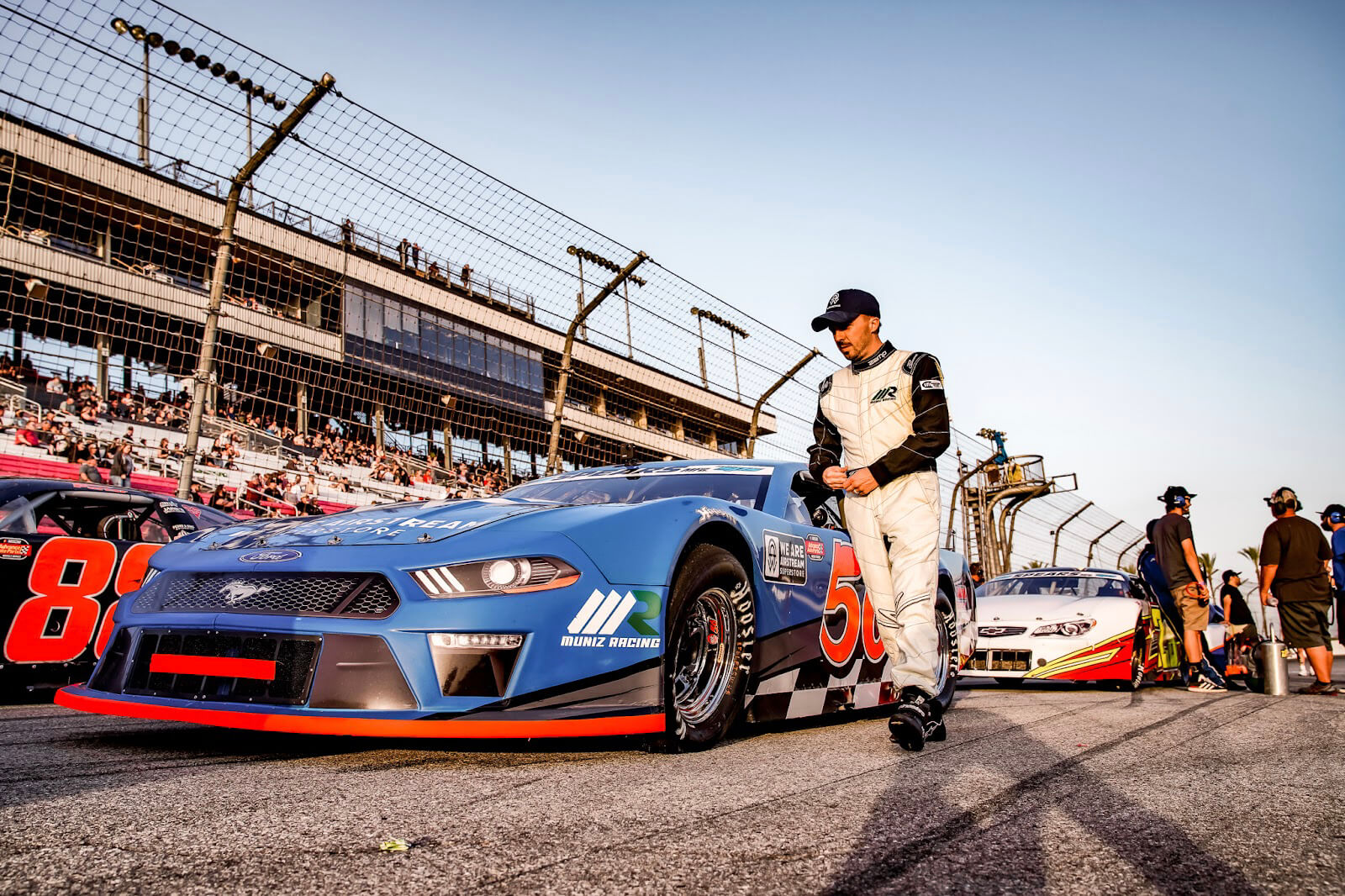
There are outliers in the pack like Frankie Muniz that have taken a different route in the pursuit of becoming a NASCAR driver. He was mostly known for his acting endeavors throughout the early 2000’s. Frankie Muniz has also quietly had a progressive career in racing that has stemmed from his passion for sports cars and motorsports racing. In late 2021, Muniz began putting the plans in place to go racing full time as a professional motorsports driver with his primary goal being full time NASCAR racing in 2023.  Muniz is licensed to race in the ARCA Menards Series and will make an announcement about his racing plans for the 2023 season soon.

Although there is not one straight path to becoming a NASCAR driver, it is possible for anyone with the drive and ambition to pursue a career in racing. NASCAR driving requires a lot of skill and it takes a certain mindset to achieve such high levels of driving. One thing is clear in every driver’s mind, their ultimate goal is to be racing in NASCAR Cup series going for gold.

Sources:

  1. https://www.jacksonville.com/story/sports/motorsports/2012/02/16/pit-road-money-pit-costs-field-nascar-team-are-staggering/15875590007/
  2. https://www.nascar.com/long-form/frankie-in-the-fastlane/
  3. https://www.softschools.com/facts/us_history/nascar_facts/3163/

The Fastest Game on Two Feet – Lacrosse

Between 2001 and 2018, Lacrosse was perceived by many as a bottom tier sport. For much of its early existence as a professional sport, there was only one league, the Major League Lacrosse (MLL), and the ticket sales and viewership were consistently decreasing year after year. Players were starting to voice their concerns and opinions regarding the current state of the sport as well as the direction it was heading in. The overall direction of the sport of Lacrosse was on its way to extinction, but two brothers had a different plan for the sport and refused to let the sport they love go out of business.

Why Lacrosse Is Called the ‘Fastest Game on Two Feet’

In 2018, Mark and Paul Rabil saw a major problem with the Lacrosse landscape. At the time, Paul Rabil was an established all-star within the MLL, but saw many concerns and declines throughout the years. With deep-pocketed investors backing him, Paul and his brother Mark approached the MLL with a buyout after a decline in attendance numbers, rigid wages, and player privacy concerns. The MLL declined the offer. Later that year, the Rabils launched the Premier Lacrosse League (PLL). They saw a space for growth and expansion and never turned back.

Only two weeks after the launch of the PLL, they named the capital of entertainment business, Los Angeles, as their headquarters. While this may sound like a minor business move, this allowed lacrosse to be in a space where athlete-driven media and content exploded on a daily basis. The new home base assured that lacrosse will continue to grow and expand to new markets and audiences and expose them to this fast-paced sport. Now in 2022, the Lacrosse landscape has changed forever with media exposure, athlete participation, and sponsor investments at an all-time high.

Adapting Under Pressure: The PLL’s Path Through COVID-19 and Beyond

The inaugural season started in 2019, which included a 14-week tour-based schedule where every weekend is played in a new city. After a successful 2019 season, the PLL ran into a major problem. With the COVID-19 outbreak derailing all major sport leagues, the PLL was threatened as it was still a new league. Seeing that the PLL does a tour-based schedule, as a result of COVID-19, they were unable to travel from city to city so they were tasked with finding a single city that would hold all the games. Against all odds, the PLL showcased its ability to strategize and overcome adversity by being the first and only North American league to put together a return to play plan after the pandemic. On the other hand, the MLL was struggling like never before and had no choice but to revert back to Paul’s offer and merge with the PLL to make one big entity. 

The 2020 season was an unusual one as they figured the best way to go about having a season was doing a bubble style season. This meant all teams would stay in one location and play the entirety of the season there. That place was Salt Lake City, Utah. With now only one big lacrosse league, the PLL was poised for a breakthrough. 

When the 2021 season rolled around, everything returned to normalcy regarding the schedule and it was time to continue to expose the game of lacrosse to new audiences.  Doing this tour-based schedule allowed lacrosse to continue to deepen its roots in certain states as well as open new markets. Continued throughout the 2022 season, the PLL had to come up with 14 different cities that will host games for the PLL. These cities are included but are not limited to Albany, Long Island, Charlotte, Frisco, Charlotte, and more. The PLL does a good job of targeting cities that have a long history of Lacrosse along with cities who are still fresh to the sport and do not have a lot of young participants. For example, New York is the most popular state for lacrosse with 26,136 high school players and 150 NCAA teams. As a result, the PLL has the state of New York to host two weekends this season. On the other hand, although Texas and North Carolina are not among the most popular states, the PLL is trying to showcase this niche sport there by hosting games in Charlotte and Frisco in order to grow the sport and increase its overall prevalence among fans. 

In a continued effort to grow the game of Lacrosse, In March, the Premier Lacrosse League (PLL) announced a four year partnership with sports media conglomerate ESPN. This agreement will span the network’s broadcast, cable, and streaming platforms. PLL games will exclusively be streamed across ABC, ESPN, ESPN+, and ESPN2. Chairman of ESPN and sports content explained that  “this new agreement will maximize exposure for the league and sport as a whole, with a number of events on linear television and all games being available direct to the consumer.”

How Strategic Sponsorships Took the PLL to the Next Level

In order to continue the growth of this league, the PLL needed to bring in big-name sponsors that would help take the league to the next level, and they did just that. From investing companies to clothing apparel, the PLL did it all. They now have sponsorships with DraftKings, Public.com, Champion, Gatorade, and TicketMaster, to name a few. Earning these sponsorships gave the league a professional feel as it shows the world that these big name companies believe in the growth of this sport.

They are willing to put their money where their mouth is and invest in the growth and expansion of the fastest game on two feet. Not only is this sport the fastest sport on two feet, but also one of the fastest growing sports in the industry – they were named Sports Business Journal’s Breakthrough Sport of the Year 2020. These companies are getting exposure to the lacrosse markets like never before and reach new consumers daily as a result of the sponsorship. Not only will these sponsorships appeal to people within the sports industry, but also to fans around the world. The companies and products they use on an daily basis are invested into lacrosse and believe in it. 

Additionally, executives within the PLL realized the importance of social media and how important it is to have a strong social media presence. Through the Greenfly Connect tool, the league fully automates the workflow for the pictures and videos that the league’s photographers take throughout the season and upload them daily. The PLL instantly connects that content with its 160 players via the Greenfly app. This makes it easy for the players to access these photos and videos and share it to fans as soon as they get into the locker room. In a matter of minutes, this content is expanded not only to the players’ brand, but also the PLL’s brand. As a result of this partnership with Greenfly, the league saw a 15% increase in social following for PLL athletes within the first two weeks of use. This tactic is mutually beneficial and PLL executives realized the power of social media and how important it is to have a presence in order to continue to innovate and reach new masses year after year.

What’s Next for the PLL and the Game of Lacrosse

Fast forward now to August 2022, the PLL is in its fourth season and is continuing to grow and expand as a whole. Prior to the merger, the PLL announced that it was adding an expansion team, the WaterDogs, after the success of the previous years. This made the total team count seven, an odd number for any league. After the merger with the MLL, the PLL decided to adopt a single team from the MLL, the Boston Cannons – now named Cannon LC. With Lacrosse in the best shape it has been in recent years in terms of viewership and overall participation, lacrosse fans can’t help but think what Mark and Paul have up their sleeves next. From partnerships to expansions, this league is full of potential and if you are a lacrosse fan, stick around to see where the brothers will take this sport even further. 

Sources:

  1. https://premierlacrosseleague.com/
  2. https://ublawsportsforum.com/2021/02/17/the-legality-behind-the-pll-mll-merger-antitrust-concerns
  3. https://premierlacrosseleague.com/articles/pll-headquarters
  4. https://www.sportstravelmagazine.com/premier-lacrosse-league-to-play-in-14-cities-in-2022
  5. https://lacrossepal.com/where-is-lacrosse-most-popular/

Celebrating the 2022 Little League World Series

Little League World Series 2022

This year marks the 75th anniversary of the Little League World Series and its first ever expansion of both the baseball and softball leagues. For people new to the world of baseball and softball, the Little League World Series is an annual tournament for children aged 10-12 years old. Although the league doesn’t actually have rules that deny girls from playing, the series is mostly comprised of boys, but has a history of including girls on some of the teams. A total of 20 girls have played in the Little League Baseball World Series including most recently Ella Bruning, who played in the 2021 league as a starting catcher for the Southwest Region Runner-up. The Little League program was founded in 1939 in Williamsport and the very first Little League Baseball World Series was played in 1947. However, the Little League Softball World Serieswasn’t established until 1974. Today, both leagues consist of about 2 millions boys and girls in all of the U.S and more than 80 other countries. Little League Softball has been growing in popularity with more than 50,000 girls participating across 460 leagues. The Little League has also seen a growing number of fans as last year’s championship game drew over 400,000 TV viewers. 

This year, the 75th Little League Baseball World Series will take place August 17-28 in Williamsburg, Pennsylvania and will include 20 teams: 10 American teams coming from the Midwest, Northwest, Southeast, Southwest, New England, Great Lakes, Metro, West, and Mid-Atlantic regions, and 10 international teams coming from Chinese Taipei, Japan, Australia, Mexico, the Netherlands, Nicaragua, Australia, Canada, Panama, the Dominican Republic, and Italy. Two iconic stadiums are playing host to the Little League Baseball World Series – Lamade Stadium (with 45,000 seats including terraced hills beyond the outfield fence) and Volunteer Stadium.

LLWS 2022 Baseball

The 48th Little League Softball World Series is taking place in Greenville, North Carolina from August 9-15. This year, the league also expanded to include 12 teams (2 additional) with 8 American teams from the Central, Mid-Atlantic, Northwest, Southwest, New England, Southeast, West, and North Carolina (host) regions as well as 4 international teams from Canada, Italy, Puerto Rico, and the Philippines.The Little League Softball World Series kicked off on August 9th with its opening ceremony, and is being broadcast on ESPN, ESPN2, and Longhorn Network, as well as their live streaming platforms ESPN+ and fuboTV.

Tournament Sponsors and Activations

Ahead of the Little League World Series, the league announced that there will be a Fan Zone and an event app  “which will provide unique experiences and opportunities to fans from all over the world”, as well as enhancing the live experience in Greenville and Williamsport. For both the Softball and Baseball League tournaments, visitors and fans can use their Fan Pass QR Code on the app to interact with each league’s partners on site for a chance to win a $50 Little League Store Gift card. As one of the league’s official partners, Barilla’s activation throughout the event includes a sample hand out of their Barilla Protein+ Pasta with their marinara sauce to visitors in the Little League World Series Fan Zone. Fans and visitors will also experience a photo opportunity at the booth to redeem a collector’s pin. Sponsors like Adidas and DICK’s Sporting Goods made a special effort to elevate the player experience for the Little League Softball World Series, inviting players to activities like Adidas’ hair-braiding station to design and incorporate your unique teams’ color and a DICK’s Sporting Goods photobooth. Additionally, the league held an autograph session with college softball star, Jaiden Fields, for players to enjoy.

Little League World Series Softball 2022

The Softball and Baseball Little League World Series have both come a long way and grown dramatically in popularity in the United States and all over the world. With the league expanding the number of teams on both sides, the tournament is expected to keep growing even more in the next coming years, attracting more sponsors, partners, and countries to take part. The league is also making an effort to popularize the softball league, but it still has a long way to go. There is always a place for improvement in both leagues especially when it comes to expanding its international teams. As we’ve now seen some expansion with both leagues, we anticipate more international teams to get involved in the series in future years, making this a more global event that can be celebrated worldwide.

Sources:

  1. https://www.littleleague.org/history/world-series/historical-information/
  2. https://www.littleleague.org/world-series/2022/llsws/ 
  3. https://www.littleleague.org/news/little-league-world-series-fan-zone-to-provide-unique-on-site-experiences-in-2022/ 
  4. https://www.reflector.com/news/local/world-series-opens-with-festive-flare-visitors-impressed-by-city-ready-to-play-ball/article
  5. https://www.sportingnews.com/us/mlb/news/little-league-world-series-teams-2022-llws-bracket/betvubethhe5jwghk2dvggo0 
  6. https://www.espn.com/mlb/story/_/id/34346465/2022-little-league-world-series-schedule-results-how-watch-more 
  7. https://www.littleleague.org/news/inside-the-rise-of-the-little-league-softball-world-series/ 
  8. https://www.littleleague.org/news/little-league-teams-up-with-barilla-for-the-2022-little-league-baseball-world-series/

Community College Sports: Why They’re Essential for Athletes

By Kayla Jones

Community Colleges with Football Teams

If someone were to ask you to name some of the top college athletic programs in the US, what would be the first schools that you would name? For most people, they would likely name some of their favorite Division 1 schools that are well-known for their athletic programs such as University of Alabama, Gonzaga University, Duke University, and many others. It is rare for a person to mention community college athletic programs because there is not enough public knowledge or media attention around them. In reality, they are responsible for providing student-athletes that may not get as much recognition in high school the opportunity to get noticed by Division 1 recruiters. Proof of these results comes from athletes such as Tyreek Hill (Miami Dolphins), Jessica McDonald (Racing Louisville FC), Andy Pettitte (retired New York Yankees), Jimmy Butler (Miami Heat), and many more. These programs have given student-athletes an opportunity to hone in on their skills or even improve their academic performance to later move up to a Division 1, where they are one step closer to becoming a professional athlete.

Why Community Colleges Have Sports Programs

Community colleges started to take notice of the lack of respect for their athletic programs in 1938, when 13 two-year colleges wanted to participate in the NCAA Track and Field Championships in Fresno, California. The 13 institutions were rejected by the NCAA, therefore resulting in the creation of the  National Junior College Athletic Association (NJCAA), an organization  responsible for governing all community college, also known as junior college (JUCO), athletic programs. According to a research study done by the NCAA in 2019 , the competition for athletes looking to transfer is high, with about 14.5% of men’s basketball athletes transferred from a two-year college to a four-year college,  21.8% for men’s baseball, 8.6% for women’s basketball, and 5.7% for women’s softball. The struggles many athletes may go through attempting to transfer was brought to the public eye by Netflix through their “Last Chance U” series for both community college football and basketball programs. The series shines a light on the realities the athletes face as they put the work in to get noticed and hopefully fulfill their dreams of becoming a professional player. 

Coaching staff at community colleges also know that most athletes participating in their sports program are there to develop their athletic prowess and showcase their work ethic. The athletes come in prepared to hone-in on their skills and grow, which is something recruiters from Division 1 schools are looking for in potential transfers. Knowing they can handle the student-athlete lifestyle because they are already in college, versus an athlete freshly out of high school with no college experience, is a major benefit considering how substantial the transition from high school to college can be.

Why Junior College Athletics Are a Smart Launchpad for Athletes

While it’s important for athletes to further develop their skills on the field and garner the attention of recruiters, they also have the opportunity to improve their academic abilities. Since community colleges tend to be smaller in student body size, it allows student-athletes to be in smaller classes where they have the ability to ask questions that they may not feel comfortable asking, or have the opportunity to, in the larger lecture classes of 4-year institutions. This more personalized setting is conducive to student-athletes who have struggled with academics in the past and are looking for ways to strengthen these areas. Community colleges also tend to be less expensive, as they don’t typically offer amenities like on-campus housing, meal plans, etc., and provide more scholarship opportunities than 4-year institutions, making them the better option for athletes that may not have the money to pay for a 4-year college where no scholarships are offered to them. 

Gateway Community College of New Haven, Connecticut is just one of the many schools in the U.S. that participates in NCJAA (Region XXI). They offer a men’s and women’s basketball team, where the men’s basketball team has made nine appearances in NCJAA Region XXI Tournament. They have had many athletes transfer from their institution to 4-year institutions such as Southern Connecticut State University, University of New Haven, Albertus Magnus College, and many others nation-wide. Some of their athletes have been named All-American and all New England, with some even in the National Junior College Hall of Fame.

How the NJCAA and Other Alliances Power Community College Sports

The NJCAA Foundation forms their purpose around helping student-athletes follow their dreams in every way possible. They provide funding for scholarships, educate people on the NJCAA to bring awareness to 2-year college athletic programs, and provide students with the necessary tools they need to not only be successful in their sport of choice, but also in the workforce if they decide that is their path.

What Student-Athletes Should Know Before Choosing a Community College Route

After high school, many student-athletes don’t have the opportunity to go play at Division 1 schools right after graduation. Community college athletic programs have become a large part of helping athletes reach their goal and continue to be a large part of a student-athletes’ journey. The coaches, administration, and community surrounding these athletes will do whatever it takes to make sure these athletes grow to their full potential and later fulfill their dream of becoming a professional athlete. 

Sources:

  1. https://www.ccdaily.com/2022/05/how-athletics-benefit-your-college/
  2. https://www.njcaa.org/about/history/index
  3. https://www.njcaa.org/Foundation/index
  4. https://gatewayct.edu/student-life/athletics/about-athletics
  5. https://www.communitycollegereview.com/blog/the-complete-community-college-athletics-guide

Women in CrossFit Are Breaking Down Body Image Stereotypes

By Clair Baker

Photo Credit: Trevor Knoll

When you think about CrossFit, what comes first to mind? Heavy weights? Box jumps? Men with large muscles? What if I told you that women are taking over the CrossFit industry like never before…not only in the gym, but in the media, too. Thanks to these strong, powerful, and capable women, the world is redefining what it means to look like a woman.

Women Are Leading the CrossFit Revolution

With the rise of CrossFit came a new era of fitness culture – drawing the attention of many females – athletes and non-athletes alike. This ultimately led to an increase in popularity and support for women’s athleticism. This, however, wasn’t without its faults. Even with Title IX opening the door for women in so many different sports, women still face criticism in sports across the board, especially those that require a very muscular physique. Nevertheless, the changes in women’s workout culture began to catalyze a change in women’s body image standards and expectations.

Strength Redefined: How Female CrossFit Athletes Are Rewriting the Narrative

The commonly accepted and celebrated woman’s body type has been, and still tends to be slim, toned, and youthful. A study done in 2019 asked women to reflect on their body image before and after their CrossFit journey. Before, the ideas they had for their bodies were much like many other girls: “skinny” and “fit”. But after their participation, it shifted into descriptors like “strong” and “powerful”. We are beginning to see more of these kinds of characterizations through women in CrossFit, the media, athletic apparel companies, and our very own athletes. With the increase of women in CrossFit came a decrease of the idea that there is an “ideal body type”. The push to not conform to these standards is being championed by the women who have already broken them. It isn’t a matter of how women look, but what they are capable of and moving beyond what is known as “socially acceptable”. 

Social media has played a major role in breaking the mold and veering away from firming and toning to power and strength. Female athletes have used social platforms to tell their stories by educating women of the true meaning of being comfortable in your own skin and how they have accomplished it through CrossFit. Fitting into a mold is a thing of the past, but it is not only social media that plays a role in breaking down barriers for women. 

Athelo group athletes, Dani Speegle and Michelle Basnett, have first-hand experiences of how CrossFit has broken their own idea of what a woman’s body should look like and how their confidence has grown as a result. Speegle has spoken about the changes she sees in herself, especially when it comes to body image. She said, “​​It’s amazing how much clarity and growth you can accomplish when you’re not worried about how your clothes are fitting or how your legs are jiggling or how other people are looking at you.” Basnett has also spoken out by saying “I choose to have muscle because I like it, it gives me confidence and I enjoy learning what my body’s capable of… do what makes YOU feel good because at the end of the day that’s what matters.” By being a positive advocate for women in sports and to encourage women’s health, it breaks down stereotypes of what a woman’s body should look like.

Other women in the industry have spoken out publicly about stereotypes in the CrossFit industry. CrossFit athlete Amanda Barnhart is an advocate for health and body positivity. She said, “Life’s way too short to be constantly chasing ‘the perfect body’. And I encourage you all to remember to love yourself despite your insecurities and to please give yourself a little forgiveness when you aren’t perfect because trust me NO ONE is.” Women in the industry have created a safe environment for anyone struggling with their body image and CrossFit has become their way of sharing their own stories of striking down body image stereotypes.

The Future of Fitness & Female Empowerment

As women in CrossFit break down body stereotypes in the media, there is also a push for athletic apparel to keep up. Typical athletic apparel in the past has been made to fit a women’s body based on past ideas of what it should look like, but with the growing popularity of CrossFit and more muscular female bodies, this apparel just doesn’t cut it. Brands like Reebok are looking to evolve their collections. By conducting 3D body scans across 300 different CrossFit body types, Reebok can determine how to create functional apparel for these powerful women. As more companies enhance technology and their knowledge of CrossFit, and all women in sports, it will boost their brand image. Stepping into the future of women greatly enhances their step forward in the world of sport and seeing it through a new lens. 

CrossFit continues to grow and attract women every day. Strength, power, and body empowerment in women is on the rise. As the media and apparel companies continue to support this, the ultimate hope and goal is that there will be no singularly accepted female body type. Women in CrossFit are making a move, breaking down barriers, and telling their stories. Following their lead will take us into the future of supporting all women’s body types, not just one size fits all. 

Sources:

  1. www.crossfitinvictus.com/blog/women-body-image-and-the-media-a-new-emphasis/
  2. https://www.boxrox.com/female-body-image/
  3. www.stylist.co.uk/fitness-health/wellbeing/women-crossfit-boxes-body-image-confidence/588758
  4. fashionandtextiles.springeropen.com/articles/10.1186/s40691-017-0116-y
  5. www.wellandgood.com/prime-day-best-deals/
  6. games.crossfit.com/article/closing-gender-gap-how-crossfit-empowers-women-spor
  7. scholarworks.utep.edu/cgi/viewcontent.cgi?article=3846&context=open_etd
  8. alvanon.com/crossfit-is-leading-to-a-huge-revival-for-a-once-disappearing-fitness-brand/ 
  9. www.instagram.com/p/CbieVVgMdlk/
  10. www.boxrox.com/transformation-dani-speegle-before-crossfit/

The Uncertain Future of College Football Realignment

By Devin Kelley

A University or college football team is essentially a business. With the sheer amount of money and profitability within college football, it is obvious that schools are looking to put themselves in the best position to grow and ensure long-term success. One way to ensure this vision is to be in the conference with the most publicity, viewership, and sponsorship deals available. Each conference is marketable in its own ways, but there are a certain few that rank much higher than others in terms of value. This is what college football teams are currently taking into consideration when deciding what conference to remain in or transfer to, if given that option.

Why Realignment Is Reshaping College Football’s Power Structure

Keeping all of the factors above in mind, we can see why schools are considering conference realignment. This is uncharted territory for college football as rule changes from the NCAA have allowed athletes to profit off their name, image, and likeness. This landmark decision, in turn, has completely upended the business of college sports for athletes, schools, and agents. This makes it difficult for most to define what a modern day partnership looks like. Schools are trying to keep up with the changing times and this is probably why teams like Texas and Oklahoma have decided to leave the Big 12 conference and transfer to the Southeastern Conference (SEC) because the conference will pay its schools more money. We have also seen USC and UCLA decide to jump ship on the PAC-12 and join the Big Ten conference, leaving fans wondering what’s next for their school.

Media Rights, Money and the Race for Conference Supremacy

Recently, the SEC announced that ESPN and ABC will be taking over the Saturday afternoon football broadcast package. Beginning with the 2024-25 season, ESPN and ABC will pay the SEC in the low $300 million range annually. At this point, any team offered to join the SEC conference would surely be interested in joining. If the SEC is backed by an ESPN and ABC duo deal, it is almost guaranteed that teams and the conference will grow immensely throughout the coming seasons. This adds much more leverage to schools when recruiting high school players because they can afford to give athletes more – incentivizing a player to commit.

According to USA Today, the gross revenue for the Power 5 of college football goes as follows: the Big Ten: $768.9 million, SEC: $728.8, Pac-12: $533.8 million, ACC: $496.7 million, and Big 12: $409.2 million. The Big Ten and the SEC have a huge advantage over the next 3 Power Five Conferences. If these conferences continue to grow at the rate they are, some experts believe there will be the possibility of seeing the emergence of a new ‘super conference’ with the Big Ten and the SEC being a part of that.

Similar to how the SEC is recruiting more schools that they think will bring more profitability and growth to their conference, the Big Ten is also doing the same. In a major win for the Big Ten, they were able to secure USC and UCLA to join the Big Ten effectively with the 2024 season. With the addition of these two schools, the bidding war has begun for streaming rights with the Big Ten. Apple is reportedly among the number of companies that are interested. This list includes Fox, CBS, ESPN, NBC and Amazon Prime Video. With that many companies interested in buying the streaming rights for the Big Ten, it is safe to say that the Big Ten should not be worried about its future.

The Institutions Losing Ground: Are the Pac-12, ACC and Others on the Brink?

On the other hand, other conferences within the Power 5 should be concerned. The Pac-12, ACC and Big 12 are now in survival mode and each move they make from here on out can have drastic effects on the success or failure of their conferences. According to Sports Illustrated, there are talks between the ACC and Pac-12 forming some sort of alliance between the two that would help both leagues remain intact. As realignment begins again, powerhouse teams within the ACC like the Clemson football team and UNC basketball team will weigh all options on what the best is for the future of their programs. With the SEC and the Big Ten poised to grow immensely within the coming years, schools want to be a part of that success. Keeping this in mind and seeing the rise of these conferences, any team who gets offered to join the SEC or the Big Ten would be hard to turn down. 

Now that players have to be compensated for their talent and skill on the field, it makes sense that these players playing in the SEC or Big Ten will be paid more generously versus another conference. Players broadcasted on the SEC and the Big Ten networks will likely be playing in front of a much larger audience resulting in more opportunities for these athletes to make deals with companies and agencies, alike. The better players are given a bigger stage to showcase their talents and have a better ability to profit in the better paid conferences. If the better players continue to choose to play in the conference with more money available to them, this will most likely result in a drastic difference in skill level over time when comparing the SEC and the Big Ten to the rest of the teams within Division 1 college football.

What the Next Wave of Moves Means for Student-Athletes, Fans & Brands

Soon more sponsors, partners and agencies will be looking to get involved with the teams and players within the SEC and Big Ten knowing the power, profitability and success within these conferences. With these uncertainties looming in the future within the college football world, schools and teams will weigh out what options are the best for growth and success in the long run. Over the next few months, decisions will be made that will affect the college football landscape for decades to come. Schools are already considering what the best options are for long term growth and success of their athletic programs. It is almost certain that we will see schools engaging in conference realignment in hopes of fulfilling that vision for their respective programs. The only question is: Who will come out on top?

Sources:

  1. www.forbes.com/sites/derekbaine/2022/07/01/big-ten-swipes-usc-and-ucla-from-pac-12-in-big-financial-coup/?sh=6f609bfd19d8
  2. www.wruf.com/headlines/2022/02/11/sec-announces-revenue-distribution/
  3. www.usatoday.com/story/sports/ncaaf/2021/07/26/college-football-if-sec-expands-could-match-ncaa-1-3-billion-revenue/5377990001/
  4. www.newsobserver.com/sports/college/acc/unc/article263209858.html
  5. www.saturdaydownsouth.com/sec-football/wall-street-journal-reveals-value-sec-football-program/
  6. www.usatoday.com/story/sports/ncaaf/2022/05/20/pac-12-big-ten-big-12-revenue-fell-pandemic/9855686002/

Premier League Cracking Down on Gambling Sponsors

By Samson Wolpov\

Although sports have reportedly been around for 3,000+ years, historians say sports betting has only been around since the mid-20th century. Recently, sports betting has seen a crackdown on regulations in some parts of the world because some countries or citizens perceive it as organized crime. In other parts of the world, it is seen as a revenue stream opportunity that, in return, provides services for citizens. In general, sports betting has become very commonplace with the ability to place bets from the comfort of your home instead of needing to go to an in-person sportsbook. To date, there are more than 45 legal online gambling platforms and almost twice that amount of illegal platforms. Despite this boom of online sportsbooks and an increase in their popularity, not all sports leagues are welcoming them with open arms. 

At the beginning of the 2019-2020 season, gambling companies began infiltrating the Premier League clubs with lucrative amounts of money to be the title sponsor for ten clubs. These clubs earned a record £349.1 million in sponsorship deals during the season, a rise of more than 10% from the previous season. The prevalence of these companies has increased in the second division where 17 out of 24 club jerseys showcase a betting logo. This means that 27 out of the 44 top clubs in England – more than half of the clubs – have betting companies as main sponsors. None of the top six teams currently have gambling sponsors – their current sponsorship deals have generated enough revenue to keep them comfortable without pursuing this slightly more controversial path.  However, the remaining 14 clubs need to find deals that will bring them the most possible money so that they can compete with the top clubs. That is exactly what West Ham United did when it struck a deal with Malta-based Betway for £10 million pounds. The most recent partnerships created this year were Everton’s deal with Stake.com and newly promoted Bourmoueth’s collaboration with Dafabet. Deals like these are providing clubs with the funds they need to sign talented players from around the world, elevating their status in the league. 

Since soccer is the most popular sport in the world, it comes as no surprise that the most popular sport is also the most bet on. According to Sportradar’s betting and sports data analysis, about 70% of the world’s betting (both legal and illegal) comes from gambling on soccer. Although the World Cup witnesses the biggest betting volume, the Premier League is not foreign to gambling as sportsbook sponsors are among the ruling sponsors in the league. With the Premier League season only one month away, the U.K. government recently announced that it is looking to halt all online gambling business within the country. This news has serious implications for the Premier League as half of the teams in the top division are currently sponsored by gambling companies. The second-tier English Football League, whose title sponsor is a sports betting corporation – Sky Bet, announced that if the bans were to be imposed, the clubs within the league would lose north of £47 million per year. 

Much of the pushback the league is setting stems from the U.K. government’s efforts to crack down on the promotion of gambling among the youth. In 2005, the Gambling Act in the U.K. was passed which dictates the protocols for all casinos, poker, sports betting, and lottery betting. Since then, it is estimated that there are around 24 million people betting on various games. In 2020, the Department for digital, culture, media, and Sport (DCMS) launched a review of the gambling laws amid the concern over youth exposure through various advertisements and football sponsorship. The reported changes that are under consideration are a betting limit on online and mobile casinos of £2.40 to £6 per wager, a ban on games that allow users to lose lots of money very quickly such as slots, and a ban on free bets.

Back in the states, there is the potential for the opposite to happen. Now that 19 states have legalized sportsbooks and gambling, these companies are starting to infiltrate professional and collegiate teams by adding in-person sportsbooks into stadiums and nearby buildings. Citi Field (New York Mets), Wrigley Field (Chicago Cubs), and Tiger Stadium (Louisiana State University) are among the many teams that have added gambling companies as sponsors. Professional sports leagues in the US are almost starting to welcome gambling company sponsorships as the NFL has partnerships with a dozen of sportsbooks and fills broadcasts with popular commercials from Draftkings, Fanduel, and Caesars. 

Back across the pond, a decision on this voluntary ban will be decided by July 21. For the ban to be in place, 14 out of the 20 teams will have to come to an agreement. The sponsors won’t be banned right away but rather over a three-year phase. The Premier League had suggested a compromise to the DCMS in which instead of an outright ban on betting partnerships, which would see company logos completely removed from the front of team jerseys, the logos would remain on the sleeves where it is not as visible to the viewers. It is reported that the DCMS minister is considering the proposal but nothing is set in stone yet. 

While Premier League Clubs may be hurting from this revenue change, the ultimate goal is to change society for the better. Being exposed to gambling at such a young age in the U.K. can be very detrimental in the long run. Commercials don’t often lean into responsible betting messaging, and viewers don’t often see the negative impact that gambling can have on someone.  An interesting alternative approach to this subject matter that we’ve seen is with Sportradar, a sport technology company, who is using a lead-by-example approach to sports gambling. They’re launching a program that supports athletes in responsible gambling – with the core focus being education and prevention of gambling addictions. The program consists of on-demand virtual visits, pre-recorded webinars, and in-person workshops. With athletes being such strong role models to the youth, Sportradar is hoping that this program will trickle down and set a positive tone for sports gambling. 

With all this being said, it is important to recognize when regulations are a crticial necessity, regardless of the positive benefit of extra funds. Irrespective of how this vote turns out, it will behoove leagues and teams to consider all angles when entertaining future partners, ensuring that they are handling sponsorships, and the inherent message that comes with them, responsibly.

Sources:

  1. https://frontofficesports.com
  2. https://www.theguardian.com/football/2019/jul/19/half-of-premier-league-clubs-to-have-gambling-sponsors-for-201920
  3. https://www.theguardian.com/football/2019/jul/19/half-of-premier-league-clubs-to-have-gambling-sponsors-for-201920
  4. https://sbcnews.co.uk/marketing/2022/07/05/clubs-to-vote-on-betting-sponsor-phase-out-after-premier-league-request/
  5. https://sportsecyclopedia.com/tank/tank/bettinghistory.html     
  6. https://sportsecyclopedia.com/tank/what-sports-do-people-bet-on-the-most/
  7. https://insidersport.com/2022/07/14/athletes-educated-on-responsible-gambling-via-sportradar-initiative/   

Social Media in Sports Marketing – Gen Z and TikTok

By Sasha Matar

They say all roads lead to Rome, but today, all roads lead to TikTok. With almost 1.2 Billion active users on the platform, the video sharing social network has become a trendsetter in every aspect. 

TikTok content is at the very center of most sports industries. Around 46% of people on TikTok use social media “often” or “sometimes” to check out game highlights, 42% use it for player highlights, and 43% use it at least sometimes for sports content and news. TikTok is definitely the future of sports media with media outlets and sport industries jumping on the bandwagon to appeal to a new audience. According to TikTok “We know the TikTok community loves sports – whether it’s soccer, rugby, or car racing – we’re redefining entertaining sports content”.

Sports brands and companies have been quickly jumping to add it as part of their marketing and business development strategies. From trendy retro sportswear to F1 influencer marketing, TikTok’s sports community is at its peak and Gen Z content creators are at the tip of it. 

Sports Wore It Best

Thanks to Gen Z content creators like Charlie D’amelio and Addison Rae, TikTok has become one of the hottest hubs to brought back a lot of trends from older food recipes, to makeup hacks, and fashion. There has always been a 20-year rule on fashion trends where popular styles go from trendy to outdated to trendy again in 20 years. That is, until TikTok took over. In about a two-year period, TikTok has brought back fashion from the 60s, 70s, 80s, 90s, Y2K and the 2010s.

Since 2019, the sports fashion industry has seen a massive throwback of styles, outfits, and pieces from the past. They have taken Nostalgia Marketing to a whole new level by making retro athletic attire trendy without even needing to play sports. It’s not surprising that Nostalgic marketing has become a hallmark for sports brands especially since statistics show that 71% of consumers are more likely to purchase a product that appeals to them personally. If you google TikTok activewear trends, the phrase “Activewear Trends” has been linked to videos for a total views of over 785.4M views. Activewear or sportswear has become a trendy outfit for any outing – supermarket haul, coffee date, or flight attire – and not just for the gym or to workout. 

Big sports brands like Nike and Puma have recently released 90s-inspired pieces or collections. Nike collaborated with luxury brand Jacquemus to release a small line of clothes and shoes that, in their own words, “allow us to expand the culture of sport and redefine it for the next generation”. Gen Z is all about bringing old styles back and this collection fits in perfectly. In the last two years, Puma released several retro styled shoes including the TRINOMIC shoe in 2022 and brought back older pieces that were onced released in the 80s for basketball court and turned them into 2021 sneakers. Did the inspiration come from TikTok and Gen Z? No one can be certain for sure, but the two are definitely in many round table conversations.

A few months ago, TikTok partnered up with NHL’s account to create original content and unique experience on NHL’s account. NHL’s TikTok account took pre-game fashion or pre-game looks to a whole new level by introducing ‘who wore it best’ TikToks on their page. The NBA has been great at posting pre-game looks on their Instagram and it’s interesting to see TikTok took over the thunder. This is a great way to showcase athletes’ personalities and bring them closer to their fans and followers on social media.

Now Trending

Many sports organizations are going the extra mile to appeal to a younger audience by hiring Gen Z executives and partnering with Gen Z content creators. Instead of shying away from bold and edgy content, many sports organizations are leaning full force into it, playing into the younger demographic of the platform. The NFL, as an example, has made a variety of content using trending sounds or creating appealing videos that link back to their YouTube channel, some of which have been highly unexpected, coming from the official account of the NFL. They’ve taken it in stride though. On a recent video highlighting the new NFL rookies of the 2022 season, one user commented “aint [sic] no way the official nfl tt posted this” and the NFL commented back simply with “Way”.

Similarly, F1 took Influencer Marketing to a whole new level with Aston Martin’s decision of handing over their F1 brand story to TikTok content creators. TikTok is Aston Martin’s official creator partner as the brand embraces the popularity of motorsports and F1 on the platform.

Bringing Fans Behind the Scenes

TikTok brought the sports community together during the 2022 Olympic winter games. 18 year-old Olympic snowboarder Tessa Maud shared her day-to-day life at the Olympic village by showing her followers the cafeteria, Team U.S.A outfits and gears, as well as the Village’s smart beds. Similarly, her teammate Maddie Mastro took her 600k TikTok followers on a tour of the pristine Olympic village market and her daily COVID-19 throat swab as part of the Games’ protocols. This is just a glimpse of how Olympians and professional athletes have shared parts of their sports’ world with their fans and followers in a completely new way.

It’s been three years since the rise of TikTok and it is estimated that by the end of 2022, there will be more than 1.5 billion active users on the app worldwide. TikTok’s sports community is massive and continues to grow everyday. Whether it’s previous sports fanatics or newbies, TikTok has become a platform that brings back sportstrends, informs fans of latest game highlights or stats, and engages sports lovers with their favorite athletes or sports brands. With every new technology or social media platform comes uncertainties, but one thing is certain, TikTok is the future of sports and it is here to stay.

Sources:

  1. www.investisdigital.com/blog/news/tiktok-gen-z
  2. www.influencermatchmaker.co.uk/blog/top-tiktok-influencers-power-tiktok-and-who-top 
  3. www.intheknow.com/post/tiktok-trend-cycle-fashion/ 
  4. www.tiktok.com/discover/activewear-trends 
  5. www.puma-catchup.com/future-meets-retro-5-things-you-need-to-know-about-pumas-trinomic-cushioning-shoes/
  6. www.nylon.com/fashion/how-to-buy-nike-jacquemus-collaboration 
  7. www.morningconsult.com/2022/05/09/sports-marketing-tiktok/
  8. www.socialmediatoday.com/news/tiktok-announces-new-exclusive-content-deals-with-the-nhl-and-other-media/619307/  
  9. www.astonmartinf1.com/en-GB/partner/tiktok 
  10. www.nytimes.com/2022/02/06/sports/olympics/tik-tok-olympic-village-athletes.html 
  11. www.nhl.com/news/nhl-nhlpa-tiktok-partnership/c-331099248
  12. www.tiktok.com/@nfl/video/7101024176236121390?_t=8TotoOMKJXa&_r=1

What is LIV Golf and How Does It Compare to Rival Leagues

By Thomas Calhoun

The PGA TOUR has always been considered to be one of the most prestigious and well respected leagues in the world, but on June 9th of this past year, the golf landscape changed forever. Just three weeks ago, the first competitor to the PGA TOUR came around and immediately made waves like the sport has never seen before. World Golf Hall of Famer, Greg Norman has spent the last couple of years trying to develop a competitor to the PGA TOUR and he was finally able to make it happen as the CEO of  LIV Golf Investments.

What is LIV Golf?

The PGA TOUR began in 1929 and has been the dominant force in golf for nearly 100 years – until now. The LIV Tour is considered to be a startup competitor to the PGA TOUR and is being funded by the Saudi Public Investment Fund. There are a few key differences between the two golf leagues that are important to note. To begin, LIV stands for 54 in Roman numerals and the reason behind the Tour name ‘LIV’ is due to the tournaments being set up over the course of three days totaling 54 holes of golf. The 54 hole idea came about as many players and fans both agreed that four day tournaments took too long and efficiency could be increased.

How LIV Golf’s Rules, Format & Finances Separate It from the PGA Tour

To continue the trajectory of making tournaments more efficient, the LIV Tour is also implementing a shotgun start, meaning all players start at the same time but from different holes. According to Golfbit, a shotgun tournament will save an average of three hours per day, making for quicker days and an overall quicker tournament. The final major difference in PGA and LIV tournaments is that there are no cuts throughout the weekend. What this means is that any player that finishes the tournament after three days will get paid a portion of the prize money. For example, there were 48 players in the field at the first LIV event, the top player made $4,000,000 and the last place player walked away with $120,000. In order to get paid a prize on the PGA TOUR, you have to be in the top 50 percent of the field after the first two days. This change was put in place so that every golfer that plays for the LIV Tour has the chance to profit off of the work they put in.

Player Migration, Money & the Battle for Golf’s Future

In addition to the change of rules and regulations, the LIV Tour has also spent a monstrous amount of money to influence players to leave the PGA TOUR and play on the LIV Tour. Having what some consider to be “unlimited money” available to spend on these athletes and increase the purses of each tournament is something that the PGA just can’t compete with. According to The Sporting News, Phil Mickelson was paid $200 million to leave the PGA Tour and be the face of the LIV and the former number one world player Dustin Johnson was offered north of $150 million. 

With there being no cuts in the LIV tournaments, players have the opportunity to make more money per week than they would have with the PGA. For example, Charl Schwartzel won the first LIV event a couple of weeks ago and brought home a whopping $4 million. Not only was this the largest tournament that Charl has ever won, but he tripled his career best tournament winnings. The purse numbers in the LIV tournaments are larger than any of the PGA tournaments which provides players yet another reason to change sides. However, there are many players that still hold true to the PGA and continue to speak out against its new rival.

Players on the LIV Tour are saying they joined because it is helping to expand the game of golf and bring the sport to different global demographics. While that may be true, many have speculated that these decisions were primarily made based on one thing: money. Players like Rory Mcllroy and Jon Rahm have spoken out on the new league and are committed to helping the PGA TOUR retain its stature and prominence. During an interview, Rory spoke about the money being thrown at players saying, “any decision you make in life that is purely about the money, usually doesn’t end up going the right way.” A lot of the top players in the world stand by the organization that helped them make the money that they have today and allowed them to play golf for a living. However others believe that playing golf professionally is a business, so it shouldn’t matter where you are competing.

Implications for the Sport, Fans & Industry

Looking at other leagues and their rivals around the world can provide an interesting perspective into how the LIV Tour and the PGA TOUR could one day work together to truly grow the game of golf. Take soccer in Europe for example, the Premier League and the Champions League play hand in hand and have grown soccer to the largest sport in the entire world while also simultaneously being successful. The two leagues have a round robin style tournament at the end of each season and it is one of the most viewed events worldwide. Players are often bought out and sold from team to team but there is never any exclusivity like we are seeing with the PGA TOUR.

The XFL and NFL are another example of two leagues that are competing for similar audiences and that have similar structures. They both have conferences, owners, trades, and similar basic rules. The NFL, formed in 1920, has obviously been around for a lot longer, and has teams with extremely devoted fanbases. Much like the LIV, the XFL is looking to make the game more fun and more viewer friendly. A few differences that the XFL has are a running clock throughout the game, no extra points, and the rule of forward passes. All of the latter are in place to make the game more fun to watch and easier on the players. Despite the fun new rules of the XFL, it is clear that they will never be able to capture the NFL audience or make as much money as the NFL, but it is good to have a competitor in any industry.

Competitive leagues are good for any sport because they provide some balance to the playing field. Having at least one other league to prevent a monopoly in a sport is important, as long as it is being managed properly. The LIV Tour becoming a reality has made golf more interesting as an international sport than it has ever been before. Between the new money, new rules and shifting of players, golf is at the front page of every sports news outlet. Maybe this is the way to grow the game by getting more eyes on the sport, but it could also be tearing its fans apart. If the two leagues found a way to compete on a center stage with one another rather than just argue, there could be an extremely productive outcome. There are lots of potential fun events that could take place between the LIV and PGA Tour similar to the end-of-season tournaments between the two soccer leagues in Europe. As of right now, the two leagues are just butting heads, but as the details get ironed out, it will end up helping the game of golf grow to an even larger worldwide sport.

Sources:

  1. www.sportingnews.com/us/golf/news/liv-golf-tour-name-invitational-series-meaning-explained/ietdisstrdtxa8k3u2s5c5kq
  2. www.sportingnews.com/us/golf/news/liv-golf-prize-money-saudi-golf-tournament/xyzqdhvum39jfz4qdnatd8cb
  3. https://www.thesportsgeek.com/sports-betting/xfl/xfl-vs-nfl
  4. www.footballhandbook.com/premier-league-vs-champions-league/

Become a Sponsor.

Join us in making a difference. Tell us a bit about yourself and we’ll be in touch with sponsorship details.

By submitting this form, you agree to be contacted by the Athelo Group team regarding sponsorship opportunities.